FF: Closer/Holder Fix
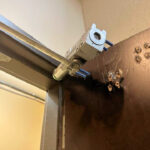
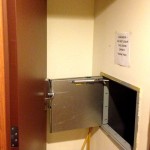
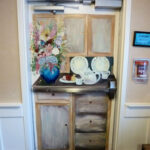
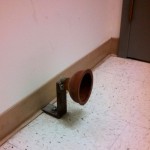
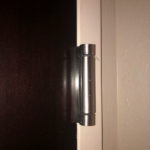
You may have to look closely at this Fixed-it Friday photo from Brian Lavallee of Doors by LAVA Inc. Have you ever seen this "creative" application in use?
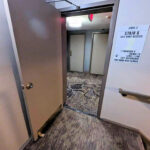
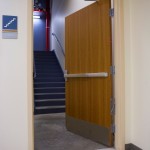
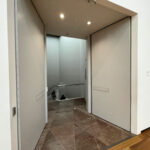
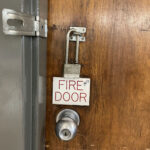
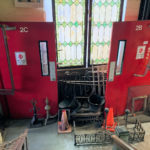
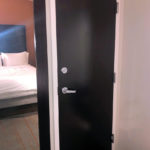
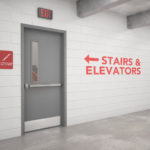
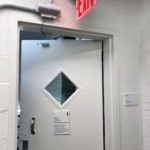
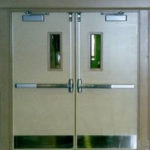
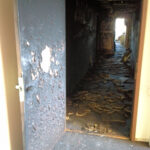
UPDATE: I just saw a great example of a door opening that was a "fire exit," incorrectly marked as a "fire door," so I have updated this post to include new photos. Is a fire exit the same as a fire door? Are the code requirements for each of these openings the same?
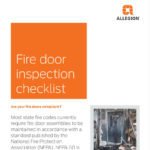
If you are involved in conducting fire door inspections or educating people about fire doors, I have updated our laminated fire door inspection card and it's now available!
Don't worry...it's not actually November yet! But there's some training coming up next week that I don't want you to miss - including a couple of sessions that I'm presenting. I hope to see some of you there!
After last week's focus on fire doors for Fire Prevention Week, several people asked about altering fire doors in the field. This recent article that I wrote for Locksmith Ledger covers the requirements and limitations of NFPA 80.
Wrapping up Fire Prevention Week is our final category in the hardware set: Protect the Door. Although these are not typically the most complex components of a fire door assembly, proper product selection, installation, and maintenance are crucial.
Earlier this year, a fatal fire in a Bronx apartment building demonstrated the importance of code-compliant fire door assemblies that are closed and latched when a fire occurs. Today's post addresses NFPA 80's three categories of fire door operation.
Because fire door assemblies are such an important part of the passive fire protection system of a building, the model codes and referenced standards require fire doors to be closed and latched during a fire. Learn more in today's post.
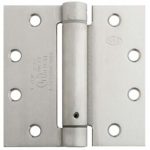
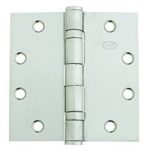
For a fire door to close and latch reliably, it's crucial for the door to be hung properly, using architectural hinges, continuous hinges, or pivots that are correctly specified for the door size, weight, and usage.
This week I will be sharing some of the resources available on iDigHardware related to fire door assemblies, to increase awareness of the requirements of the codes and standards that help to ensure fire doors perform as designed and tested.
I originally wrote this article in 2012(!), and when someone asked me a question about this topic yesterday, I noticed that the post needed an update. Current information from the model codes and NFPA 80 is now included.
Today's Quick Question: In our facility there is a mechanical room where we need a removable transom panel in a fire door assembly, to allow for the occasional replacement of equipment that won't fit through a 7-foot door. Is this possible?
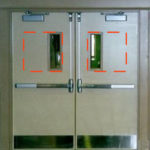
This photo is a great illustration of a problem that has come up before, and I don't have a good answer. What solutions have you seen for double pairs of fire doors like this? WWYD?
Here's a little quiz question...this one caught me by surprise the first time I noticed it: Besides a communicating door between hotel rooms, where might you find a fire door that is not required to be self-closing or automatic-closing?
Remember last month when I mentioned that I might question the condition of a restaurant's kitchen based on their doors and hardware? Well, the same goes for hotels, and these Wordless Wednesday photos of my hotel's fire doors from last week's trip are a compelling example.
Back in 2016 (where does the time go??), I answered a Quick Question: Does every component of a fire door assembly have to be listed/labeled? Today's post includes some updated information found in the enhanced content for NFPA 80.
Specifiers are involved during the construction process—not throughout the life of the building, but there are many ways the choices made during the specification process can affect the durability and function of fire door assemblies for years to come.
After I posted my Decoded article about fire door clearance, I found out that Hal Kelton of DOORDATA Solutions is presenting a webinar TOMORROW (Wednesday) on how to mitigate problems with fire door gaps! Here's the info...
My next Decoded article addresses a recent study on clearances for fire door assemblies - the results of the testing may surprise you. Please share any input or questions before the article goes to print!
I get a lot of requests for training on fire door assembly inspection, and I just realized that one of my coworker Jeff Tock's sessions was recorded and made available on YouTube! You can check it out in today's post.
Last week, I received some photos of a pair of fire doors with LBR fire exit hardware installed without the auxiliary fire pin. Apparently the door manufacturer's listings did not require the pin, but the hardware listings do. WWYD?
When a good teaching tool comes along, I get really excited. Especially when the resource is shared in the mainstream media, so it's readily available to people outside of the door and hardware industry. Please share this widely.
Because of the holiday weekend and the Webinar Wednesday sessions scheduled for the first week of the month, this is a last-minute notification of the online training available TOMORROW - I hope some of you can make it!
After writing countless times about fire doors needing to close and latch, and hearing about the impact of open fire doors during a Bronx apartment fire earlier this year, seeing a stairwell fire door permanently prevented from closing is just too much.
A quick question came up yesterday during a code update class, as I was talking about a change to NFPA 80: Can a rectangular or oblong hole be prepped in an existing fire door in the field?
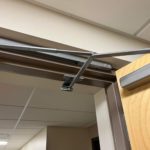
Last week I received an email from an architect, asking if I would update a post from 2009. Naturally, I was curious about how this old information was being used.
In this Q&A feature with Facility Executive, I offer educated insight around the importance of fire doors in multifamily facilities, illustrating the impact with real-world examples, referencing codes and offering tips to facility managers to ensure compliance.
I just received this Wordless Wednesday photo from Allison Berejka of Allegion, and I'm beyond wordless. This is a stairwell fire door in a New York City apartment building, and it will serve no purpose if a fire occurs.
A while back, I posted a Quick Question about whether a missing closer cover on a fire door assembly should be noted as a deficiency during a fire door inspection. There is finally an official answer!
My Decoded course has been taken thousands of times on-demand, along with countless attendees who have participated in live Decoded classes taught by my Allegion coworkers. I just updated all 4 classes and they're ready to go!
Today's Quick Question is a good one...When a specific requirement stated in a referenced standard is in conflict with what is allowed by the code that is referencing the standard, which requirement applies?
Webinar Wednesdays continue, along with a new Security in 30 session coming up this month! Electrified hardware, hollow metal doors and frames, fire doors, panic hardware, and a Security in 30 on some important health care research!
There are millions - yes, MILLIONS - of existing fire door assemblies that have been modified or damaged, or that have not been maintained properly. The only way to find them and fix them is to enforce the code requirements for fire door inspections. What's the hold up?
Last week, NYC Mayor Eric Adams signed an executive order that strengthens fire safety enforcement and outreach in the city. In addition, proposed city council legislation was filed that would increase penalties for non-compliant doors.
I've been asked today's quick question three times in the last two weeks, so I have updated the post with the references from the current codes. Is it acceptable by code to install a louver (fusible link or other type) in a fire door?
With the number of apartments in a metropolis like New York City, and the prevalence of fires in multifamily buildings, how are code officials ever going to get a handle on the non-code-compliant conditions?
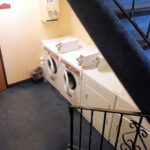
Whether it's a smoking dryer in the laundry room or something more serious, fire door assemblies play a very important role in a building's fire protection system - even if most people don't realize it. Another fire door win!
This story from WWLTV does a great job of illustrating the importance of compartmentalizing a building for fire protection. It focuses on the firestopping at the new MSY airport in New Orleans, and discusses the potential results of voids that are not code-compliant.
There was a time when trimming doors in the field was common. With most doors now arriving prefit, prebeveled, and premachined from the manufacturer, they should not need to be undersized further in the field.
I have to admit...I was very disappointed when a document from the U.S. government referenced security methods that could conflict with the adopted codes. But there's a new (and improved!) edition of the K-12 School Security Guide!
I will be publishing several sets of frequently asked questions this year, with more detailed supporting articles on each topic. If you have a FAQ that you'd like to add to the list, leave it in the comment box and I will include it in a future article.
If you missed registering for any of the learning opportunities I mentioned last week, you can still access these informative sessions! Last week's presentations are available on-demand, and there are more scheduled for this week and next!
I was recently asked to create a class for locksmiths, installers, or others who are looking for a crash course on the most frequently-asked code questions related to door openings. And here it is! Share it with all who could benefit from this training!
Several news stories left me wordless this past week...ANOTHER apartment fire in the Bronx with an open door, funding to cut the bottom of classroom doors (including fire doors) to increase ventilation, and parliament fire doors latched open.
On behalf of an iDigHardware reader, I need help from someone with a really long memory or a better filing system than mine. Where did the limit of 30 pounds to set the door in motion and 15 pounds to open the door fully come from?
There are some great learning opportunities coming up - a two-hour webinar on fire door assemblies from Door Safety, an Allegion Security in 30 session, and an ICC panel discussion on tornado awareness...which one(s) will you attend?
There are still details that have not been released regarding the January 9th fire in a Bronx apartment building. Why didn't the apartment door and the stairwell door close and help prevent the smoke from spreading?
After an I-Team investigation, a Bronx landlord repaired fire door problems in their apartment buildings, including doors to stairwells, trash rooms, and apartments that were not self-closing. Here is a follow-up story from News 4.
I received this photo of a fire door in a hotel stairwell from Gabriel Montoya of Jansen Ornamental Supply. You might be thinking to yourself, "This doesn't leave me wordless...I see stuff like this all the time!" That's the point.
A recent fire in a Bronx apartment building is yet another reminder of the importance of code-compliant fire door assemblies and the need for enforcement of the fire door inspections mandated by current codes and standards.