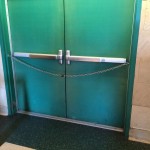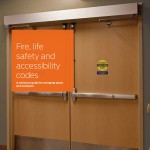
FF: Preschool Exit
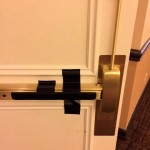
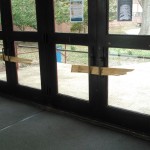
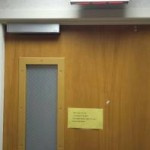
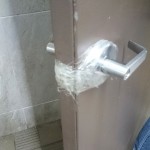
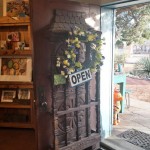
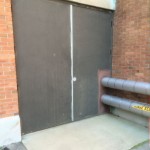
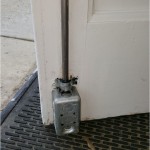
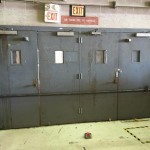
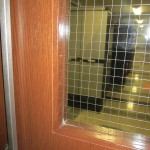
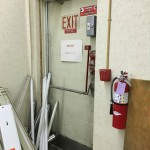
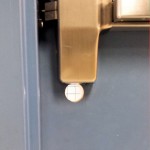
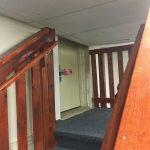
This Fixed-it Friday solution is ok for a preschool since the average height of the occupants is 26 inches, right? WRONG!

This Fixed-it Friday solution is ok for a preschool since the average height of the occupants is 26 inches, right? WRONG!
Code question...fake it till you make it?
I think this would discourage me from attempting any lock replacements! Thanks to Locksmith's Journal for this Wordless Wednesday photo!
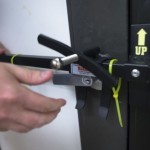
In this age of classroom shootings, many are looking for barricade locks - a cheap and easy stopgap to bolster door security...
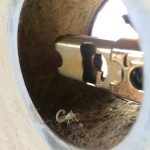
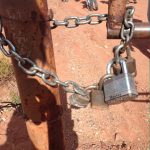
Here's how you master-key a gate without the complications of master-keying the padlocks...
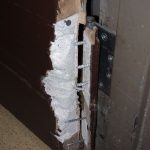
When an old fire door needs to be modified, what precautions are taken to ensure that the door does not contain hazardous material?
See any problems here? Thanks to Tim Weller of Allegion for this Wordless Wednesday photo! The fun never ends!
If a school decides to buy all new doorknobs for their school, and only buy a lever handle for the one classroom with a teacher who has a disability, in my opinion that would not meet the intent of the ADA. What makes it ok to do the same thing with classroom barricade devices?
Two paragraphs were added in the 2013 edition of NFPA 80 to address continuous hinges used on fire doors. I've seen these sections many times and never noticed a potential problem, until it came up twice in the last couple of weeks...
While I was at the BHMA meeting this week, my dinner companions pulled out their phones to compare photos of bad hardware and code problems (yes, this is the fun stuff we do at these meetings). Tim Weller of Allegion had these Fixed-it Friday photos...
While delayed egress locks must automatically unlock 15 seconds after a building occupant actuates the device, a controlled egress lock allows the egress doors serving certain areas to remain locked until they are unlocked by staff, the automatic fire protection system, or power failure...
This photo was taken in a high school, while school was in session. The doors lead from an enclosed courtyard into the school - the egress path should pass through the interior of the school and out the main exit doors to the public way...
Safety officials are concerned a new state law that allows barricade devices on classroom doors could make a crisis situation worse. The idea sounds great...
I have finished the on-demand version of Class 3 in the Decoded series, so now 3 of the 4 classes are available - for free!
Today's Fixed-it Friday photo is not an April Fool's Day joke, the result of a bad camera angle, or an image that has been Photoshopped. The doors are skewed to the left, and it looks like the floor is sloped. The hardware is horizontal, as is the graphic on the wall...
When I receive a question about the NFPA 101 - Life Safety Code requirements for health care facilities, I need to know not just what the code says but how it will be enforced...
I was very surprised at research conducted by the Georgia Tech Research Institute, which found that people trusted a robot to guide them to safety, even when it made mistakes or experienced technical difficulties...
Most stairwells in commercial and institutional buildings are designed to protect the means of egress using fire-resistant construction and fire door assemblies as opening protectives. When building occupants are within a stair enclosure during a fire...
Several people have asked me recently what the Americans with Disabilities Act says about keys. Although the ADA standards address operable parts of locks - like thumbturns, keypads, turn-buttons, and of course, knobs and levers, keys are not covered by the ADA...
There's more than one way to change a lock function...
We visited Santa Clara del Cobre, a town known for it's amazing copper work. I didn't find a lot of copper doors, but the pair below is on the entrance to the Museo del Cobre. The doors are wood, with small copper overlays attached which look like they were done by various artisans...
This photo was sent to me by Joanne Gretter of Herman Gibans Fodor, Inc., and I really have no words.
The word "occupied" is not defined in the IBC or the IFC. When a term is not defined in these publications, the "ordinarily accepted meaning" applies, as defined in Merriam Webster’s Collegiate Dictionary...
Escape rooms are popping up all over the world, and have already opened in many US cities. The premise is that you are locked in a room with friends, family members, coworkers...
This photo was taken at a VERY well-known theme park which does a great job with their door-related code-compliance, and is frequently inspected by the local code officials. The black part of this chain looks like it might be a magnet...
THE VOTES ARE IN, and the code change proposed by BHMA to address classroom locking in the 2018 IBC has been approved as modified by public comment!
What do you think? Does this door meet the intent of NFPA 1 if the security devices are only engaged when the building is not occupied?
These school security requirements could eventually be incorporated into your state's school security legislation. What additions or changes would you like to see?
BHMA is required by ANSI to update and review each of the product standards every 5 years, and an important change was made to ANSI/BHMA A156.3 when it was last revised in 2014. The standard now requires cycle tests for Grade 1 exit devices to include preloading...
It looks like this TV show needs a new quality-control expert with some experience in doors!
This lock function is one of several applications that may meet the technical requirements of the accessibility standards, but in reality are difficult to operate by people with certain types of disabilities. Have any of you had experience with AHJs allowing or not allowing this function?
John Lozano of Allegion sent me these photos from a recent class on fire door inspection. What problems do you see on this pair of fire doors in a health care facility?
I used to post lots of photos from trips I took with my family, and I'll be doing some more traveling this summer. In the meantime, I'm counting on y'all to send me pics of any interesting doors you see in your travels. Logan Piburn of Dyron Murphy Architects sent me these photos...
Last week, the debut event of the Congressional School Safety Caucus on Capitol Hill was hosted by the Security Industry Association (SIA). This event brought together the co-chairs of the caucus with school security experts to talk strategy, and included a panel discussion moderated by Tim Eckersley...
According to Ken Cook of Allegion, today's Fixed-it Friday photo is from a church in Indianapolis, where a small earthquake in 2004 broke some underground pipes. This is one way to solve the problem...
The first 2 Decoded classes are now available on-demand! Class 1 is Intro to Codes & Accessibility, and Class 2 is on Fire Door Assemblies. They're free!
I wonder how the designer got away with the design of this exit. From the corridor, it gives the impression of a normal exit door. When you open the door, you can only go either up to the 7th floor or onto the adjacent roof. There is no way to go down to exit the building...
If a low-energy operator is actuated by a motion sensor, it has to meet the requirements of A156.10 instead of A156.19, which usually means the door must have guide rails and safety sensors. What about the "wave-to-open" switches...are these considered motion sensors?
As a hardware consultant, there were many times that I tactfully pointed out to an architect what I thought was a door-related design problem. My advice was usually ignored unless the issue was code-related. Finally...vindication from Vox and 99% Invisible.
Oh dear. Must be electric latch retraction. :D
As a member of the door and hardware industry, my focus with regard to classroom lockdown is how to provide security without jeopardizing safety. Lt. Joseph Hendry of the Kent State University Police Department looks at the issue from a slightly different (and valuable) perspective...
This Wordless Wednesday photo was posted on the Truck Floor Training Facebook page, by Ian Vandenberg of Travis County Fire Rescue. I just love the extra-large wood wedges...
The new code reference guide is here! Each year, thousands of people receive a hard copy or electronic download of our code reference guide. When a new edition of a code or standard becomes available, I incorporate any necessary changes...
My question for you is this...if you supply, specify, or install wood fire doors, is the glazing typically installed in accordance with NFPA 80 - at the factory or in an authorized wood shop?
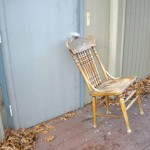
"The violations included a window that was screwed shut with three wood screws; an evacuation sign that labeled three exits to the home, even though there were only two; and one of the two exits, leading out to the back, was jammed by a chair that was screwed to the deck..."
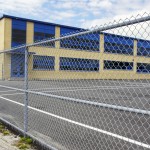
If these criteria are met, the fence surrounding the building would not be required to have gates that allow free egress, as the building occupants can gather safely in the enclosed area and wait for emergency responders to arrive...
This Wordless Wednesday photo (from Keith Brown and Steve Bildzok of Allegion) reminds me of how I feel when I walk into my kids' bedrooms. "WHY? What is all of this crap on the floor and why isn't it put away where it belongs? What excuse could you possibly have...
Here's the last whiteboard animation video in the current "Intro to Door Hardware" series...about the design-bid-build process for new construction.
This Fixed-it Friday photo could easily cross over into Wordless Wednesday territory...a fire-rated stairwell door in a day care center, where the installer obviously had an accident that he didn't think was important enough to address...
The possible solutions posted by iDH readers included electrified lever trim, electric latch retraction, delayed egress, a direct-hold electromagnetic lock, a networked wireless lock, or an electric strike. My preference would be...