KEYNOTES: Enhancing K-12 Security
Despite the dramatic advances in construction, technological tools and safety protocols that have been made in the past two decades, this progress is not always evident in many of our nation’s K-12 buildings...
Last week, the family of Colleen Ritzer filed a lawsuit against the town of Danvers, the school department, the architectural firm that designed the new wing of the school where the teacher was killed, and the cleaning company...
What should a school consider before purchasing classroom barricade devices, also known as temporary door locking devices?
The classroom security change that will be included in the 2018 IFC is consistent with the IBC, and early adoption of this language would go a long way toward maintaining life safety and creating a uniform set of requirements across the United States.
I occasionally publish a post from a guest blogger, and I just learned that sometimes the author can receive CEUs for these posts through various industry organizations. Today's post is from Don Cherry of Allegion.
In the wake of any tragedy, society struggles collectively to process the loss. For some it is the loss of friends and loved ones, but for most it is our feelings of safety and trust in the overall goodness of our fellow man that are diminished or seemingly lost entirely. In their place, we are filled with an overwhelming desire to do something...
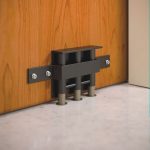
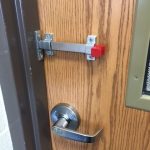
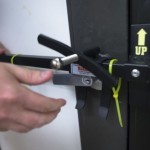
I received this photo from Guardian Fire Testing. The bolts have been installed on existing fire-rated doors in a school, and Guardian was asked to relabel these fire door assemblies...
A code change proposal has been submitted to the North Carolina Building Code Council, to address "emergency lockdown safety mechanisms" (AKA barricade devices) in schools, government buildings and office buildings...
CPTED (pronounced sep-ted) stands for Crime Prevention Through Environmental Design, and is defined as a multi-disciplinary approach to deterring criminal behavior through environmental design...
I read an article this morning about a 3-year-old boy who eloped from his preschool in Bangor, Maine. The teacher saw him go through the exterior door...
A Charlotte-Mecklenburg police officer is hoping a device he invented will be in your child’s school soon. It’s designed to keep active shooters out of classrooms...
For the last year or more, our industry has been dealing with legislation overriding the code development process in several states, with regard to classroom security...
We have been asked to share our expertise and constructive feedback on this product idea for locking classroom doors...
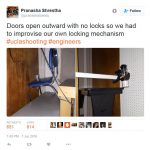
During yesterday's shooting at UCLA, Brian Fochler tagged me in a photo tweeted from the engineering building where the shooting was taking place, which was my first indication that something lock-related was happening. Since then I've received many other emails...
Schools have been able to use magnets over locking mechanisms, allowing doors to be easily opened throughout the day and still lock quickly by simply removing the magnet. But by Jan. 1, 2018, that quick fix will no longer be enough...
Here's the latest on classroom barricade devices...let me know what's happening in your state.
The National Center for Education Statistics has just published an updated report for Indicators of School Crime and Safety through 2015. The good news is...
In this age of classroom shootings, many are looking for barricade locks - a cheap and easy stopgap to bolster door security...
If a school decides to buy all new doorknobs for their school, and only buy a lever handle for the one classroom with a teacher who has a disability, in my opinion that would not meet the intent of the ADA. What makes it ok to do the same thing with classroom barricade devices?
Safety officials are concerned a new state law that allows barricade devices on classroom doors could make a crisis situation worse. The idea sounds great...
THE VOTES ARE IN, and the code change proposed by BHMA to address classroom locking in the 2018 IBC has been approved as modified by public comment!
These school security requirements could eventually be incorporated into your state's school security legislation. What additions or changes would you like to see?
Last week, the debut event of the Congressional School Safety Caucus on Capitol Hill was hosted by the Security Industry Association (SIA). This event brought together the co-chairs of the caucus with school security experts to talk strategy, and included a panel discussion moderated by Tim Eckersley...
As a member of the door and hardware industry, my focus with regard to classroom lockdown is how to provide security without jeopardizing safety. Lt. Joseph Hendry of the Kent State University Police Department looks at the issue from a slightly different (and valuable) perspective...
In yesterday's post I wrote about a video on classroom barricade devices that had gone viral. In the first 36 hours or so, the video had 18 million views. 18 MILLION! Almost 600,000 people have shared the video on Facebook, and about 6,500 people have commented. This is an amazing (and somewhat disturbing) example of the power of social media...
A video about classroom barricade devices - a particular company's devices, actually - has been posted on a Facebook page and has gone viral. Right now, about 14 hours after it was posted, it has over 3 million views. There are over 1,000 comments - many of them in support of this idea...
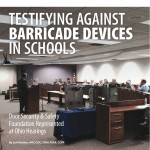
Last Friday, the Ohio Board of Building Standards posted a 434-page business impact analysis containing all of the comments submitted with regard to the proposed code change on classroom barricade devices. My comments to the board included a comparison of the recommendations made in the July 2015 OBBS Final Report vs. the proposed code language...
Every December I weed through my inbox so I can start fresh in the new year. I get A LOT of email...my inbox is currently down to only 525 emails waiting for some sort of action on my part. I just found an email that included a link to an article from NFPA Journal...
There is too much valuable information in this white paper for me to cut and paste small sections here - I'd recommend reading the complete document, but one paragraph did catch my eye...
What do you think about the idea of using a children's book, like this one from the ALICE Training Institute, to teach kids about preparing for a school shooting?
The Partner Alliance for Safer Schools (PASS) has released a white paper detailing their position on classroom barricade devices. This position statement provides valuable information for any jurisdiction or school district considering the use of these devices to secure classroom doors...
One of the arguments made by supporters of classroom barricade devices is that many other states have already changed their codes to allow the devices to be used. While a few states do allow the devices, the vast majority of state codes have not changed...
A few weeks ago I mentioned that there would be a meeting with the Ohio Board of Building Standards to discuss the proposed code language allowing classroom barricade devices. Quite a few of you left comments, and like me, most felt that the proposed language does not go far enough to keep teachers and students safe...
I know...lots of videos this week. It's just a coincidence - not a new trend. I'll just leave this right here...
I'm working on some more information to post here, but for now I wanted to share this article from Al Jazeera America. It is the very FIRST mainstream media article I've seen that addresses some of the problems associated with the use of classroom barricade devices...
If you're thinking that this post doesn't apply to you because you're not in Ohio, think again. Several states are becoming more proactive about this issue to try to avoid similar legislation...
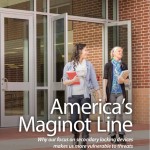
In the October issue of Doors & Hardware, Lt. Hendry shares the law enforcement perspective on the use of classroom barricade devices, in an article called America's Maginot Line - Why our focus on secondary locking devices makes us more vulnerable to threats...
In the October issue of Doors & Hardware, I have an article on what took place in Ohio with regard to the state legislation on classroom barricade devices, and another article covering the myths and facts presented at the National Association of State Fire Marshals' annual conference (here's a video version of this information)...
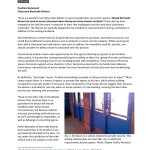
According to Nathan Burkhardt of Opening Technologies, this church addressed their classroom security by adding shades for the vision lites, and changing the locks to office function with a turn-button. Because the kids and teachers were getting injured by the sharp turn-button design...
You may have read the AP article that appeared in the news media across the country over the weekend, addressing some of the concerns associated with classroom barricade devices. In case you missed it...
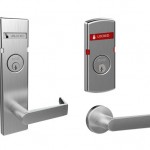
Ideally a classroom door can be locked from within the classroom without opening the door and potential exposing the teacher to an intruder in the hallway. Many schools have existing classroom function locksets, which have to be locked by inserting a key in the outside cylinder. When a district doesn't have the funding to replace the locks...
What do you think? Is this the safest school in America?
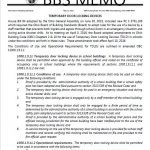
Ohio BBS Guidance Document: "Schools are being cautioned against purchasing and deploying devices before the rules take effect as some devices currently on the market may not be allowable once new rules are adopted."
What do you think of this new Fixed-it Friday product idea? It looks like it would be a little pricey and I'm not sure how a whole class would fit inside, but I give him credit for the engineering. I could use one of these to hide from my kids. :)
Last month, along with a panel of experts, I presented the myths and facts about classroom barricade devices on behalf of the Door Security and Safety Foundation for the annual conference of the National Association of State Fire Marshals (NASFM). I recorded my portion of the presentation so I could post the myths and facts here. Feel free to share the link with those considering the use of barricade devices, or any jurisdictions discussing the possibility of changing their codes.
This Fixed-it Friday photo illustrates the common problem of an access control system that has been modified for convenience. No matter how much time and money are invested in planning and installing a system, human intervention is always a factor...
If you have not watched this 2014 Dateline series on school shootings, it gives the perspective of survivors and describes their struggles in the months and years after the tragedies occurred. Very moving.
Articles touting the value of classroom barricade devices without any mention of the related safety issues are legitimizing the use of these devices that are not compliant with the model codes. An article in this month's Security Management magazine, a publication of ASIS International, covers the perceived security benefits of the devices used in the Mentor, Ohio school district...
Today I presented as part of a panel discussion at the annual conference of the National Association of State Fire Marshals, along with my fellow panelists: Larry Flowers - Ohio State Fire Marshal, Ed Paulk - Alabama State Fire Marshal, Kelly Nicolello of UL, and John Woestman of the Builders Hardware Manufacturers Association. The panel was moderated by Jim Tidwell of Tidwell Code Consulting, and Jim Narva of NASFM kicked it off.
As many of you know, I have been closely watching the barricade device issue in Ohio. If you haven't been following along, here's the summary of what happened: