
In this Decoded article, I took a closer look at the requirements related to fire protection systems for doors with electrified hardware.
~~~
This Decoded article will be published in Door Security + Safety
.

For the electrified hardware used in some special locking arrangements, there are code requirements for automatic release operations that must occur to allow egress during a fire alarm activation. A great question hit my inbox the other day, related to this topic:
Do the codes permit the installation of electrified hardware on doors serving buildings that do not have a fire alarm or sprinkler system?
The answer to this question depends on the type of electrical locking system, so here’s a quick rundown:
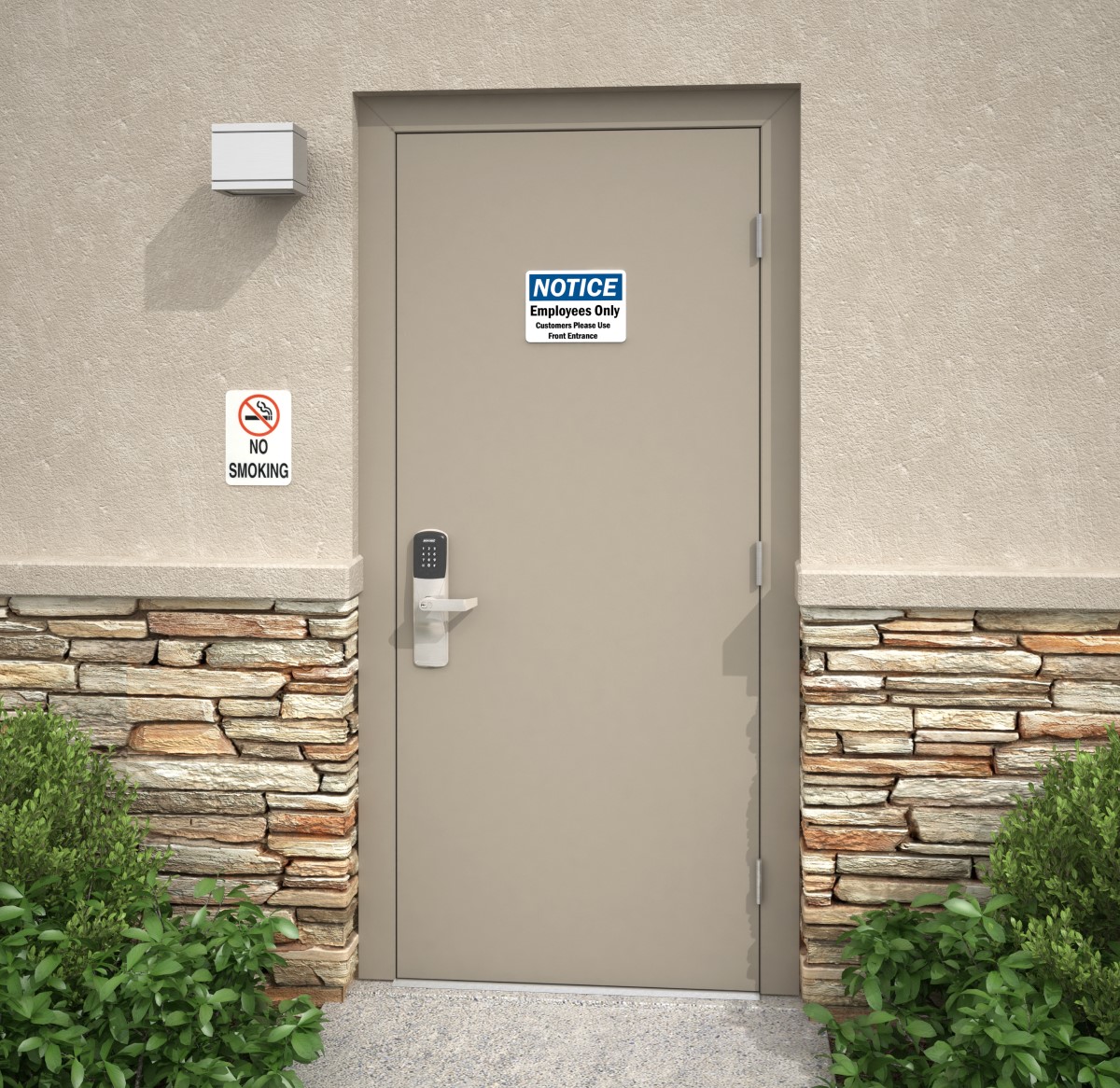
Doors with electrified hardware that controls access but does not affect egress are not considered special locking arrangements.
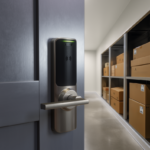
Access Control / Free Egress – This electrified hardware uses a credential reader, keypad, or other access control device to control access, but the electrical system does not impact egress. These systems are not considered special locking arrangements. The hardware on the egress side of the door – panic hardware, lever handle, etc. – may be used at any time to exit freely without the use of a key, special knowledge, or effort. This application is addressed by Section 1010.2.9 of the 2024 International Building Code (IBC) and International Fire Code (IFC), along with monitored or recorded egress applications. The I-Codes (IBC+IFC) do not require the building to have a fire alarm or sprinkler system in order for this hardware to be installed, and there is no requirement in this section of the code for the hardware to receive a signal from the fire protection system (if provided).
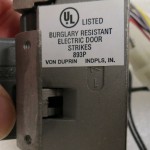
One consideration that could mandate a fire alarm connection for these “normal locking arrangements” is when this hardware is installed on a fire door assembly. For electrified hardware that controls the latching of the door (ex. electric latch retraction fire exit hardware and locksets, or fail secure electric strikes), the latch must be engaged during a fire to ensure that the door remains closed. Because an access control system could hold the latch in the retracted position for a prolonged period of time, the system should be connected to the fire alarm system so the latch is automatically projected if a fire occurs.
Stairway Doors – When a stairway door leading to the interior of the building is lockable on the stairway side of the door, the lock must release if there is an emergency to allow building occupants to leave the stair to seek another exit or wait for assistance. Beginning with the 2024 I-Codes (Section 1010.2.6), this automatic release must occur upon:
-
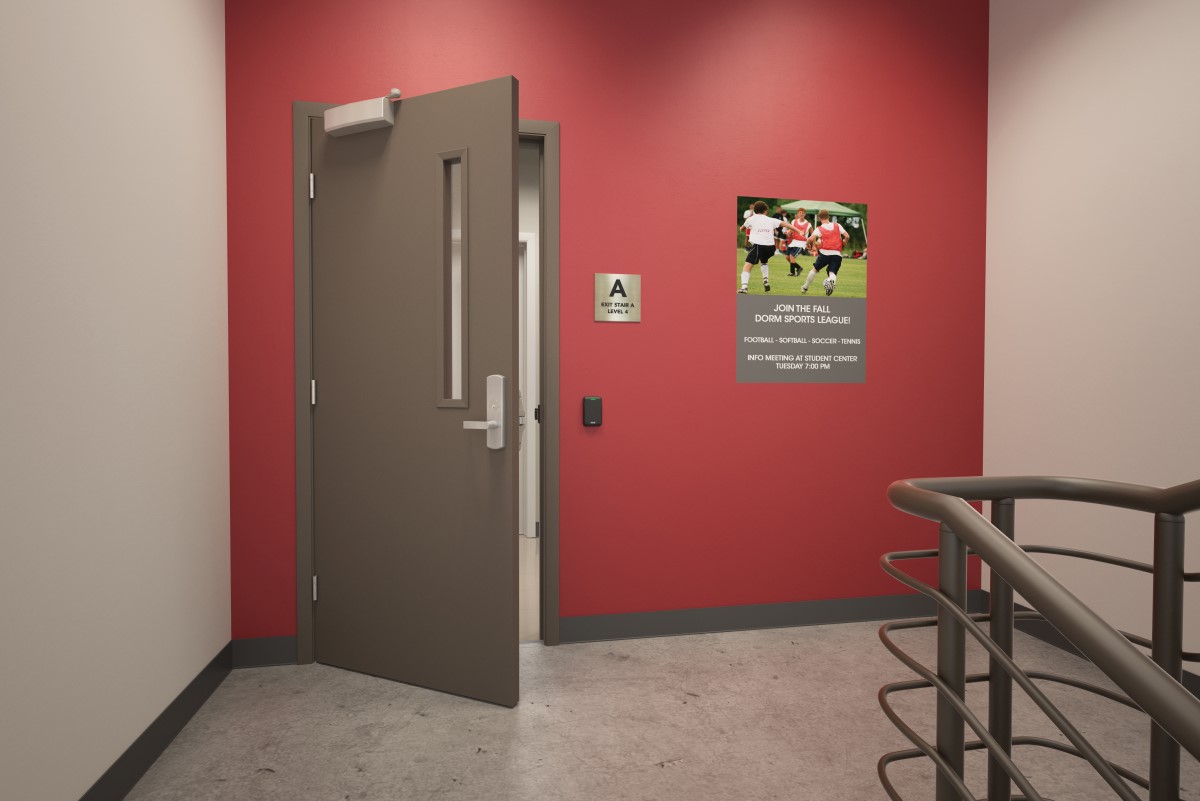
A change to the 2024 I-Codes requires stairway doors to unlock on the stair side (without unlatching) when any of the three specified conditions occur.
a signal from the fire command center or from a location inside the main entrance to the building,
- activation of a fire alarm signal when a fire alarm system is present in an area served by the stairway, and
- failure of the power supply to the electric lock or the locking system.
Note that if any of these three conditions occur, the doors must unlock (without unlatching) on the stair side. The fire alarm release is only required if the building has a fire alarm system; this section does not mandate a fire alarm or sprinkler system in the building. Stairway discharge doors are exempt from this requirement but must provide code-compliant egress. There are two additional exceptions in this section for buildings with single exit stairways.
Door Hardware Release – These doors have door hardware (ex. panic hardware, lever handle, sensor bar) that incorporates a switch to release an electrified lock; the lock typically used in these systems is an electromagnetic lock. When the door-mounted hardware is operated, the electric lock is released to permit egress. The door must also unlock for egress upon loss of power to the electrical locking system.
Section 1010.2.10 of the 2024 I-Codes does not require the building to be equipped with a fire protection system in order for this type of locking system to be installed. There is no specific action that is required to occur upon fire alarm activation for this application.
Sensor Release – Electromagnetic locks are also commonly used in sensor release systems, but the code requirements are much different from the requirements for door hardware release applications. Sensor release applications are covered in Section 1010.2.11 of the IBC and IFC, which require the electrified lock to be released for egress by a sensor detecting an approaching building occupant, loss of power to the electric lock, sensor, or the electrical locking system, and actuation of a manual unlocking device – typically a push button (refer to the adopted code for specifics).
In addition, activation of the building fire alarm system, where provided, must automatically unlock the electrified lock, and the lock must remain unlocked until the fire alarm system is reset. The same requirements apply to activation of the building automatic sprinkler system, where provided. Note that it is acceptable to install this type of system in a building that is not equipped with these systems.
Delayed Egress – In a delayed egress system, egress is delayed for a period of time – typically 15 seconds, or 30 seconds where approved by the Authority Having Jurisdiction (AHJ). In order for a building to have doors with delayed egress locks, the I-Codes require the building to be equipped throughout with an automatic sprinkler system or an approved automatic smoke and heat detection system in accordance with the code. If delayed egress locks are installed on secondary exits in courtrooms, the building must be equipped throughout with an automatic sprinkler system.
The 15-second delay must be deactivated for immediate egress upon activation of the automatic sprinkler system or automatic fire detection system, upon loss of power to the electrical locking system or electrified lock, and the system must have the capability of remote release from the fire command center and other approved locations. In addition to these automatic and remote release methods, actuating the hardware or moving the door slightly in an attempt to egress must begin the timing sequence; at the end of the prescribed time period the door may be used to exit. There are many additional requirements in Section 1010.2.12 of the 2024 I-Codes.
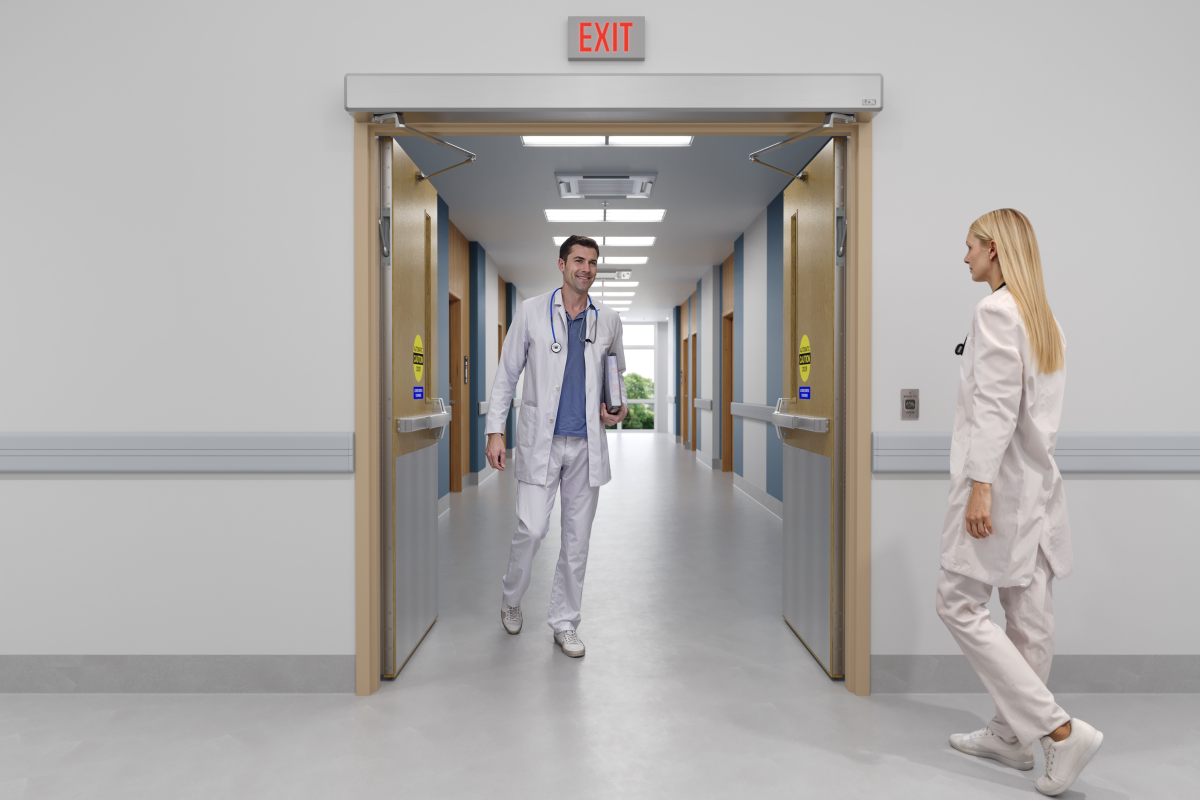
In health care facilities where patients require containment for their safety or security, controlled egress locks are permitted to lock doors in the direction of egress until evacuation is needed.
Controlled Egress in Health Care Facilities – This type of locking system is only permitted by the model codes in Group I-1 and I-2 units where patients require containment for their safety or security; this typically applies to memory care, maternity, pediatrics, and similar areas. Controlled egress doors are locked in the direction of egress under normal operation, and the building must be equipped with an automatic sprinkler system or approved automatic smoke detection system in order for this application to be used.
In addition, the model codes mandate several release methods (refer to Section 1010.2.13 of the 2024 I-Codes):
- Activation of the automatic sprinkler system or automatic smoke detection must unlock the doors to allow immediate egress.
- Loss of power to the electrified lock or the electrical locking system must unlock the doors for egress.
- A switch at the fire command center, nursing station, or other approved location must unlock the doors by directly breaking power to the electric lock.
- A building occupant must not be required to pass through more than one door equipped with a controlled egress lock before entering an exit.
- Unlocking procedures must be described and approved as part of the emergency planning and preparedness (see IFC Chapter 4).
- All clinical staff must have the capability to unlock the doors for egress, including any keys, codes, or other means necessary.
Note that the I-Codes include exceptions that allow Items 1-4 to be omitted from the system requirements for doors serving areas where patients require restraint or containment as a function of a psychiatric or cognitive treatment area. Items 1-4 may also be omitted in areas where a listed egress control system is used to reduce the risk of child abduction from nursery and obstetric areas of a Group I-2 hospital.
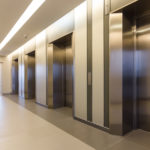
Elevator Lobby Exit Access Doors – A new section (1010.2.14) was added to the 2024 I-Codes, addressing doors serving elevator lobbies without direct access to an exit. In the past, the IBC and IFC required at least one door serving each elevator lobby to allow code-compliant egress, which in many cases allowed access to the tenant space. The new requirements allow these doors to be locked with fail safe electrified locks which prevent egress under normal conditions when security is desired. In order to use this application, the building must be equipped throughout with an automatic sprinkler system and a fire alarm system, and the secured elevator lobby must be provided with an automatic smoke detection system, in accordance with Chapter 9 of the code. When the fire alarm system is activated by means other than a manual fire alarm box, the elevator lobby doors must automatically unlock to allow egress from the lobby. The locks must remain unlocked until the fire alarm system is reset.
In addition to the fire alarm requirements, this section of the I-Codes addresses unlocking upon loss of power and upon activation of a remote switch, and the need for a two-way communication system in the lobby, emergency lighting, and UL listings. Refer to the 2024 I-Codes for additional information.
NFPA 101, Life Safety Code, includes similar requirements to those of the I-Codes, but some sections do vary. It’s always important to check the adopted codes in a project’s jurisdiction, as state and local modifications may apply. For additional assistance, consult with the AHJ.
You need to login or register to bookmark/favorite this content.



With the new Stairway Door requirements, how do you handle an office building with different tenants on each floor? I designed an office building where the various tenants did not want occupants from the other companies to be able to access their space. The stair doors were locked from the stair side to prevent access. But it sounds like the new changes require those doors to unlock now which would give someone access to any other floor to find another egress point. This would create a major security issue.
Hi Jim –
Yes, the other tenants will have access upon fire alarm activation, power failure, and a signal from the fire command center.
– Lori
Although these requirements are new to the I-Codes, they have been in NFPA’s codes for a long time. NFPA 101 requires the stairwell doors to unlock upon fire alarm activation unless the requirements for selected re-entry are met, which include keeping at least one door every five floors unlocked at all times. I found the same requirements in the 2000 and 2024 editions (though the applicability to existing buildings was slightly changed in response to the Çook County Administration Building fire). In the 1976 and 1981 editions of NFPA 101, I did not find any such requirement, although I did find handbook commentary under section 5-2.1.2.1 that recommends keeping one door every three floors unlocked at all times to balance security with the need for re-entry.
I wish more Fire inspectors read your articles. If I had a dollar for each time we were made to put a motion sensor, a push to exit button and a fail-safe electric lock, even when the mechanical handle will allow free egress at all times, “because the code says so”
Hopefully there will be a better overall understanding of the requirements based on the changes to the code.
– Lori
Some AHJ’s will offer acceptations allowing that at least 1 of each 2 floors open for access in a fire alarm.
We do a fair amount of courthouses that are in a high-rise situation with detention occupancies that allow floors to be excluded. I do not know if that is in our code, or a model code.
NFPA 101 section 22.2.11.1.10 exempts detention/correctional occupancies from the stairway re-entry requirements. I am not aware of any such exception in the I-Codes.
[…] distinction between standard access control and special locking arrangements is critical. Electrified hardware that controls access without restricting egress is not classified as a special locking arrangement and does not require a fire alarm connection […]