
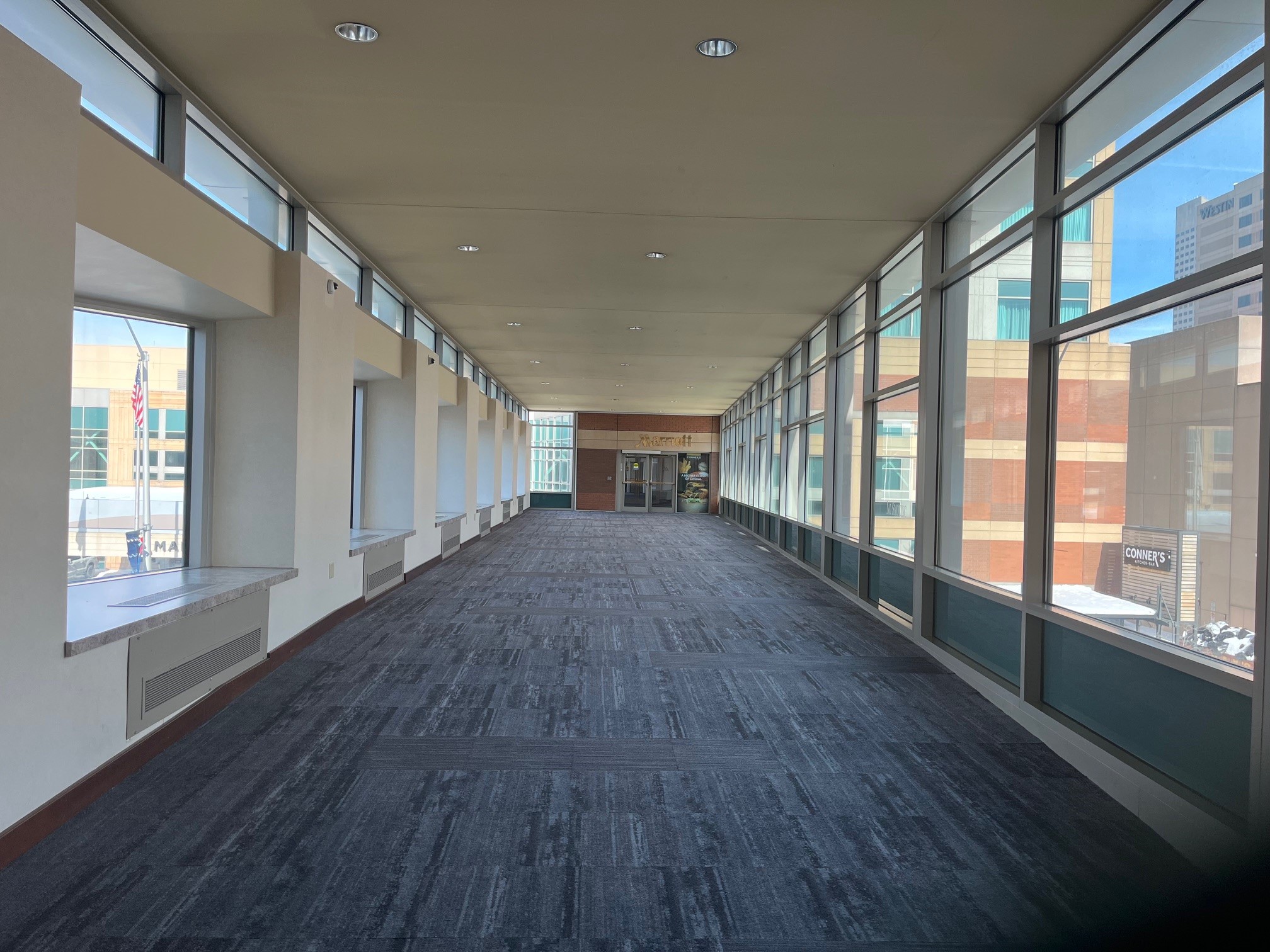
As I mentioned in last Friday’s post, I spent some time last week navigating the Indiana Convention Center and connecting bridges to avoid going outside and potentially becoming a frozen lump on the sidewalk. Enclosed bridges are always a tough application from a hardware standpoint, and the one in today’s Wordless Wednesday photos makes for a good discussion topic.
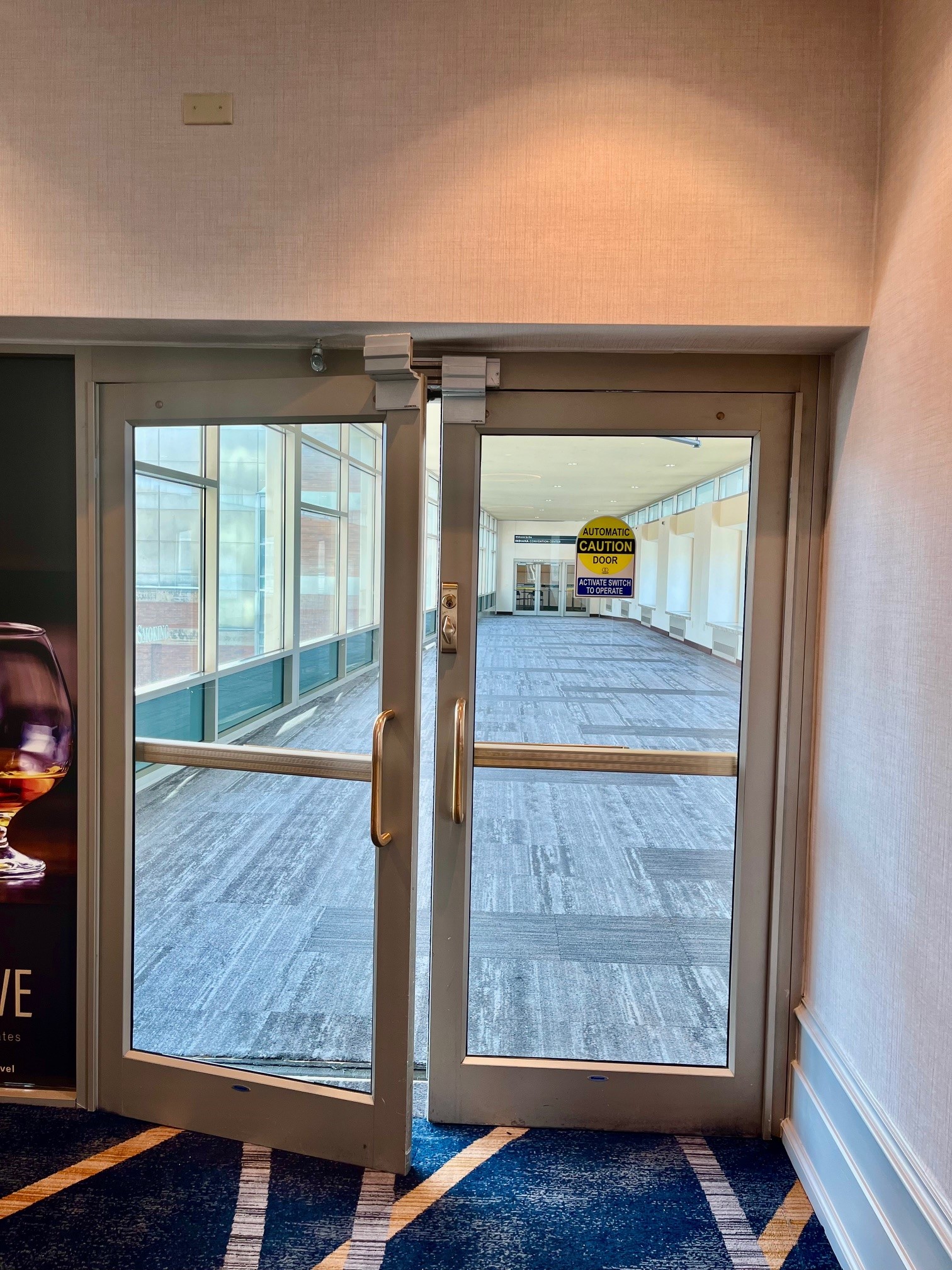
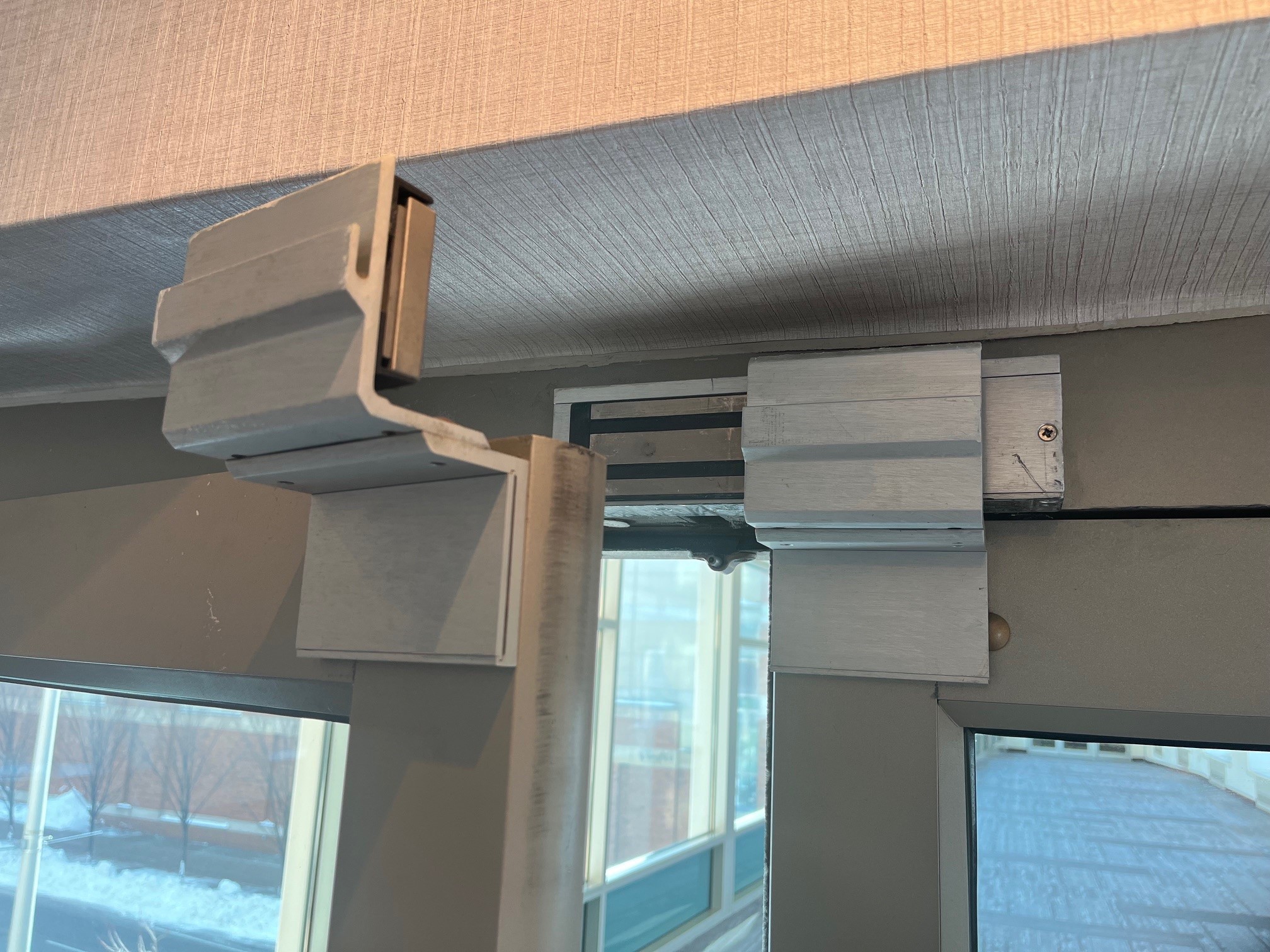
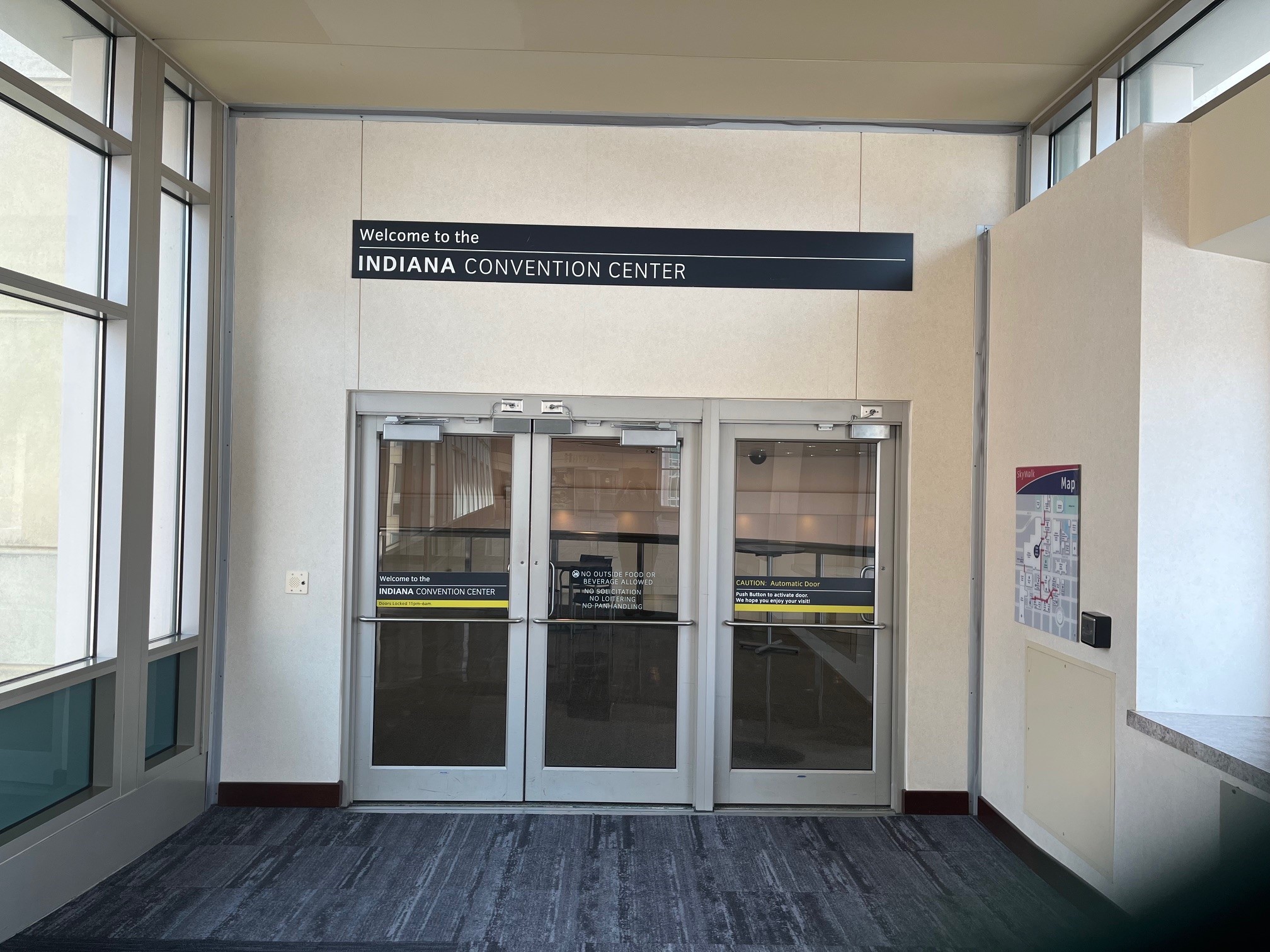
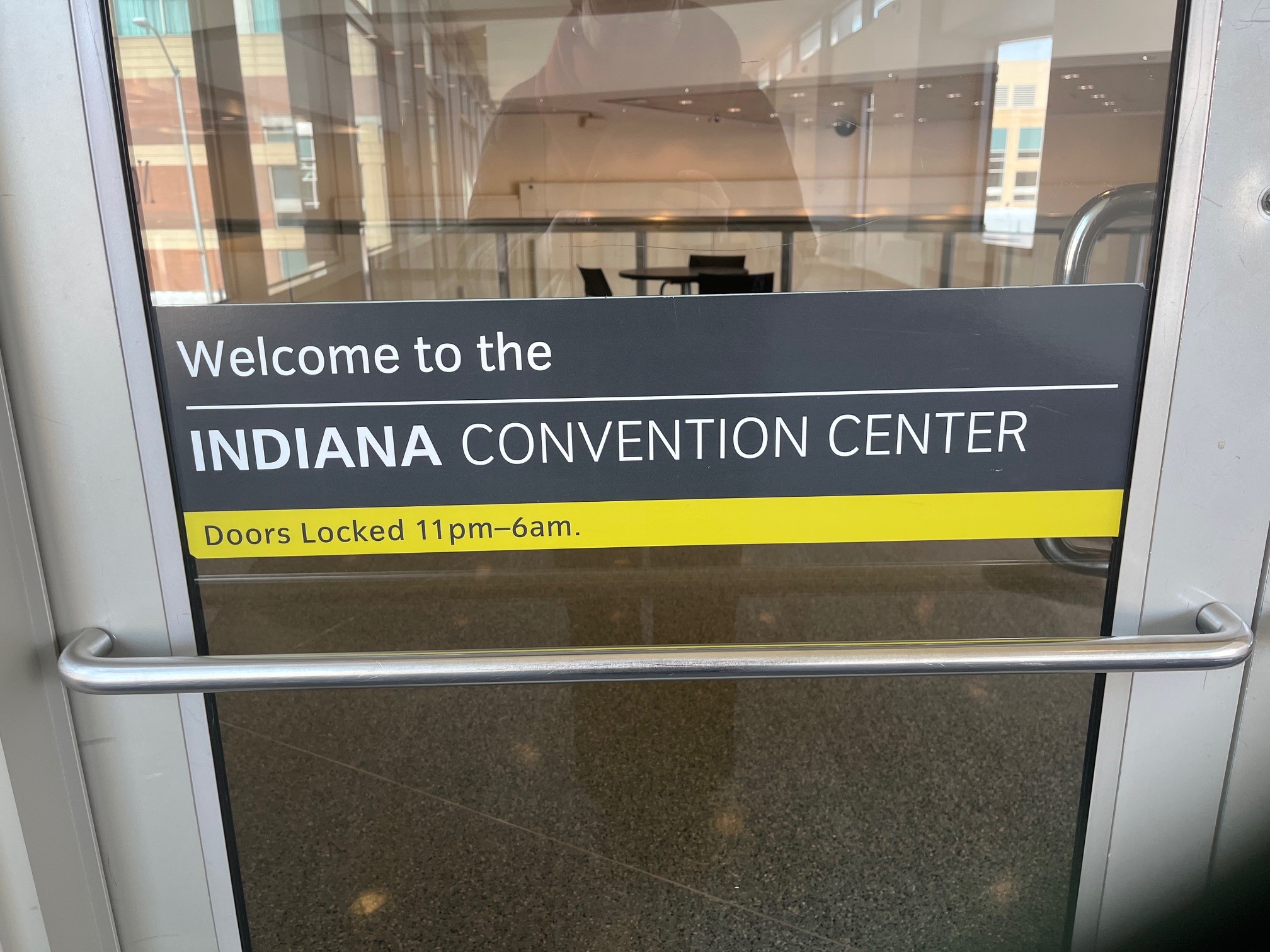
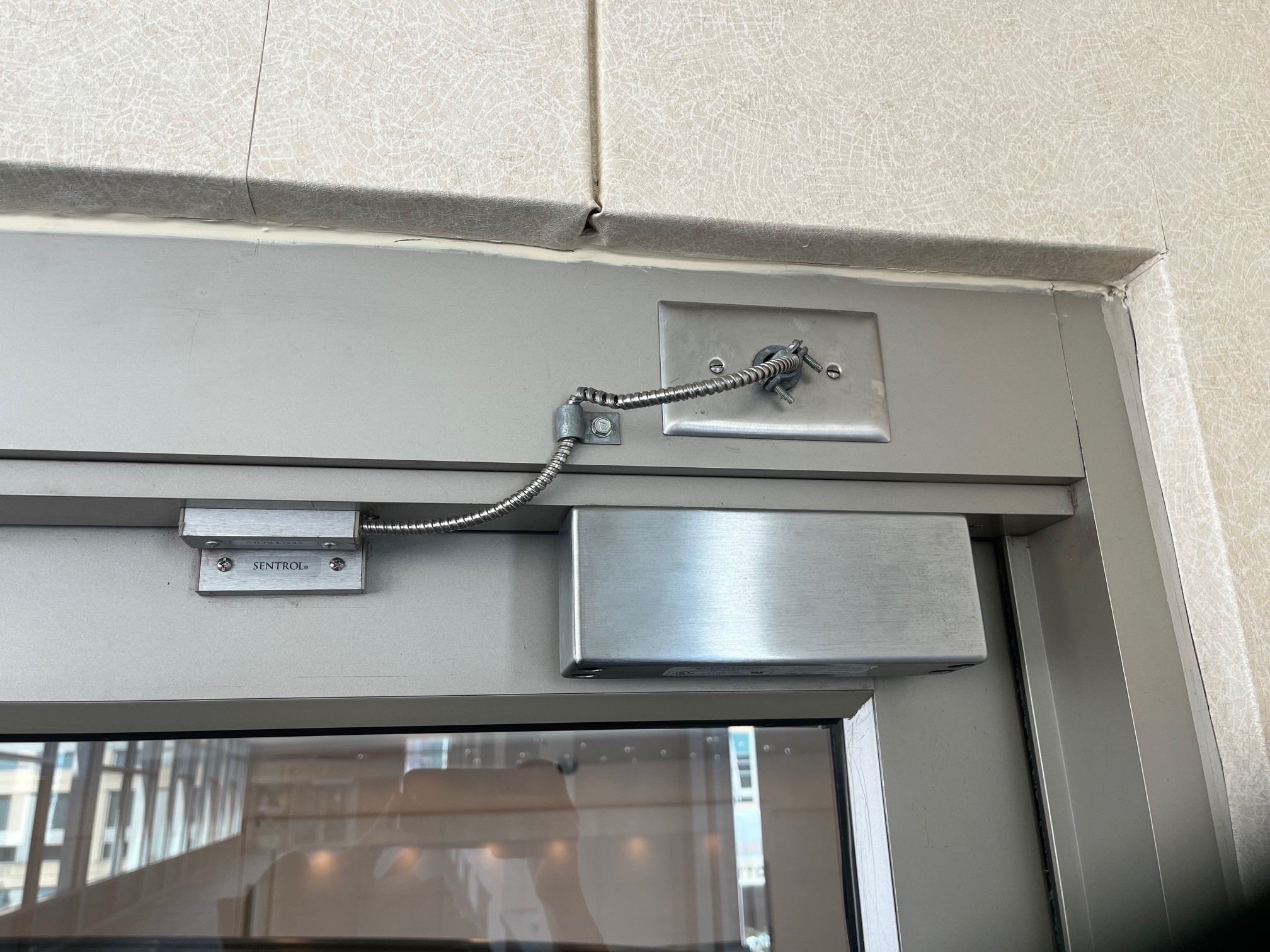
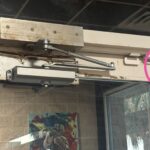
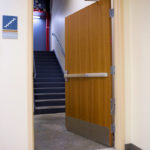
The door with the top-jamb-mounted mag-lock is at the hotel end of the bridge and the other is at the convention center end. Neither door is marked as an exit on either side, but both swing out of the bridge and at least one needs to provide a means of egress from the bridge. The convention center doors have signage stating that they are locked at night, and the presence of the mag-lock on the other doors means that they could be locked as well, with no visible means of release in sight. I wouldn’t be surprised if locking the doors was a scheduled event in the access control system.
If one set of doors was lockable and the other was always unlocked (not lockable), in my opinion this could still be a problem because it would create a dead end corridor. I’m not an expert on dead end corridors, so feel free to weigh in.
How would you have specified the hardware for these doors?
You need to login or register to bookmark/favorite this content.



Dead end my easy say
Only applies ,,, If you are required two means of egress from a spot. Than you run into a dead end, or door, or short run corridor, over 20/50 feet.
Would the pictures as shown, be more an entrapment issue,,, you can get in, but not out?
Is that kind of the issue here?
I saw that but I wonder what the occupant load of the bridge is – it’s huge and runs between two assembly occupancies in some cases.
– Lori
My somewhat understanding of ibc,,, I would say, if it is not part of an exit system,,,
Unless they have parties on the bridge, there is no occupant load assigned.
If part of an exit system, than an assigned capacity would be per the occupant load of the building floor exiting through it.
My thoughts right or wrong. Now that is a good ex inspector answer.
It looks like panic hardware is present on the hotel side. The maglocks might unlock upon activation of the panic hardware. That said, if I remember correctly, the codes require maglocks released by door hardware to have their power directly interrupted by the panic hardware, and Von Duprin’s RX switches aren’t listed for this purpose.
I also don’t see any sprinkler or fire alarm equipment in the bridge. I wonder what code was in effect when it was built.
If this is a ‘sky bridge’ and used entirely for circulation between two buildings, then it could be a ‘pedestrian walkway’ per 3104 of the IBC. I have not been to this convention center, but many are like it. If that is the case, there is no occupant load of the sky bridge itself, as it is purely circulation between buildings. In fact, the skybridge is not a ‘building’ by definition and does not contribute to the height and area of either building. My guess is, if you can’t get into the sky bridge, there is no requirement for egress out. But in practice, might be wise to have 2-way communication in there like in the enclosed courtyard section in my option.
Thanks!
– Lori
It does not appear to in the Path of Egress.
So, it would be like any other room, except for the potential occupant load of the bridge.
I believe that is the major question:
100 people trapped when attempted to exit could make this a deadly dead end. Hello Triangle Shirtwaist factory fire.
I’ve had this very problem and the approach was simple: people in the bridge must always be able to push out into either building, but entry into the bridge from each building can be card-controlled. I would also reduce the number of doors involved (e.g. a single pair). What would be problematic is that this pathway is a required means of egress from either building.
To avoid the “who’s in charge” problem, set it up so each side can place the other side’s entry in a scheduled “closed” mode. Add backlit “HOTEL ACCESS CLOSED” and “CONVENTION CENTER ACCESS CLOSED” signs at the doors and at the main approach points so people know before they get there.
Jim, you nailed how we do it on our campus.
The doors on our pedways all crash outward from the pedway (so as not to have entrapment issues) And the “far end” of each pedway are the card access (or scheduled, or unlocked by housekeeping) doors belonging to that building.
This appears to be a Pedestrian Walkway (PW). Unless the PW is part of the required Means of Egress, Dead End requirements would not apply.to it. While PW have requirements for Exit Access Travel Distance, Dead Ends are not identified in IBC-2024 3104 Pedestrian Walkways and Tunnels.
I can’t see the hotel side but there must be a motion sensor somewhere on the bridge side and there has to be someone making sure the bridge is clear before lockdown so that no one ends up trapped anywhere. There should have been an emergency swing clear window installed on the bridge in case someone managed to get stuck and a security push button.
If neither side utilizes the bridge as a required MOE, then it would seem best to lock both sides at the same times, thus no access, no dead-end. If I understand you correctly, as of now one could enter and cross the bridge only to find they must return the way they came. This should never be the case where the corridor could be mistaken as egress. If one was fleeing an emergency and saw that bridge it wouldn’t be illogical to think cross a street to another building was as a safe bet.