
I’ve been talking about this month’s Decoded question for a while now…maybe seeing it in print will help get some traction. What do you think about this issue?
This post will be published in Door Security + Safety
.

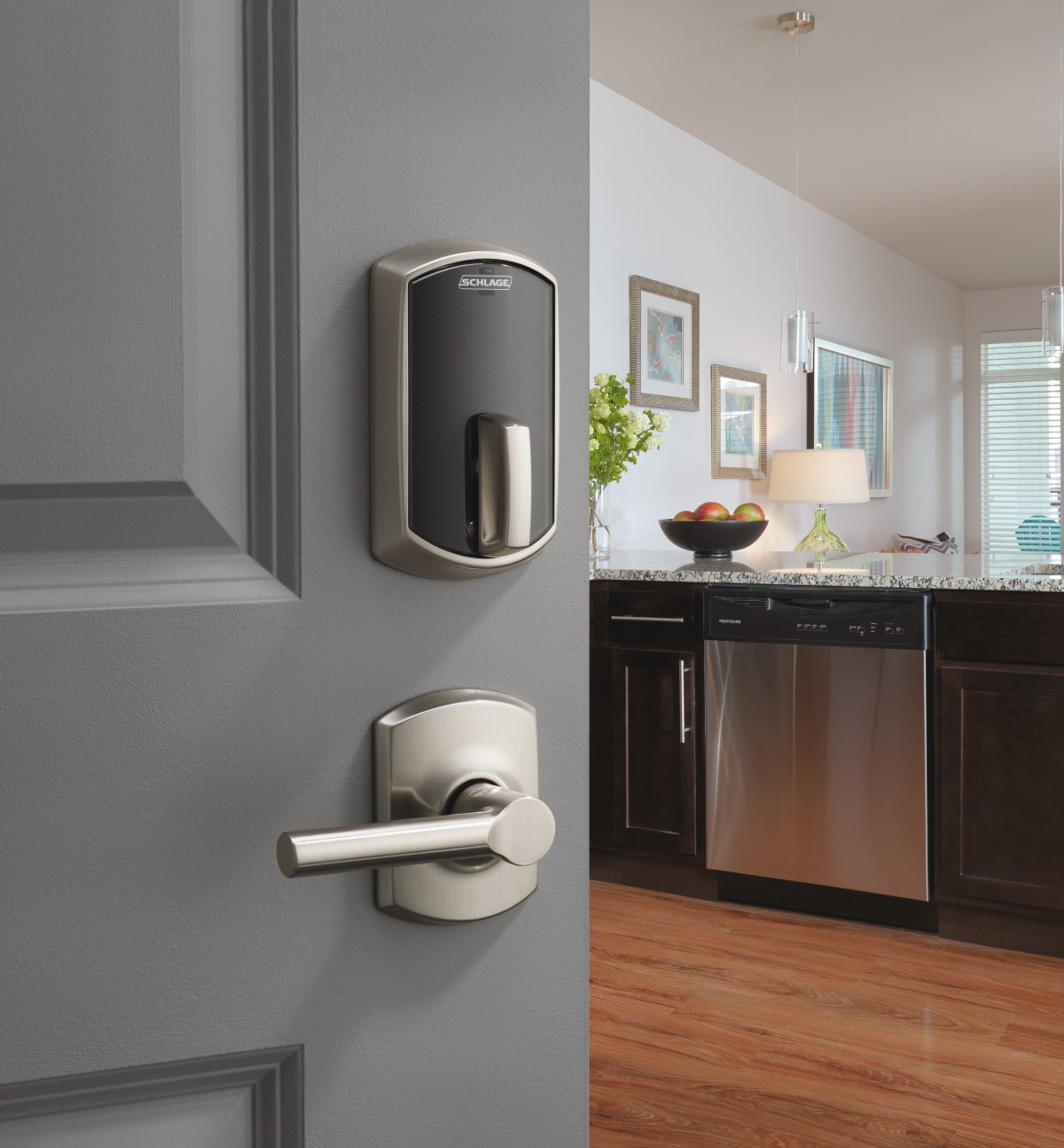
The model codes and accessibility standards require operable parts of door hardware to be within the allowable range of 34 inches to 48 inches above the floor.
This month’s Decoded question illustrates a problem that I’ve been hearing about in the field for a few years now:
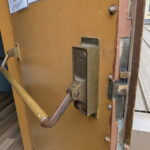
On a recent multifamily residential project, the accessibility inspector rejected the dead bolts because of the mounting height. How can I avoid this problem in the future?
Prior to the adoption of the ADA Standards for Accessible Design and ICC A117.1, Accessible and Usable Buildings and Facilities, the standard mounting height for deadbolts was 60 inches measured from the bottom of the strike jamb on the frame to the centerline of the strike. This industry standard was changed decades ago because of the accessibility standards.
The ADA Standards currently state:
404.2.7 Door and Gate Hardware. Handles, pulls, latches, locks, and other operable parts on doors and gates shall comply with 309.4. Operable parts of such hardware shall be 34 inches (865 mm) minimum and 48 inches (1220 mm) maximum above the finish floor or ground. Where sliding doors are in the fully open position, operating hardware shall be exposed and usable from both sides.
The standards include exceptions for some types of existing doors and also for doors and gates serving swimming pools. The model codes such as the International Building Code (IBC), International Fire Code (IFC), and NFPA 101, Life Safety Code, contain the same mounting height limitations as the accessibility standards; releasing hardware used to unlatch the door must be mounted between 34 inches and 48 inches above the floor. Some state codes further limit the acceptable mounting height range.
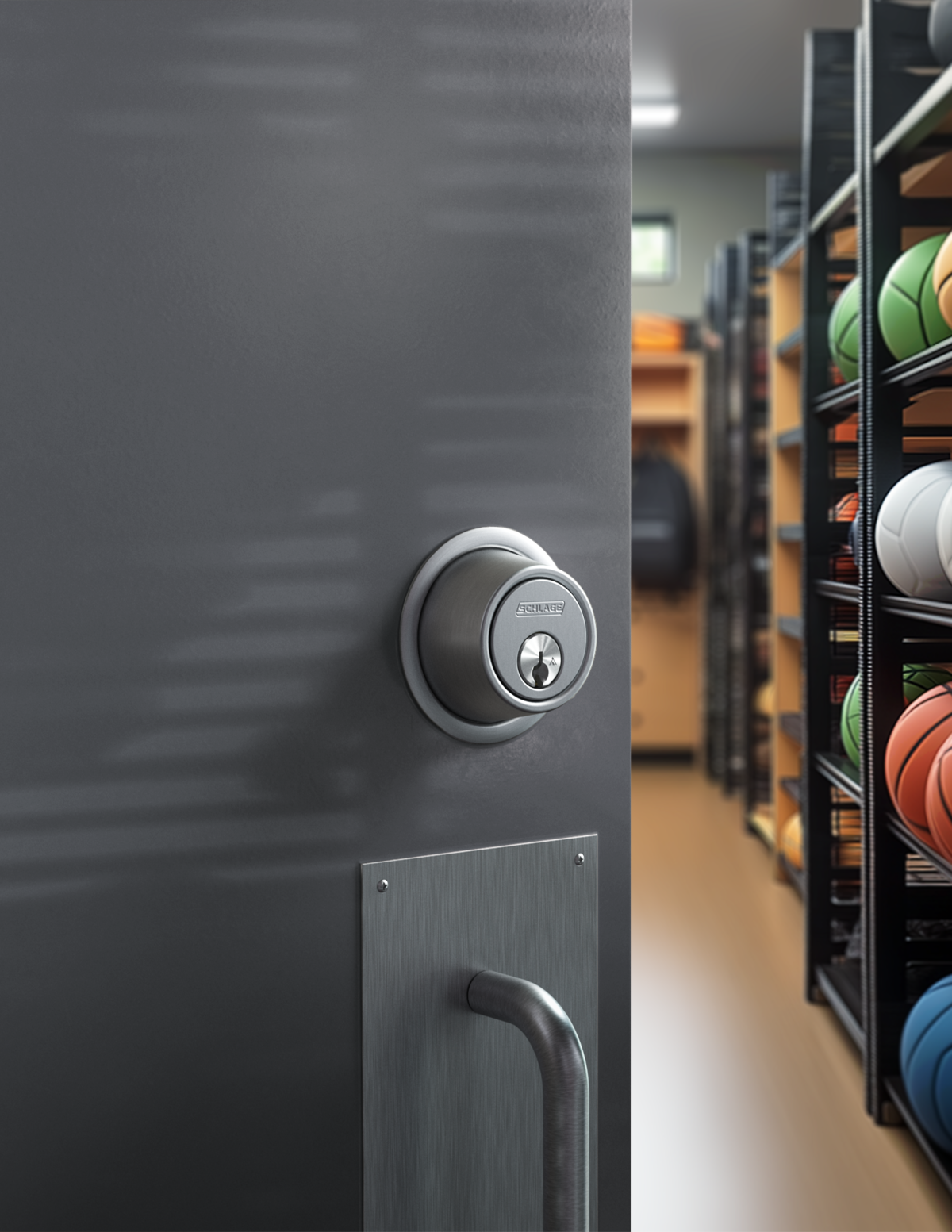
Mounting a deadbolt at the industry standard mounting height of 48 inches above the floor may result in operable parts outside of the allowable range.
The current industry standard location for dead bolts is 48 inches measured from the bottom of the frame to the centerline of the dead bolt strike. The problem with this location is that depending on the dead bolt, it’s very likely that some or all of the operable parts of the lock will fall above the limit of 48 inches maximum above the floor or ground.
Operable parts are defined by the ADA Standards as: A component of an element used to insert or withdraw objects, or to activate, deactivate, or adjust the element. An element is defined as: An architectural or mechanical component of a building, facility, space, or site. When it comes to releasing hardware, doorways would be considered elements, and the lever handles, touchpads, thumbturns, keypads, and other components used to operate the hardware are operable parts.
The ADA does include some exceptions where operable parts do not have to comply with the requirements of the standard, but they would not apply to the example used in this article’s Decoded question. Some examples include operable parts for use only by service or maintenance personnel, various exceptions related to electrical or communication receptacles and HVAC diffusers, cleats and other boat securement devices, and exercise equipment.
Considering that the mounting height limitations of the model codes and standards apply to most dead bolts, and the operable parts of those dead bolts may be above the the centerline of the lock/strike, the issue is clear. This is especially common when a deadbolt has a keypad or reader, as those components are typically in the top portion of the lock. In checking dead bolt templates and standard locations for various manufacturers, it seems like the 48-inch mounting height to the lock centerline is still the most common location.
Note that mounting height problems may also occur with hospital latches, which are often mounted higher than a standard lever handle for the convenience of the users. Depending on whether the paddles are mounted facing up, down, or sideways, they may or may not fall within the required range of 34 inches to 48 inches above the floor.
Until the standard locations are adjusted, it is up to the specification writers, hardware distributors, locksmiths, and other industry professionals to verify that all hardware is mounted at a compliant height, ensuring that the operable parts fall within the allowable range. With that said, lowering the deadbolt could create conflicts with other lock preps, so care must be taken to avoid warranty and listing issues.
Have you run into this problem in the field? How was it resolved?
You need to login or register to bookmark/favorite this content.





This has been a question for a while and I’ve never gotten around to ask it until now. Would dead bolts comply with IBC 1010.2.3, Exception #1: (Locks used only for security purposes and not used for normal operation are permitted at any height.)?
Hi Eric –
In my opinion, this exception in the IBC would not cover all deadbolts. For example, a deadbolt on a dwelling unit entrance door or a deadbolt on a single toilet would be intended to be used by building occupants so they would need to be within the allowable range. The IBC Commentary says:
The requirements in this section place the operating devices of the door hardware at a level that is usable by most people, including a person using a wheelchair. In other words, the part of the door hardware that is pushed, pulled, turned, or moved—the operable parts—are required to be located between 34 inches and 48 inches above the finished floor.
Exception 1 permits locks used only for security to be placed at any height. An example would be an unframed glass front door of a tenant space in a mall that has the lock near the floor level. The lock is only used when the store is not open for business. Such locks are not required for the normal operation of the door. Also note in this example, if this door is on an accessible route, the bottom 10 inches of the push side of a manually operated door must have a smooth surface (See ANSI A117.1 referenced by Chapter 11).
The accessibility standards handle this a little differently, I wrote about it here: https://idighardware.com/2019/05/locks-used-only-for-security-purposes/. I’ve put this on my wish list to try to clarify in the IBC, I mean…what is a lock used only for security purposes? Aren’t all locks used for security purposes? I’m definitely seeing AHJ enforcement of the mounting height for operable parts on deadbolts, so I know that not all of them are applying the exception to all deadbolts (nor should they).
– Lori
Was recently contacted by an out of state contractor for some help with a Fire Marshall final inspection on this very topic. The GC’s supplier’s understanding; hardware mounting heights in Means of Egress CBC 1010.2.3 as 34″min to 48″max.
Not so fast GC. Your mail order CHD in Kansas City is uninformed.
In the CBC Accessibility section 11B-404.2.7 it states 34″ min to 44″ max.
The Div of State Arch 1.9 says the more accessible standard shall apply. So, Max height is 44″ in California.
I can see why this is confusing because the CBC 2025 that shows 2 different heights. Hopefully will be caught and changed before the next edition.
Thanks Glenn! I appreciate your insight with the CBC…there are some big differences when it comes to door openings!
– Lori