
My next Decoded article looks at the delayed egress requirements of both sets of model codes – there are some important variations to be aware of.
This post will be published in Door Security + Safety
.

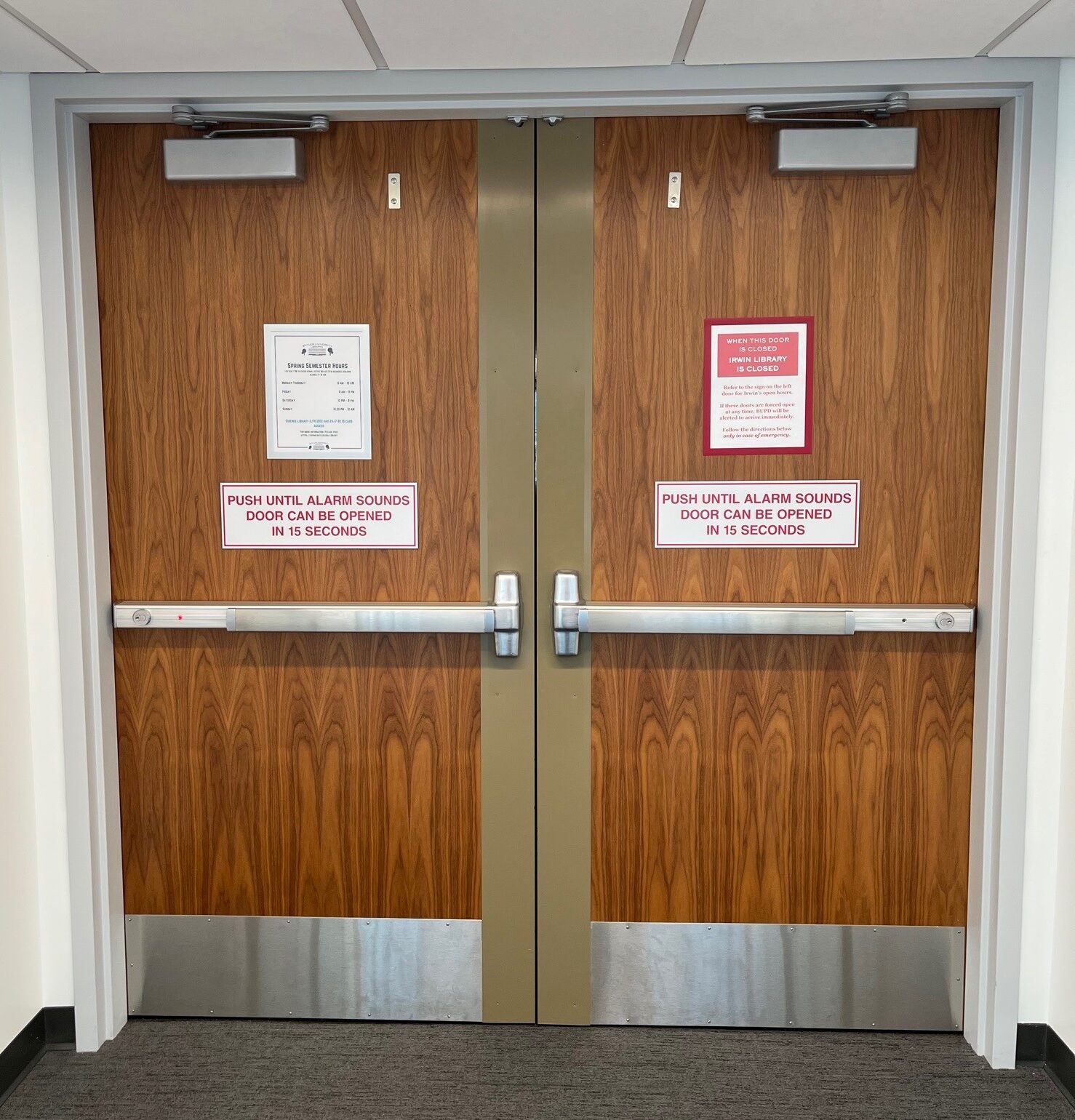
One of the many code requirements for doors with delayed egress locks is the mandated signage to instruct building occupants how to use the doors.
When considering building security and deterring the unauthorized use of doors, we must balance security and life safety for the required means of egress and any doors provided for egress purposes. Model building codes generally require that egress doors permit occupants to exit with a single releasing motion, without a key, tool, or special knowledge or effort. Yet the code requirements for some specific hardware applications, such as delayed egress locks, provide exceptions to ordinary egress requirements.
During unauthorized attempts to exit, delayed egress locks permit an exit delay of 15 seconds, and up to 30 seconds with approval from the Authority Having Jurisdiction (AHJ). Crucially, these locks must allow immediate egress during emergencies, such as during a fire alarm activation. Typical settings for delayed egress locking systems include retail stores, business occupancies requiring extra security, and high-security environments like airports; however, for airport terminals (classified as assembly occupancies), AHJ approval is typically needed.
A delayed egress system may consist of panic hardware or fire exit hardware with a delayed egress function, electromagnetic locks with integrated delayed egress capability, or other electrified locks paired with delayed egress controllers. Regardless of the configuration, model codes provide stringent requirements and operational limits to prioritize occupant safety.
As always, it’s crucial to refer to the adopted code when specifying or supplying an electrified hardware system, as the model codes may vary from one edition to the next, and local codes may include state-specific modifications. This article will compare the mandates of the I-Codes – the International Building Code (IBC) and International Fire Code (IFC), with those of the NFPA codes such as NFPA 1 – Fire Code, NFPA 5000 – Building Construction and Safety Code, and NFPA 101 – Life Safety Code.
Use Groups and Occupancy Classifications
I-Codes: Delayed egress locks have long been allowed in most use groups, but were restricted in Group A (assembly), E (educational), and H (high hazard) occupancies. Beginning with the 2018 editions of the I-Codes, delayed egress locks may be used in two specific assembly and educational occupancies. On secondary exits for courtrooms (typically assembly occupancies), delayed egress locks are now permitted if the building has a sprinkler system. The 2018 edition and subsequent editions also permit delayed egress locks on classroom doors in educational occupancies if the door is serving a calculated occupant load of less than 50 people. This gives schools new options to deter elopement and protect students with special needs or young children.
NFPA: These codes typically permit delayed egress locks in spaces with low or ordinary hazard contents, while prohibiting them on the main entrances/exits of assembly occupancies and jetway doors for airports. Residential limitations include just one delayed egress device per escape route in lodging or rooming houses and a restriction to exterior doors in residential board and care facilities.
Required Fire Protection Systems
I-Codes & NFPA: Both the I-Codes and the NFPA codes require buildings with delayed egress hardware to be equipped throughout with an automatic sprinkler system or approved automatic smoke or heat detection system. Either type of system is permitted, although the courtrooms addressed by the 2018 change are specifically required to have a sprinkler system. This requirement also applies to some institutional occupancies where two delayed egress doors are part of one egress route.
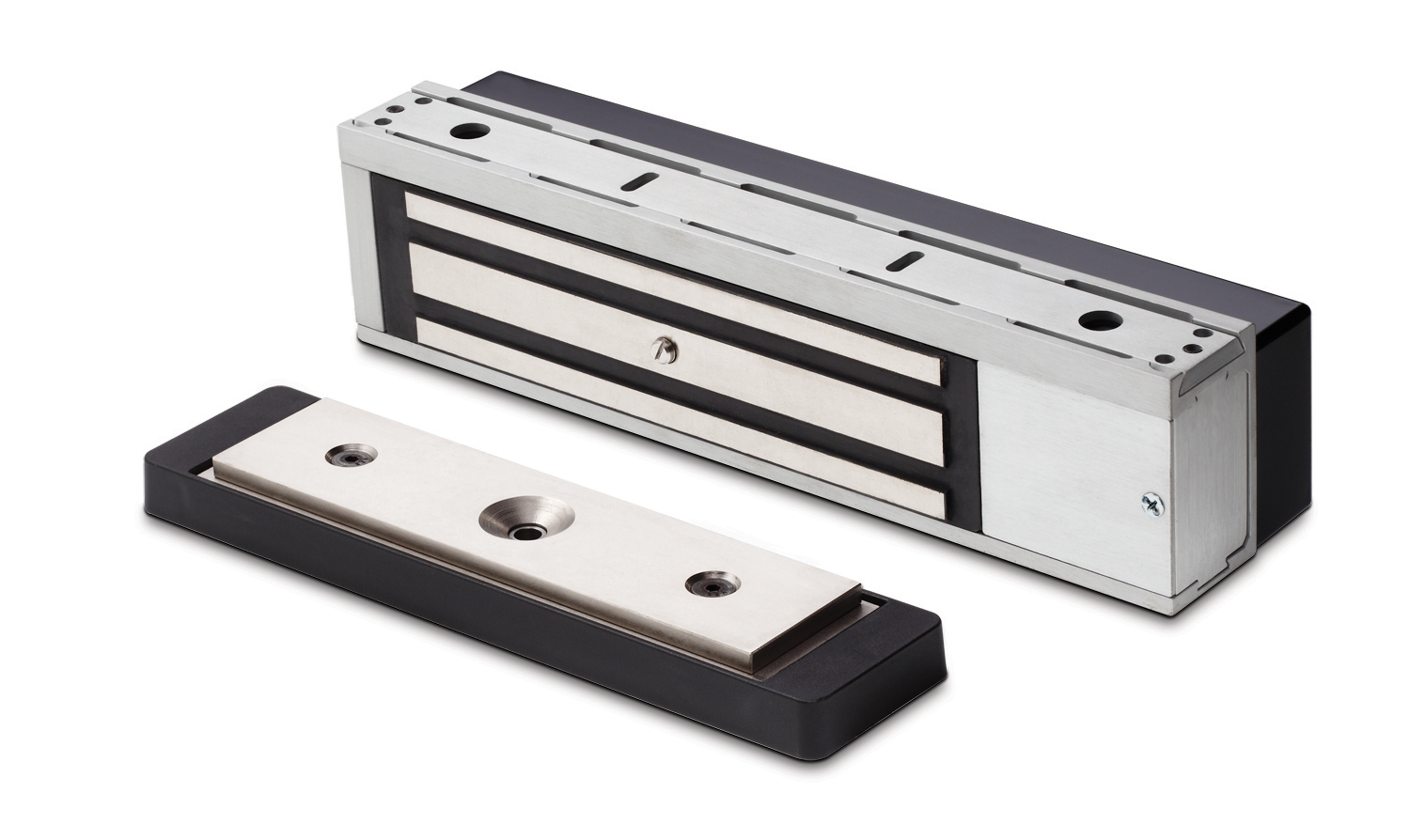
The delay timer may be initiated by a force applied to the delayed egress lock (ex. panic hardware), or by movement of the door which is one way that a delayed egress electromagnetic lock may be activated.
Activation and Release Timing
I-Codes & NFPA: Under current codes, delayed egress locks must start their timed delay when a force of 15 pounds, maximum, is applied for up to 3 seconds. The activation time to initiate the 15- or 30-second delay may be less than 3 seconds, but it may not exceed 3 seconds. Prior to the 2015 edition of the IBC, the timer was required to begin after a 1-second attempt to exit.
Automatic Release Delay
I-Codes & NFPA: When the timer is activated by applying force during an attempt to exit, the model codes require the delayed egress lock to release and allow egress after 15 seconds; the AHJ may approve a time delay of 30 seconds. After the approved time period expires, the door will be unlocked in the direction of egress, and another attempt to exit will allow the door to be opened immediately.
Rearming After Activation
I-Codes & NFPA: When a delayed egress lock timer is activated and the lock allows egress after 15 (or 30) seconds, the model codes state that the lock must be manually rearmed. Prior to the year 2000, some codes permitted the locks to re-lock automatically after the opening and closing sequence of the door, but current codes do not allow this. Manually rearming the lock allows security personnel to investigate what triggered the lock activation and to verify that it is safe to rearm the lock delay.
Audible Alarm
I-Codes & NFPA: Both the I-Codes and the NFPA codes require an audible alarm to sound locally upon activation of the delayed egress lock, but the codes are not prescriptive about the type of alarm that is required. Some products incorporate a continuous alarm while others have an intermittent sound or even a verbal countdown.
Instructional Signage
I-Codes: With the exception of certain types of treatment areas in Group I institutional occupancies (where permitted by the AHJ), doors with delayed egress locks must have signage stating: “PUSH [PULL] UNTIL ALARM SOUNDS. DOOR CAN BE OPENED IN 15 [30] SECONDS.” The signs must be mounted above and within 12 inches of the door exit hardware and current editions of the I-Codes require signage to comply with the visual character requirements of ICC A117.1 – Accessible and Usable Buildings and Facilities.
NFPA: The same language is required for the instructional signage: “PUSH [PULL] UNTIL ALARM SOUNDS. DOOR CAN BE OPENED IN 15 [30] SECONDS.” Signage must be located on the egress side of the door, adjacent to the release device, and must be readily visible, durable, with letters not less than 1-inch high and 1/8-inch stroke with a contrasting background.
Fire Alarm and Sprinkler System Activation
I-Codes: Delayed egress locks must automatically allow immediate egress when the fire alarm or sprinkler system is activated. This ensures that building occupants can exit quickly during a fire.
NFPA: The NFPA codes are more specific regarding the types of system activation that must unlock the delayed egress locks for egress. These doors must unlock with no delay in the direction of egress upon activation of sprinkler system, or not more than one heat detector, or not more than two smoke detectors.
Power Failure Provisions
I-Codes & NFPA: Delayed egress systems must unlock upon power loss, as stipulated by both the I-Codes and NFPA. Whether battery backup is compliant is not directly addressed; AHJs may be asked to interpret whether this is permitted. Industry best practice—particularly referencing NFPA 72—advises against independent battery backup solely for locking devices. Ideally, delayed egress locks and fire alarm systems share a common standby power source to ensure reliable coordination and release of the delayed egress lock upon fire alarm/sprinkler system activation.
Remote Release Capabilities
I-Codes: The I-Codes require delayed egress locks to be capable of being deactivated by a switch at the fire command center and/or other approved location(s), to allow immediate egress in an emergency.
NFPA: In the section of the Life Safety Code that addresses delayed egress locks, remote release is not mandated.
Emergency Lighting
I-Codes & NFPA: Emergency lighting on the egress side of a delayed egress-equipped door is mandatory in both sets of model codes. Verifying proper emergency illumination is critical prior to installation.
Quantity of Delayed Egress Locks Per Egress Path
I-Codes: Recent IBC/IFC editions allow only one delayed egress lock along any given egress path in most use groups. In Group I – institutional occupancies (ex. hospitals, nursing homes, day care facilities) two doors with delayed egress locks are now permitted per egress path, with a maximum combined delay of 30 seconds. In Group I-1, Condition 1 and Group I-4, the exception permitting two doors with delayed egress locks mandates that the building is equipped throughout with a sprinkler system.
NFPA: In contrast, for most occupancy classifications, the NFPA codes do not restrict the number of delayed egress locks per egress path. Only in lodging or rooming houses does the Life Safety Code limit delayed egress locks to one device per escape path.
Listing and Labeling Requirements
I-Codes & NFPA: Both sets of model codes require delayed egress locking systems to be listed to UL 294 – Standard for Access Control System Units. Beginning with the 2024 editions of the codes, these systems may be listed to UL 1034 – Standard for Safety for Burglary-Resistant Electric Locking Mechanisms as an alternative to UL 294. Other listings may also be required. For example, if a delayed egress lock will be installed on a fire door assembly, the assembly must also be listed to UL 10C – Positive Pressure Fire Tests of Door Assemblies or NFPA 252 – Standard Methods of Fire Tests of Door Assemblies (using the positive pressure test method). In addition to the other listings, panic hardware with the delayed egress feature must be listed to UL 305 – Standard for Panic Hardware (both I-Codes & NFPA) and in some cases BHMA A156.3 – Exit Devices (NFPA only).
Conclusion
Delayed egress locks allow for enhanced security while maintaining code-compliant egress under controlled conditions. However, requirements can vary significantly from one code to the next. Always review the most current, locally adopted codes and coordinate with the AHJ for clarification. State or local amendments may impose additional restrictions or allow specific alternatives.
You need to login or register to bookmark/favorite this content.



Can you install delayed egress hardware on a fire door serving an exit stair? NFPA 101 section 7.2.1.6.1.1 requires that “once the electrical lock has been released by the application of force for the releasing device, rearming the delay electronics shall be by manual means only.” Does that mean that once the device is released, the fire door is defeated because it won’t self-latch anymore since it would need to be manually re-armed in order to self-latch again?
Hi Will –
If the use group/occupancy classification is one where delayed egress locks are permitted, there is no prohibition on installing a delayed egress lock on a fire door serving an exit stair. The hardware would have to be listed to UL 10C because it’s going on a fire door. If a delayed egress mag-lock is used, the door would need to also have latching hardware like a lockset/latchset or fire exit hardware, depending on the occupancy type and load. There is fire exit hardware with the delayed egress function built in (ex. Von Duprin Chexit) which is code-compliant for doors that require fire exit hardware. When the device is disarmed by fire alarm activation, power failure, or after the 15-second timer, the Chexit remains latched like any other fire exit hardware. You just have to push on the touchpad to release the latch – no special knowledge or effort required. It will continue to re-latch whenever the door closes. Rearming the device (manually) will re-set the 15-second timer but does not affect latching in the way you’re asking about.
Let me know if this isn’t clear, and thanks for asking!
– Lori
Hello Lori,
Interesting topic. I have a question.
My understanding is that, before some of the more recent code changes, delayed egress locks were often permitted because they would release upon activation of a smoke detector, heat detector, or other approved fire detection device.
With that in mind, can a building be fully sprinklered without having any smoke detectors, heat detectors, or other automatic detection devices connected to the fire alarm system?
If so, I’m trying to understand the logic from a life-safety perspective. Wouldn’t a smoke or heat detector typically release the delayed egress lock earlier than a sprinkler system? In a sprinkler-only building, would the lock remain delayed until a sprinkler head activates or someone pulls a manual station?
Just trying to learn and better understand the code intent.
Thanks for any insight you can provide!
Hi Dave –
I’m not an expert on fire alarm systems (only doors! :)) but from your description I guess it’s possible that it could take longer for a sprinkler to release the delayed egress lock. Maybe by then the 15-second timer would already have elapsed and allowed egress. I think it would be unusual to have only a sprinkler system in a building but I’m not sure. From a door standpoint, the important thing is that whatever emergency system is activated, there is immediate egress.
– Lori
Manual fire alarm pull stations are not required to release the lock, since that would allow a shoplifter or eloper to trivially bypass the delay.
In many occupancies, a building can indeed be fully sprinklered but not provided with any general detection besides waterflow detection (though automatic smoke detection may be required in a few specific areas such as elevator lobbies and above the FACP). IBC 903.4.3 does require the fire alarm system to be initiated by waterflow detection when sprinklers are provided, so that when a sprinkler head opens, water begins flowing through the pipe and the fire alarm system activates in response to the flowing water. This means a sprinkler head provides similar automatic initiation to a heat detector in addition to controlling the fire.
Although smoke detectors would respond sooner than sprinklers, unlocking upon sprinkler activation is still beneficial as when the fire alarm system activates in response to the sprinklers, a greater number of people can be expected to be leaving the building, so the demand for the door may increase. However, one caveat is that even if smoke detection is provided, delayed egress doors do not appear to be required to unlock in response to smoke detection if they unlock in response to sprinkler activation. The codes could benefit from requiring delayed egress doors to unlock in response to fire alarm activations other than pull stations when a fire alarm system is provided, similar to NFPA 101’s current language for sensor-release locks.
Another important point is that people unfamiliar with a building often try to leave by the way they entered, which is typically not locked with a delayed egress lock. In this case, the queueing at delayed egress doors might not actually be significant unless the fire grows large enough to block the main entrances, and sprinklers will hopefully activate at that point. Health care facilities might have all of their exits locked by delayed (or controlled) egress, but staff will likely have the means to bypass the delay on doors with delayed egress locks in an emergency.
I found the option for releasing delayed egress locks upon sprinkler activation in the 2000 IBC, and it also appears to be present in the 1981 edition of NFPA 101, which is when delayed egress was first introduced to NFPA 101.
Delayed egress doesn’t sit well with me. There are many more emergencies where immediate egress is required but a fire alarm has not been triggered or power has been disabled. I’d also consider being able to read and understand the language on the sign to be a form of required knowledge. Standing at a door, in a foreign land in an emergency and pressing on the exit device over and over and it not releasing because it wasn’t a solid 15 second hold is a terrifying thought. Similarly, you don’t want to trap potentially violent criminals in a building with other people. Generally, I think egress should be as simple as possible for everyone and no building should trap you inside. Get a camera and leave the other matters to insurance and police
Thanks Matt – Just one point…you don’t have to hold the device for 15 seconds in order for it to release. The model codes limit the “hold time” to 3 seconds max to put the hardware into alarm and start the timer. The delayed egress requirements have been in NFPA 101 since the 1981 edition. There was some talk about whether the requirements should be changed after a shooting occurred in a retail store that had delayed egress hardware on the secondary exits. A release button could easily be added to the system for non-fire-alarm emergencies, but so far it is not required by code. With that said, the codes are a minimum.
– Lori