
This Decoded article will be published in Door Security + Safety
.

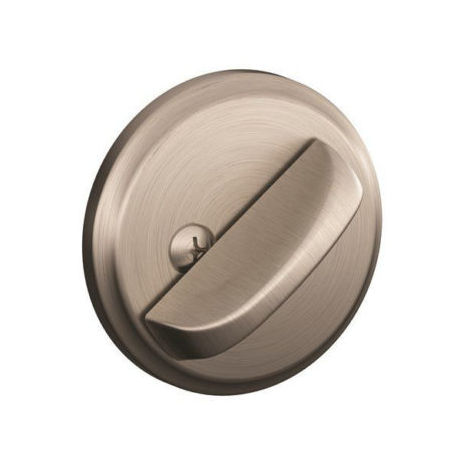
There are very limited locations where a classroom door is permitted by code to have a separate deadbolt along with other latching hardware.
In this month’s Decoded article for the School Security and Safety issue of Door Security + Safety, I’ve answered a question that comes up often with regard to classroom security:
Is it acceptable by code to install a separate dead bolt along with a lockset or latchset on a classroom door?
The answer to this question depends on which code has been adopted in the project’s jurisdiction. The International Building Code (IBC) and International Fire Code (IFC) require egress doors in almost all locations – including classrooms – to unlatch with one releasing motion. For jurisdictions where the I-Codes have been adopted without a modification to the requirements for classroom doors, a separate deadbolt would not be permitted on a door with other latching hardware, as it would require two releasing motions to unlatch the door.
While NFPA 101, Life Safety Code, also requires one releasing motion for most egress doors, a change was made in the 2018 edition of the code that was carried forward in subsequent editions. The original change was found in Chapter 15, Existing Educational Occupancies and has been added to Chapter 17, Existing Day-Care Occupancies. The section was originally called: Classroom Door Locking to Prevent Unwanted Entry. The current section title in Chapter 15 is: Locking of Classroom Doors and Other Instructional Spaces. In this section, Item 3 states:
Two releasing motions shall be permitted where approved by the authority having jurisdiction provided that releasing does not require simultaneous operations, and provided the door is not equipped with panic hardware or fire exit hardware.
With approval from the authority having jurisdiction (AHJ), this section of NFPA 101 would allow a separate deadbolt on an existing classroom door in an educational occupancy or day care center as long as the releasing motions did not have to be performed simultaneously. The deadbolt would not be permitted if the door was equipped with panic hardware instead of a lockset or latchset.
In addition, this section of the Life Safety Code includes many other criteria for the locking and latching hardware. For example, the door must be able to be locked from the inside without opening the door and must be able to be unlocked from the outside with a key or credential. Unlocking/unlatching the door from the egress side must be done without the use of a key, tool, special knowledge or effort, and the releasing mechanism(s) must be located between 34 inches and 48 inches above the floor. The emergency action plan must address the use of the locks, and emergency egress drills must train school staff on the engagement and release of the locking methods.
It’s important to note that sections addressing classroom doors also appear in the chapters for New Educational Occupancies (Chapter 14) and New Day-Care Occupancies (Chapter 16), but these chapters require classroom doors to unlatch with one motion. A separate deadbolt with other latching hardware would not be permitted by these chapters. Similar sections also appear in the chapters for New and Existing Business Occupancies (Chapters 38 and 39). Some college classrooms are required to comply with these chapters, but the sections related to classrooms for both new and existing college and university buildings mandate hardware that will unlatch the door with one releasing motion.
Annex A of NFPA 101 clarifies that new hardware (for example, a dead bolt) may be installed on an existing classroom door in an existing educational occupancy. However, the annex states that a new door in an existing school would have to comply with Chapter 14. Because this chapter’s section on classroom door hardware requires hardware that can be unlatched with one releasing motion, a separate deadbolt can not be used on a new door if there is other locking or latching hardware on the door. To comply with this section and with the requirements of the I-Codes, a mortise lock with an integral deadbolt could be installed; turning the lever for egress must retract both the deadbolt and latchbolt simultaneously.
A change has been approved for the 2027 edition of the IBC, which will impact the locking hardware used on exterior doors and classroom doors in schools, day care centers, colleges and universities. Where current codes permit classroom doors to be lockable to prevent unauthorized entry, the 2027 edition of the IBC will require classroom doors (as well as offices and other occupied rooms) to be lockable from the inside without opening the door. A separate deadbolt would not be compliant with the 2027 IBC, as the code will continue to require the door to unlatch with one releasing motion.
There are several lock functions available that would meet the requirements of the current and future I-Codes, including:
- Classroom security function – inserting a key in a cylinder on the egress side will lock the outside lever to prevent access, the interior lever always allows free egress.
- Entrance/office function – a push button or thumbturn on the egress side will lock the outside lever to prevent access, the interior lever always allows free egress.
- Storeroom function – the outside lever is always locked, so closing the door will effectively lock the door to prevent access, the interior lever always allows free egress.
These mechanical functions could be combined with an integral dead bolt if desired, where turning the inside lever would retract both the latchbolt and dead bolt simultaneously with one releasing motion.
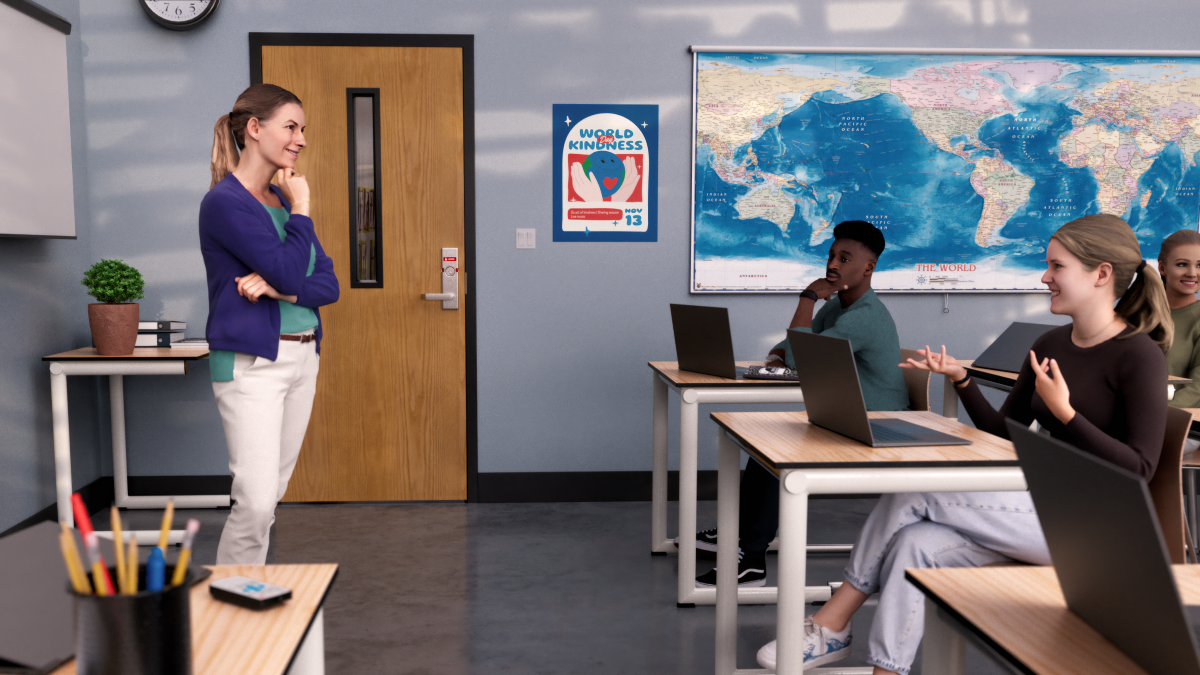
A mortise lockset with an integral deadbolt is compliant with the “one motion” requirement of the model codes when turning the lever retracts both the latchbolt and dead bolt simultaneously.
Locked/unlocked indicators can display the locked status of the outside lever, which can be very helpful during a lockdown condition. Electrified locks are also available which can facilitate remote, facility-wide lockdown as well as local lockdown and free egress. For classrooms with an occupant load of 50 people or more (I-Codes) or 100 people or more (NFPA codes), panic hardware is typically required if the door is equipped with a lock or latch. All of these hardware options must permit authorized access from the outside using a key or credential, allowing school staff and emergency responders immediate access to a locked room.
Once very commonly used on classroom doors, the traditional classroom function lockset and classroom function lever trim for panic hardware are no longer recommended for this application. These locks have a key cylinder in the outside lever and no means to lock the door from the inside. To lock the door and prevent access, the door must be opened and a key inserted in the outside lever. This could potentially expose the teacher or other staff member to danger in the corridor.
The 2027 IBC requirement for the door to be lockable from the inside will also apply to exterior doors serving educational facilities. These doors must be lockable from the egress side of the door to prevent access – it will not be compliant to open the door to lock or unlock the outside lever. In addition, at least one door on each building face must be able to be unlocked from the outside with a key or other approved means, to allow authorized access.
Based on current codes, the use of separate dead bolts on doors with other latching hardware in educational facilities is very limited. These locks would only be permitted on existing doors in existing schools where NFPA 101 or the state code allows a second releasing motion. And while it may be tempting to add temporary locking devices (AKA classroom barricade devices) to classroom doors, many of these products do not comply with the code requirements for egress, fire protection, and accessibility.
It is important to verify that any security product complies with the adopted codes and accessibility standards, and that any modifications to fire doors comply with NFPA 80, Standard for Fire Doors and Other Opening Protectives. ANSI/BHMA Grade 1 locksets have provided the necessary level of security in past active shooter incidents in schools, while meeting the requirements of the model codes and accessibility standards.
You need to login or register to bookmark/favorite this content.
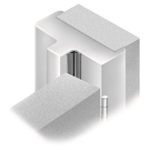
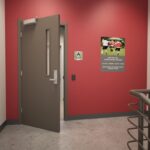
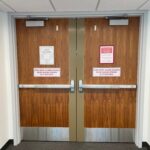
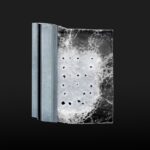
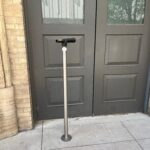
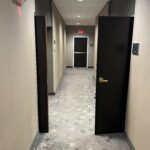
The answer to this security issue in future builds may be outswing doors built into alcoves along corridors. Even with a single simple corridor lockset, an outswing door is going to be nearly impossible for an active shooter to force outward, causing them to move on unless there’s a specific target on the other side. Inswing doors rely on their locks to provide all the force-prevention, thus defeating the lockset pretty much allows simple access. Forcing an outswing fire rated door is much more challenging, and nearly impossible if your hands are not free…