
In today’s guest post from Devin Bowman of TGP, he discusses the difference between three applications that are somewhat similar in purpose, but very different when it comes to egress.
~~~
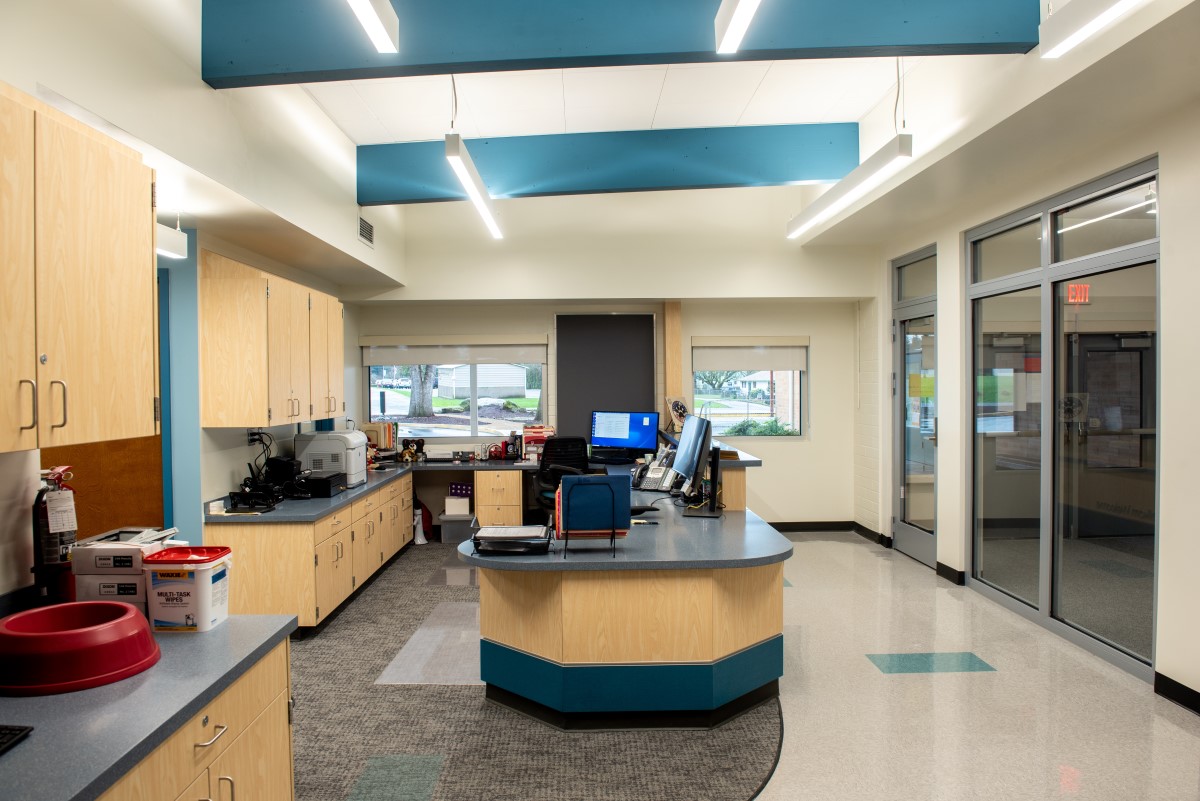 Bringing together best-practice building design concepts with best-practice safety and security protocols for schools remains a complex task. One reason is that building design and safety and security protocols are each complex topics already. That said, they’re both incredibly important to our schools and communities today – and they should work together.
Keep in mind, safer school design incorporates several disciplines to be the most effective and code compliant. This is especially true of openings along means of egress routes, such as entry vestibules. These points must accommodate mass exit to meet requirements for fire and life safety, but they should also resist unauthorized ingress to meet safer school design best practices.
In these applications, there are several specialized terms that describe slightly different vestibule configurations. All these terms refer to a series of doors with an intermediate space between them. But the operation and locking configurations of these doors significantly impact a design’s ability to meet free egress requirements.
For this part of the built environment, having all project teams in alignment can support more efficient and effective safer school design.
Key safer school design terminology
The first step in aligning project teams for safer school design is using precise terminology. Doing so helps ensure security professionals recommend code-compliant options and specifiers can efficiently incorporate these recommendations. There are three important terms to differentiate: sallyports, interlocks (also known as control vestibules), and secure entry vestibules.
According to Lori Greene, Manager, Codes and Resources for Allegion, an interlock is “a space with two or more doors in series, arranged so that when one door is open the other door or doors cannot be opened.” An interlock can be further specified into security interlock or safety interlock, depending on the default lock status of the doors.
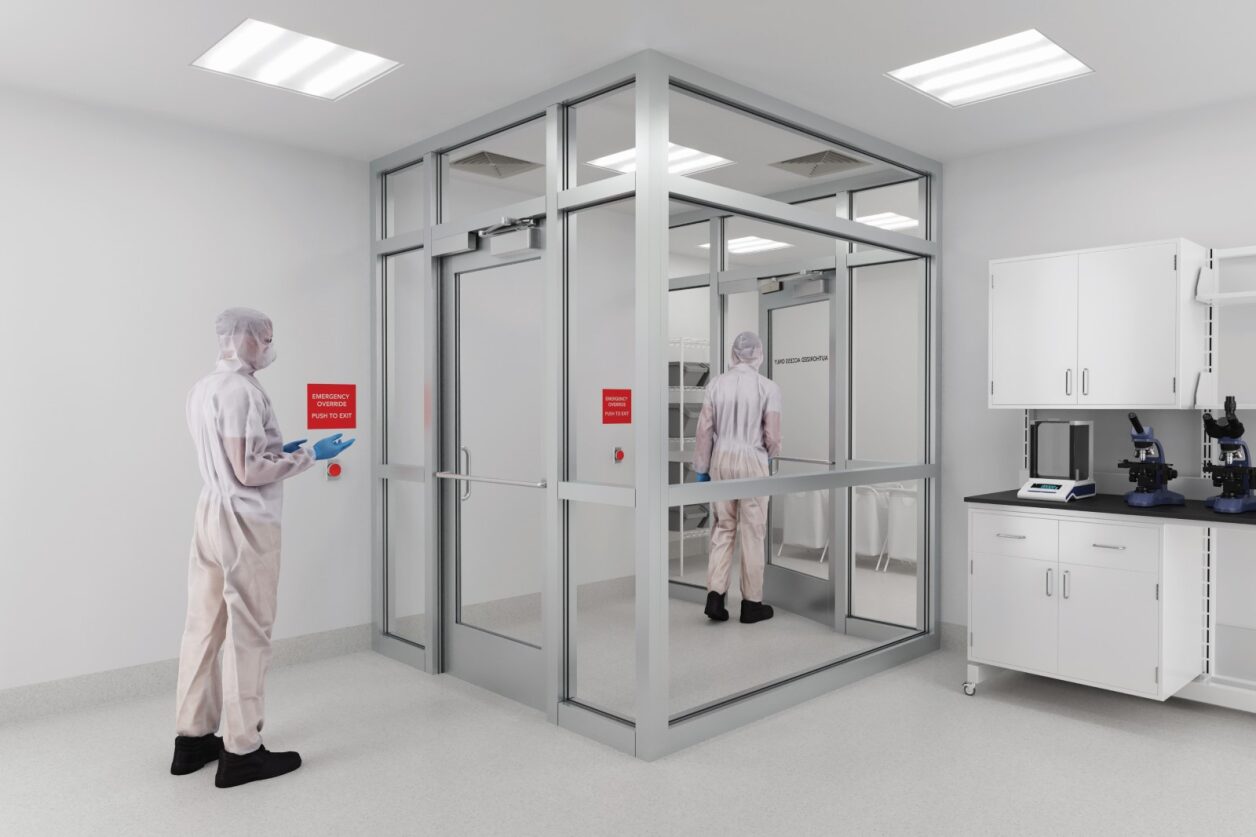 To date, the International Building Code (IBC) has not included specific requirements for interlocks, but a change has been approved for the 2027 edition of the code. The term “control vestibule” will be used in place of interlock, and there will be several conditions mandated for this application. These include limitations on the types of facilities and occupant loads where they are permitted, as well as emergency overrides for egress. While local codes may differ, interlocks will not be code compliant with the IBC in an educational occupancy (Group E) or as a main exit.
Further, control vestibules should not be confused for sallyports. The IBC defines sallyports as “a security vestibule with two or more doors or gates where the intended purpose is to prevent continuous and unobstructed passage by allowing the release of only one door or gate at a time.” The IBC also limits this configuration to I-3 occupancies, such as correctional facilities, provided there are provisions for egress during emergencies.
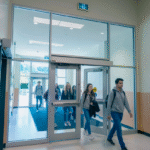
Visually similar to control vestibules and sallyports, secure entry vestibules include a set of two or more doors. The locking hardware of these doors is not connected, so occupants need not close one door to open the next. As such, this configuration is allowed in Group E occupancies, given its components meet all requirements for use along a means of egress path.
What’s wrong with sallyports?
Understanding why sallyports may not be code compliant in educational facilities and as main exits can help project teams work together to enhance school security while meeting code-driven requirements for fire and life safety. The main reason sallyports (and control vestibules) are usually not allowed in this occupancy type has to do with the flow of egress during emergencies.
Because these configurations limit the speed and ease of which occupants can evacuate a building, they can present a sizeable risk to life safety in emergencies where every moment counts. For sallyports specifically, there must be provisions for continuous and unobstructed emergency egress. But even with these provisions, their use is limited to Group I-3 occupancies due to the need for increased security and the corresponding safety measures and oversight in a correctional facility. As a result, recommending them for an educational setting is not compliant with the IBC.
When security professionals recommend a sallyport (or another control vestibule type), it is that these terms may not have the precise meanings they do in the design and construction world. In these cases, the confusion often arises from project teams having a different vocabulary. Creating a shared vernacular can help these professionals avoid missteps and streamline the specification process when a school building seeks enhanced security measures.
The solution: secure entry vestibules
Secure entry vestibules offer a code-compliant option for hardening main points of egress without obstructing the ability for occupants to leave en masse during an emergency. A best practice recommendation from the Partner Alliance for Safer Schools (PASS), this configuration bolsters the ability for front desk staff to assess visitors safely and places a barrier between violent threats and occupants.
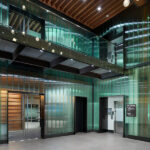
 Further, when a secure entry vestibule incorporates glass, it can unite multiple layers of safer school design. According to PASS, a multilayer approach to improved security is most effective. The organization’s best-practice guidelines break down typical school campuses into four layers: district wide, digital infrastructure, campus exterior and classroom interior. The last two are the most relevant for secure entry vestibule design. Glass connects these layers and allows the real-time surveillance of parking lots and main hallways.
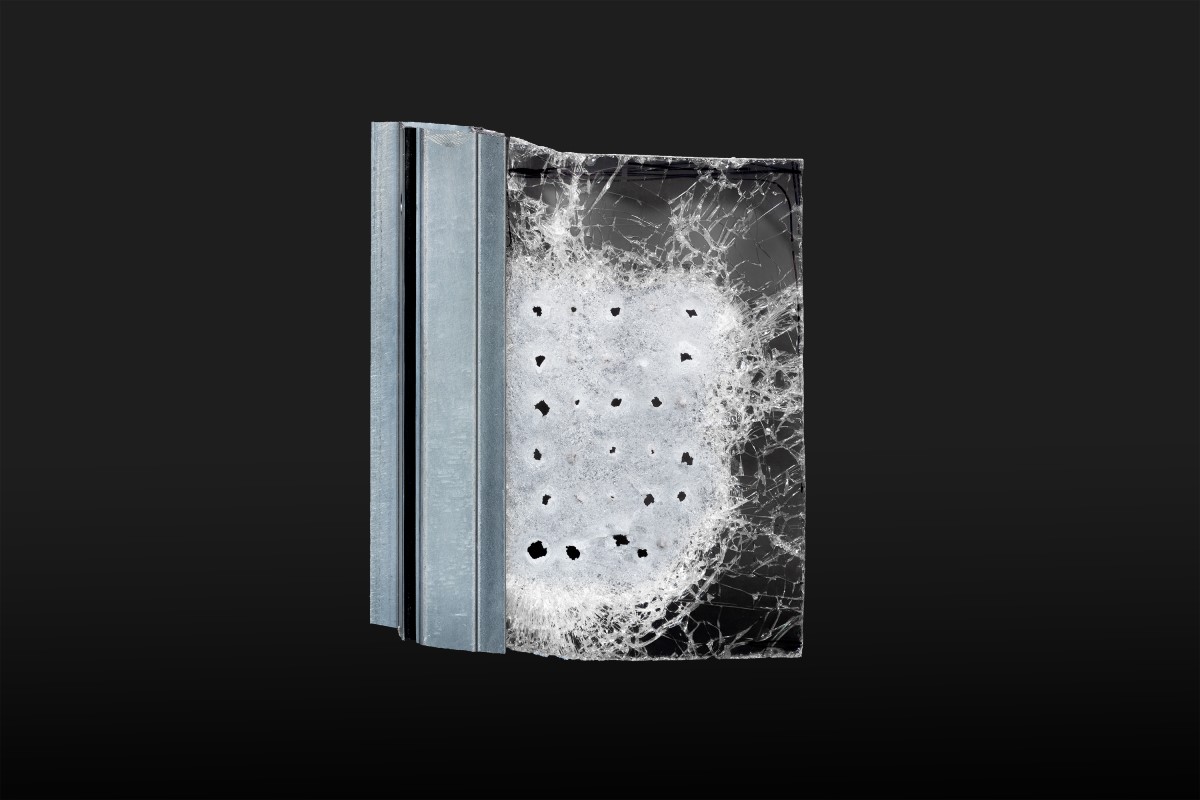
That said, typical architectural glazing can create a weak point in vestibule design as it often is not tested to security standards and so may break if subjected to these situations. Safer school design resources recommend using glazing that is either ballistic- or forced-entry resistant depending on project goals. It is also important to understand that some secure entry vestibule designs may need fire-rated materials. In these instances, both security- and fire-rated components should be compatible to ensure one form of protection is not compromised for the other.
Project teams can streamline the process of designing code-compliant vestibules by specifying full glazing systems that are either tested as a system to multiple standards (often ASTM F3561 for forced entry, UL 752 for ballistic resistance, UL 263 for fire-resistive-rated glass and UL 9 and UL 10C for fire-protective-rated glass) or built from components known to be compatible. Known as multifunctional, fire-rated glazing systems, these assemblies contribute to enhanced security while meeting requirements for fire and life safety.
Using multifunctional, fire-rated doors in more than vestibules
Multifunctional, fire-rated glass doors can be specified as fire door assemblies throughout the built environment. Traditionally, fire doors are used for compartmentation strategies to limit the spread of fire and smoke as well as maintaining free egress routes. According to a white paper from PASS, these types of doors can also create additional time barriers within the classroom interior layer when they include appropriate materials and hardware.
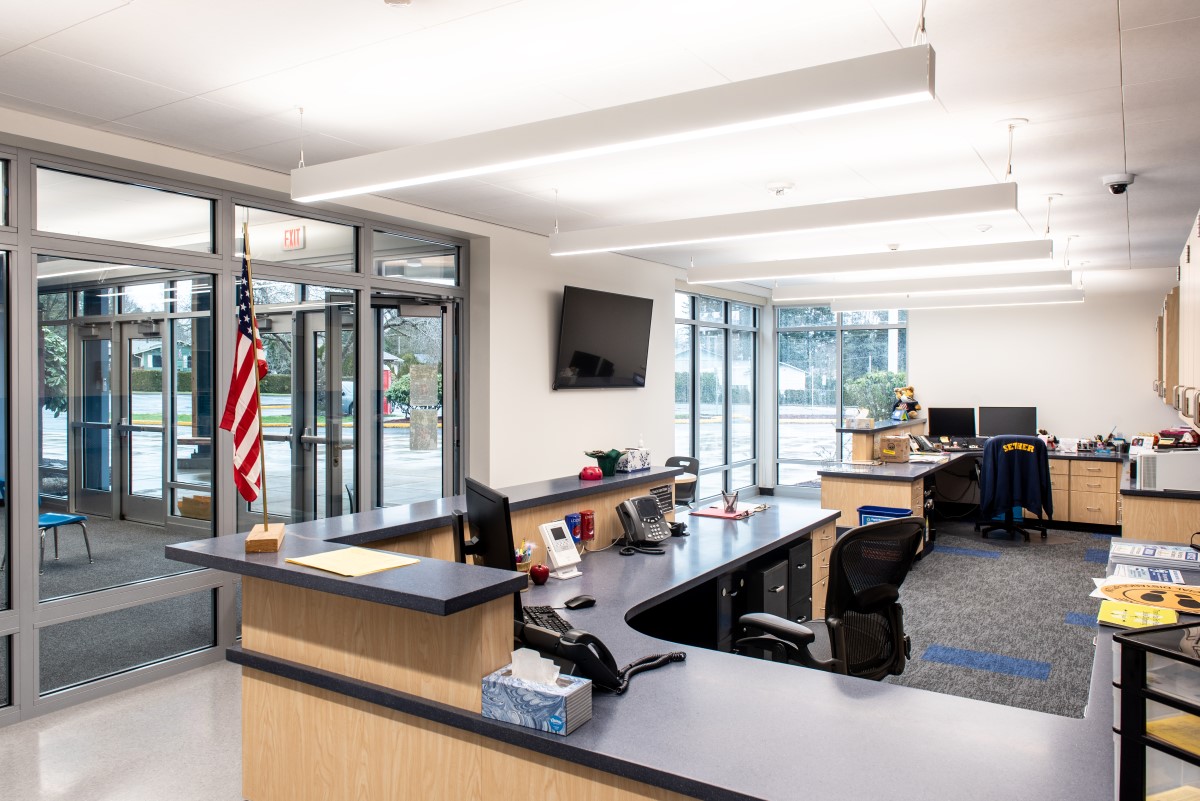 Using full-lite doors certified to both fire and security rating standards allows design teams to meet code requirements and enhanced security goals in one system, provided the doors are fitted with code-compliant locking hardware. These multifunctional, fire-rated assemblies also visually connect adjacent spaces. On the one hand, this prioritizes an intuitively navigable space. On the other, it contributes to efforts to reduce locations where students can be bullied out of sight.
A group of high schoolers explained how open sightlines can be instrumental in anti-bullying efforts during a 2018 American Institute of Architects (AIA) summit. Considering bullying is both the most common type of violence students encounter and connected to other types of violence on campus, minimizing its occurrence is integral to safer school design.
Aligning all project teams to safer school design best practices
Security professionals, code officials, architects, school administrators and even product manufacturers are encouraged to work together to ensure building hardening efforts provide as much protection as possible while also meeting code requirements. Although maintaining free egress has been the focus of this article, achieving code compliance for education occupancies also entails designing for accessibility. This can include how locking hardware operates to the force needed to open a door to maneuvering clearances required for the operation of manual doors
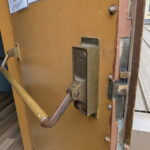
All these considerations and more significantly impact how secure entry vestibules are discussed, planned and built. They also influence the specification and ongoing upkeep of doors throughout the built environment. While this certainly includes all the components specified at the time of a design, it also includes aftermarket products like barricade devices. PASS guidelines recommend avoiding them as they can cause unintentional hazards and make door operation inaccessible to some. This is in line with findings from the final report from Sandy Hook Advisory Commission that there has never been an instance in which an active shooter breached a locked door through the lock.
A collaborative approach to safer school design can ease the difficulty that this nuanced approached to building design entails, which not only supports all project stakeholders but often leads to more effective outcomes.
Devin Bowman is General Manager of Technical Glass Products (TGP) and AD Systems. With over 20 years of industry experience, Bowman is actively involved in advancing fire- and life-safety codes and sits on the Glazing Industry Code Committee (GICC). Email: Devin.Bowman@allegion.com. Contact him at (800) 426-0279.
You need to login or register to bookmark/favorite this content.


Leave A Comment