
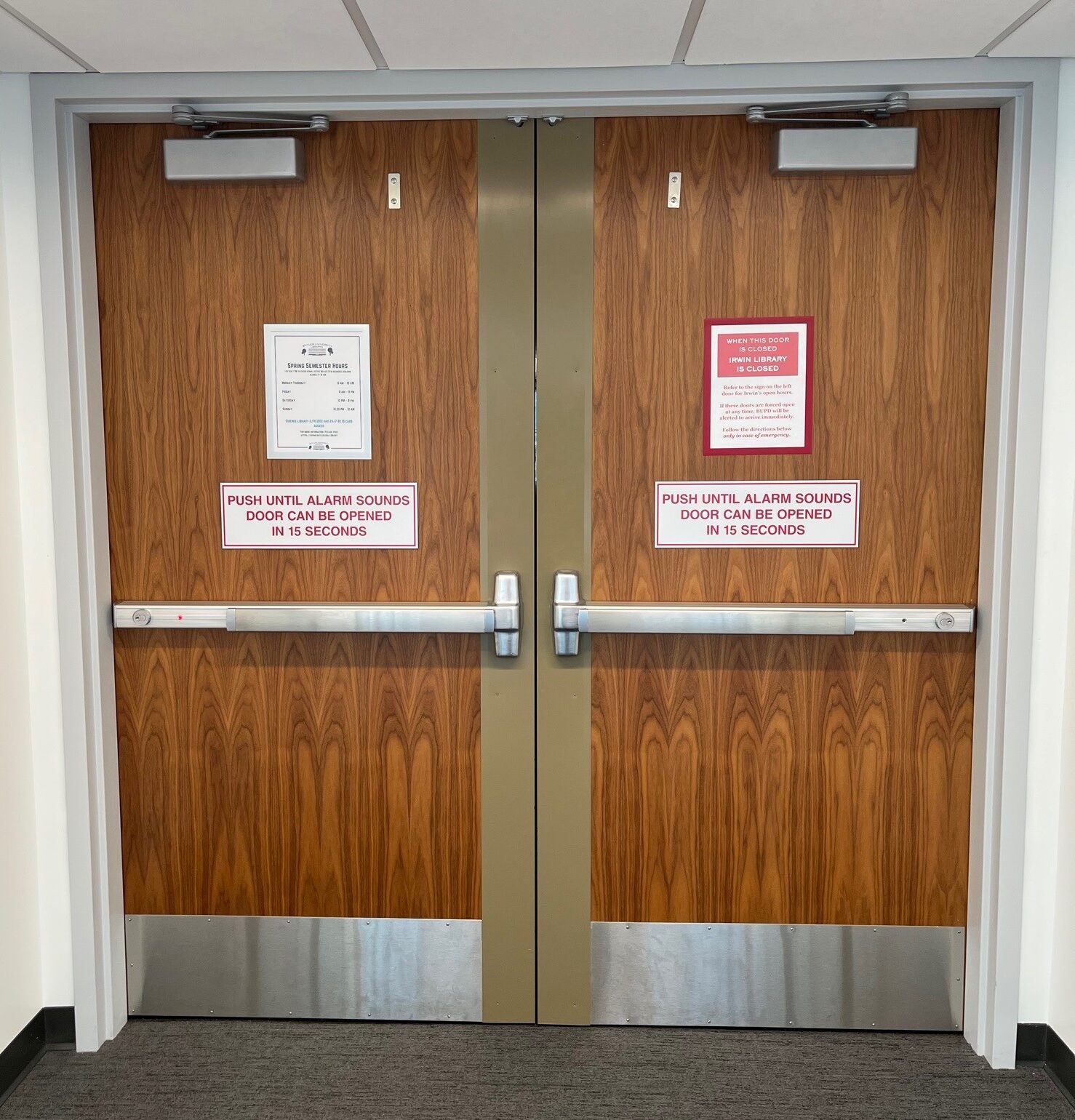
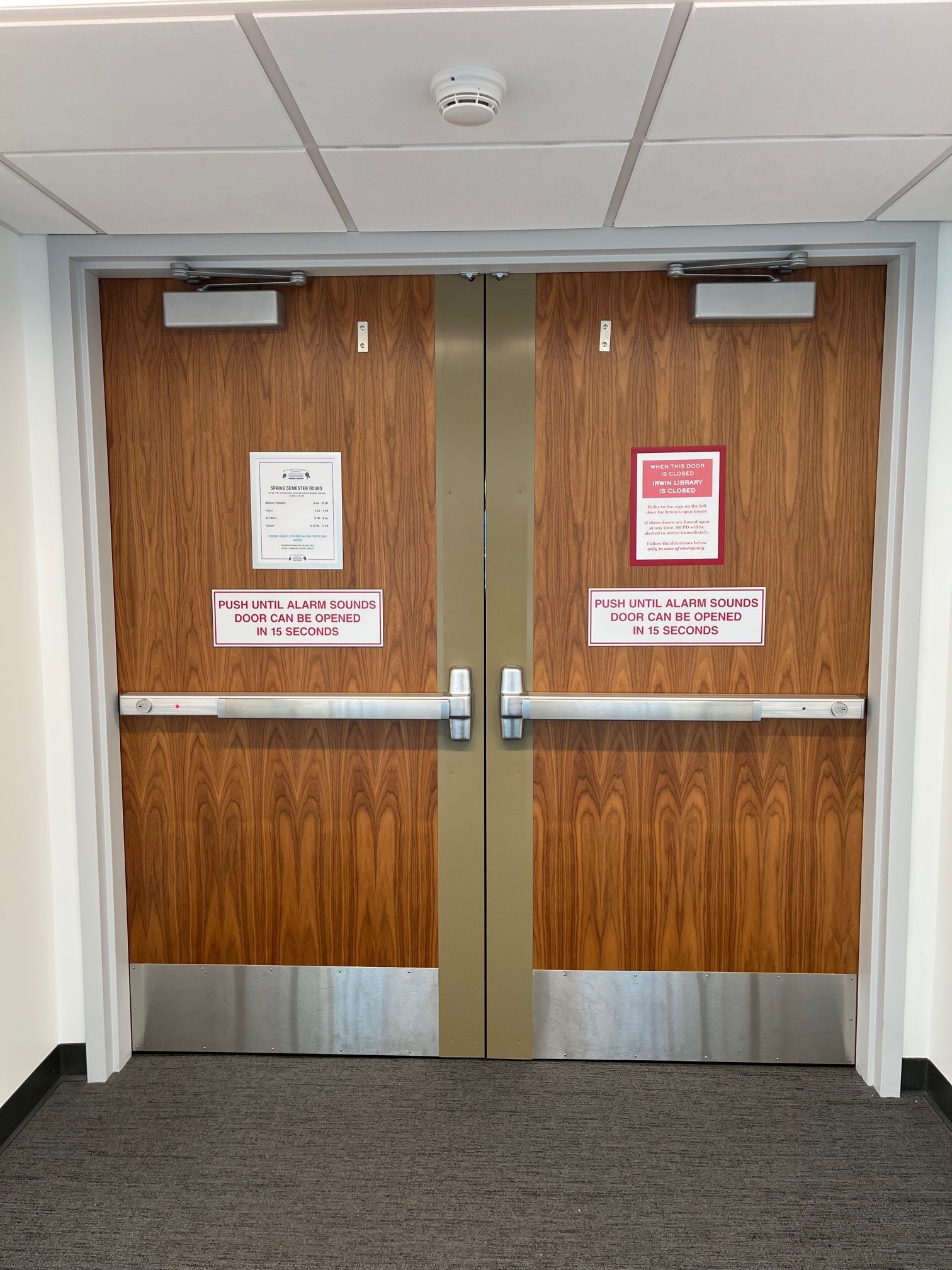
 If you’re familiar with delayed egress locks, you know that that once the 15-second timer ends and the door can be opened, rearming the lock must be done by manual means only. The text of this section of the International Building Code (IBC) will change slightly in the 2027 edition, stating:
When a physical effort to exit is applied to the egress side door hardware for not more than 3 seconds, an irreversible process shall be initiated that allows such egress in not more than 15 seconds. Initiation of the irreversible process shall activate an audible signal in the vicinity of the door. Rearming the delay electronics shall be by manual means only.
Exception: Where approved, a delay of not more than 30 seconds is permitted on a door with a delayed egress locking system.
The requirement for manual rearming of the lock differs from one of the codes that was used before the IBC existed. The BOCA code permitted the lock to be automatically rearmed after the 15-second timer was completed, and the door was opened, closed, and stayed closed for at least 30 seconds (there’s an old post on this here, with a REALLY old photo of me :)). The current language of the IBC is clearly stating that what was permitted by BOCA is not allowed by the IBC.
Beyond that, there’s not a lot of information about what “manual means” really requires. The intent is that someone checks the vicinity of the door to see what is happening before rearming the device. If the lock has a key to rearm the device, could a credential be used instead or or in addition to the key (I say yes)?
If a security officer could look at a camera to check the area, and then manually rearm the lock remotely, would that meet the intent? I’ve seen this permitted by some AHJs, but the IBC Commentary says otherwise:
Once the door is openable from the egress side at the end of the delay, it remains openable, allowing immediate egress until someone comes to the door and manually rearms the delay. The first user to the door may face a delay, but after that, other users would be able to exit immediately. Automatically rearming the delayed egress electrical locking system from a remote location such as a central control station or security office is not permitted.
Of course, the Commentary is not enforceable code language but it is used by many AHJs to help establish the intent of the code. With that said, immediately accessing cameras to see what’s happening in the vicinity of the door might be more helpful than dispatching a security officer to a door on the other side of the campus. So my question for you is this:
What’s your take on the manual rearming of a delayed egress lock? WWYD?
For more on delayed egress locks, check out this video or this article.
You need to login or register to bookmark/favorite this content.



My stance is to have the security guard still make their way over there to reset the alarm locally (either by key/pin/or individual reader if supported). The whole point is to get them there to inspect and assess the situation at the location. Just looking through a single vantage camera will not allow the guard/manager to know the exact cause or find out if there is any additional issues or potential tampering present. Letting them do a remote reset will allow for future “lazy reset” regardless of policy/procedure set. My experience for delayed egress is by far in the retail asset protection market.
Thanks Kevin!
– Lori
Here’s how I see it:
Core issue:
Delayed egress (DE) is overused to compensate for architectural designs that didn’t fully consider security. It solves egress, but from a security standpoint it’s really just a “delayed security breach”—there’s no way to stop a determined person.
Real-world results:
Alarms: 15–30 second alarms disrupt patients (especially in healthcare), and security can’t respond that fast.
Response: That response window is unrealistic. Requiring a physical key is also impractical since most clinical staff don’t carry one.
Workarounds: Staff sometimes disable DE doors to avoid alarms and security calls (unofficial, but happens).
Final result:
The door becomes a visual deterrent only, with no real delay to a breach.
Long-term solution:
Design buildings with security and egress integrated from the start. Better placement of exits and stairs can eliminate many DE doors entirely.
Example: A hospital waiting room could have avoided multiple DE doors by adding a single exterior exit.
Short-term solution:
Clarify “manual rearming” to allow credential-based reset.
Something like: “Rearming by an authorized, knowing act using a credential or key.”
Hi David!
Do you think the codes should specify that the rearming has to occur at the door and not remotely using a camera?
– Lori
Yes, local staff are in the best position to see what’s happening at a door, determine if it’s a real issue, and escalate if needed. In healthcare, they already play a key role in safety and often have tools like duress buttons—so letting them filter out false alarms makes sense.
Imagine if your smoke detector kept sounding until the fire department arrived every time you burned toast.
If reset isn’t practical at the door, alarms become a nuisance, response is too slow, people work around the system—and it loses its effectiveness.
The code intent is good, but it must be practical for real-world healthcare environments—this may not apply in other settings.
Recently, NC DHSR has changed its position on this issue and is no longer permitting badges to be used to re‑arm delayed egress doors. Instead, they are now requiring the doors to be reset using a key.
This change has led to significant alarm fatigue. Audibly, alarms are frequently triggered accidentally, and operationally, obtaining someone with a key to reset the door can take considerably longer than having a valid cardholder access the door. Additionally, this places increased strain on the team responsible for resetting the alarms, as it pulls them away from other critical duties.
AHJs often compare this requirement to fire alarm systems, which also require a trained response for assessment and reset. However, emergency pull stations are not a moving, functioning, or operable component of a building in the same way door hardware is, making the comparison imperfect.
Thanks for sharing your experience, Matt!
– Lori