
Today’s post is the ninth post exploring the inspection criteria for fire door assemblies. The ninth criterion listed in NFPA 80 for the inspection of swinging doors is:
(9) Latching hardware operates and secures the door when it is in the closed position.
In this guest post, Sarah Finley Gilman of Allegion shares some important considerations for the hardware that provides positive latching for fire door assemblies.
Click here to read other posts in this series and learn more about fire door inspection.
~~~
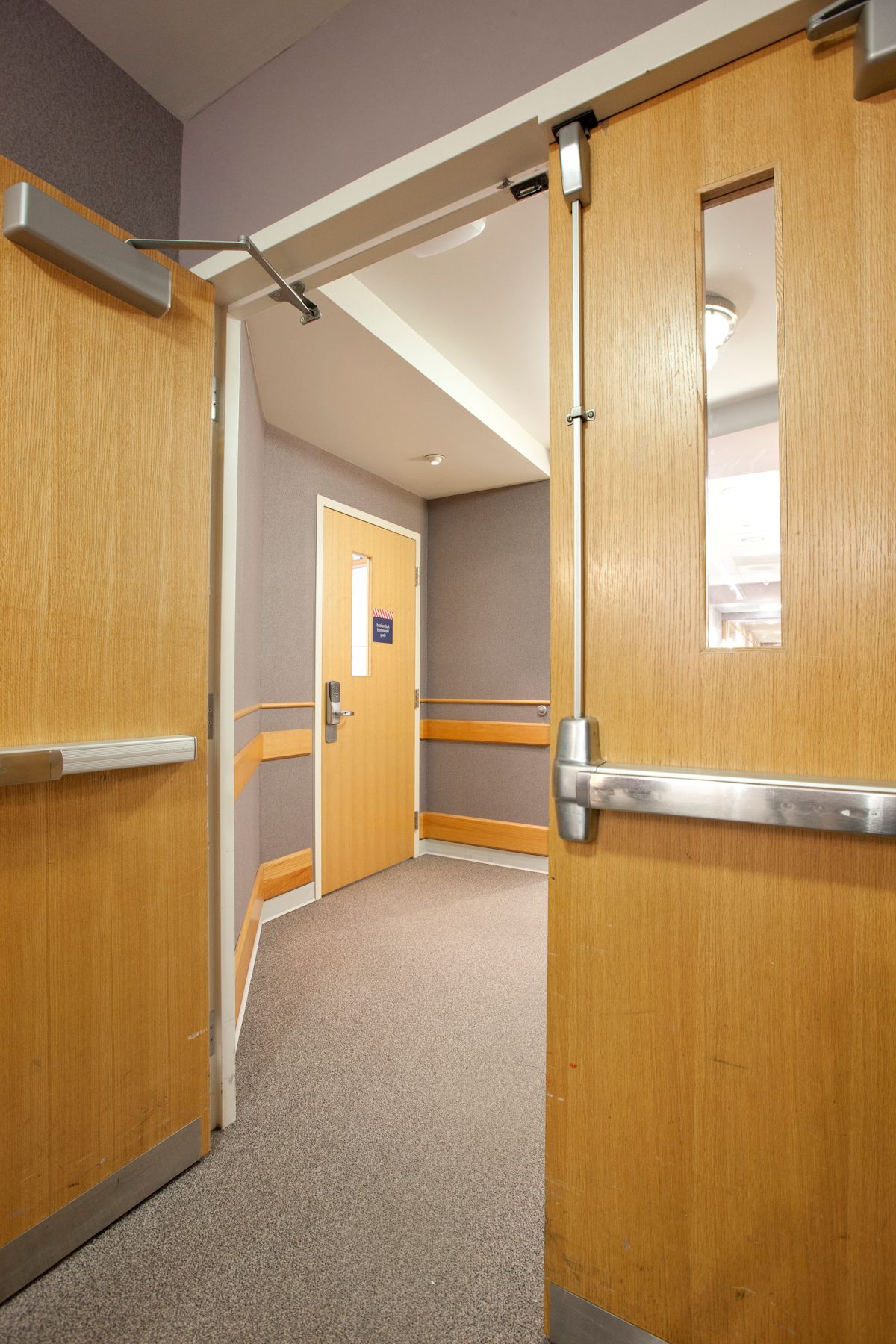 The evolution of panic hardware and fire exit hardware has been instrumental in advancing fire and life safety standards. Von Duprin’s original “self-releasing fire exit devices” revolutionized building egress by providing a crossbar mechanism that allowed occupants to open doors quickly and effortlessly during emergencies. Over the decades, Von Duprin has expanded its product line to include self-latching, fire exit hardware that complies with modern safety codes and accessibility requirements.
A fire door’s primary purpose is to function as a barrier to fire and smoke, slowing their spread and allowing occupants more time to evacuate safely. For a fire door to fulfill this function, it must close completely and latch automatically without requiring manual intervention. This is where self-latching hardware comes into play.
NFPA 80, Standard for Fire Doors and Other Opening Protectives, requires fire doors to be equipped with hardware that has an active latch bolt to provide positive latching when the door is closed. This hardware may be fire exit hardware, a lockset/latchset, or other hardware with an active latch bolt that is listed for use as a component of a fire door assembly. The latching hardware works with other components of the assembly to help ensure that when a door closes, it securely latches into the frame, creating a tight seal that prevents fire and smoke from passing through gaps.
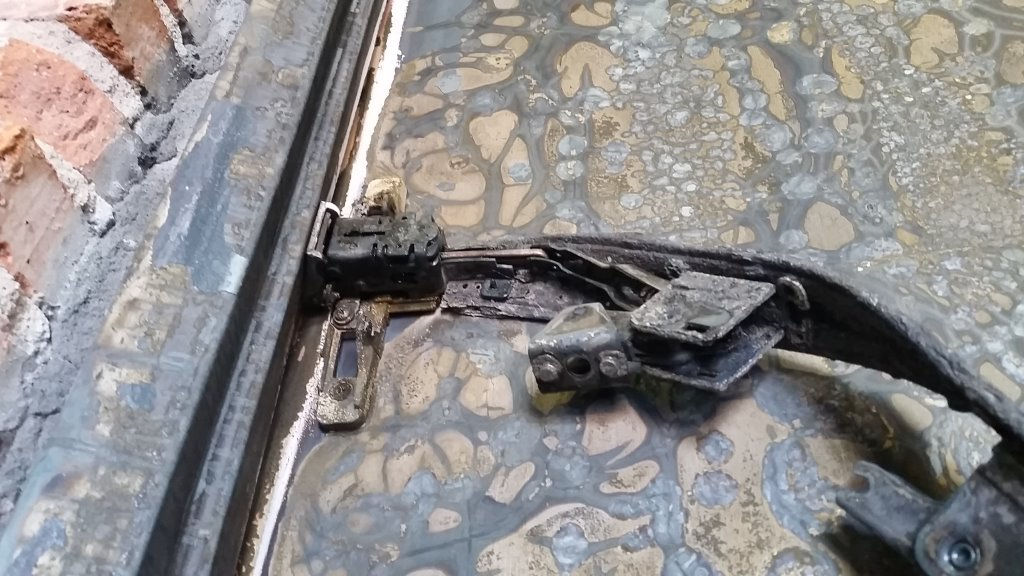
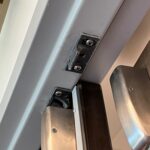
This photo shows the fire exit hardware after the fire test – the hardware is not required to be functional for egress after testing.
Self-latching hardware works by engaging the latch mechanism into the strike after the door closes. The latching mechanism ensures that the fire door remains closed during a fire. Once a certain temperature is reached during a fire, many products incorporate a fusible link within the latching mechanism will melt, causing the door to permanently latch and allowing both fire and smoke to be compartmentalized.
If a door is not self-latching, it may remain slightly ajar or fail to latch properly, compromising the integrity of the fire barrier. This can lead to rapid fire spread, increased smoke inhalation risks, and, greater danger to building occupants. Fire doors are designed to withstand extreme heat and pressure for a specified period, depending on their rating. However, their effectiveness depends heavily on them being closed during a fire. Open fire doors provide a direct path for flames and smoke, negating their protective purpose.
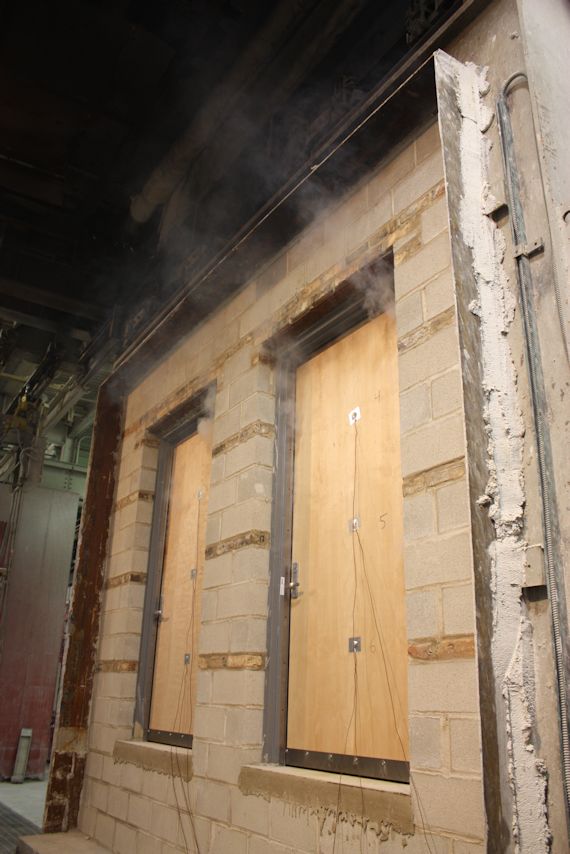 To test fire doors, the full door assembly (door, latching hardware, and other components) is mounted in a test wall assembly. This entire test wall assembly is mounted into a test furnace and exposed to specified temperatures throughout a specified period of time. This is called the Fire Endurance Test and measures the length of time a door assembly can resist fire penetration and prevent the passage of flames and excessive heat.
Following the fire exposure portion of the test, the side of the assembly that wasn’t exposed to the fire is then exposed to a stream of water from a fire hose. This is called the Hose Stream Test. This test simulates the impact of firefighting hoses and measures the door assembly’s structural integrity after being exposed to fire and thermal shock. This test is designed to evaluate if the door assembly can withstand the force of water from fire hoses without collapsing or developing breaches that would compromise its ability to contain a fire.
Properly functioning fire doors are a critical component of any building’s fire protection system, and their ability to self-latch and remain closed is essential to their effectiveness. By ensuring fire doors close securely and automatically, we help contain fires, reduce smoke spread, and provide safe evacuation routes. Regular inspection, maintenance, and education about fire door safety can make all the difference when seconds count.
For more information on which latching hardware is best for your fire doors, please contact an Allegion representative and we’ll be happy to walk you through our product library.
You need to login or register to bookmark/favorite this content.






Leave A Comment