
Today’s post is the sixth post exploring the inspection criteria for fire door assemblies. The sixth criterion listed in NFPA 80 for the inspection of swinging doors is:
(6) Door clearances do not exceed clearances listed in 4.8.4 and 6.3.1.8.
Are you aware of the current clearance requirements of NFPA 80, which allow up to 3/16-inch clearances on 20-minute fire doors in hollow metal frames?
Click here to read other posts in this series and learn more about fire door inspection.
~~~
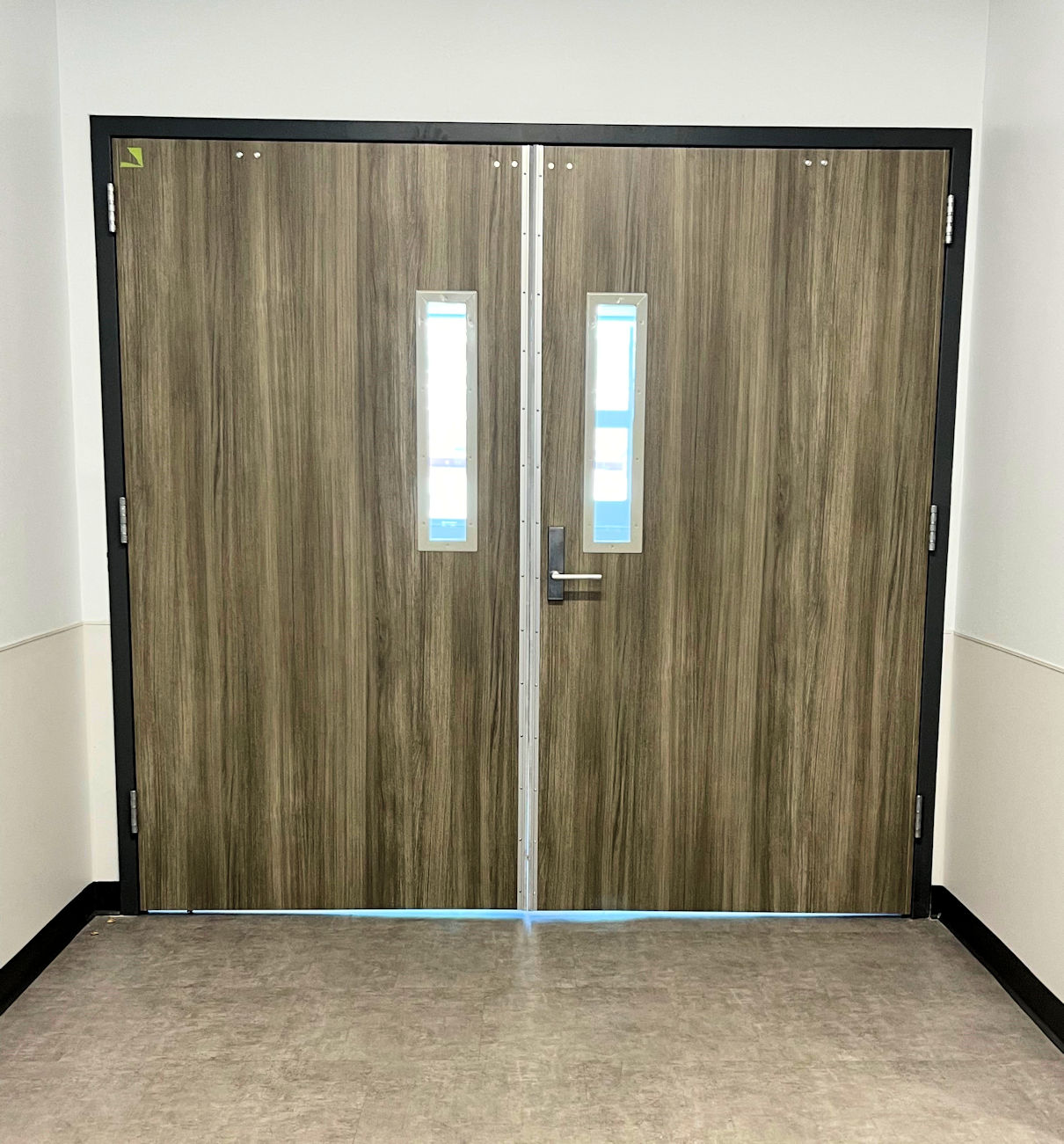
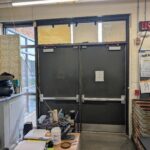
The clearance under this existing pair of fire doors varies from the jambs to the meeting stiles. Photo: Hal Kelton
Non-compliant clearances around fire doors are among the most common deficiencies found during fire door assembly inspections. The balance between the limitations on fire door clearance and the ability of the door to function during daily use is a constant challenge. Facility managers in health care occupancies and other buildings where fire door inspections are being conducted regularly struggle with the time and resources needed to try to keep doors opening, closing, and latching properly while staying within the clearance limitations of NFPA 80.
The most recent edition of the NFPA 80 standard (2025) addresses clearance under fire doors in Section 4.8.4, and clearance at the head, jambs, and meeting stiles in Section 6.3.1.8. The standard mandates the following clearance limitations for fire door assemblies (measured on the pull side of the door):
- Clearance at the head, jambs, and meeting stiles of pairs:
- Hollow metal doors: 1⁄8 inch +/- 1⁄16 inch, maximum
- High-pressure decorative laminate (HPDL)-faced doors, 1⁄3-hour-rated flush wood doors, and stile and rail wood doors installed in hollow metal door frames: 3/16 inch, maximum
- HPDL-faced doors, flush wood doors, and stile and rail wood doors with fire ratings greater than 1⁄3 hour: 1⁄8 inch, maximum
- Door leaves constructed of other materials: 1⁄8 inch, maximum, unless otherwise permitted in the door, frame, and latching hardware manufacturers’ published listings
- Clearance at the bottom of the door:
- 3/4 inch, maximum, measured from the bottom of the door to the top of the finished floor or threshold
- 3/8 inch, maximum, or as specified by the manufacturer’s label service procedure, if the bottom of the door is located more than 38 inches above the finished floor (ex. access door or counter shutter)
- Where latches of the hardware project from the bottom of the door, clearance must be in accordance with the hardware manufacturer’s installation instructions – not to exceed 3⁄4 inch.
- Where a threshold is installed, clearance shall be in accordance with the hardware manufacturer’s installation instructions and listings.
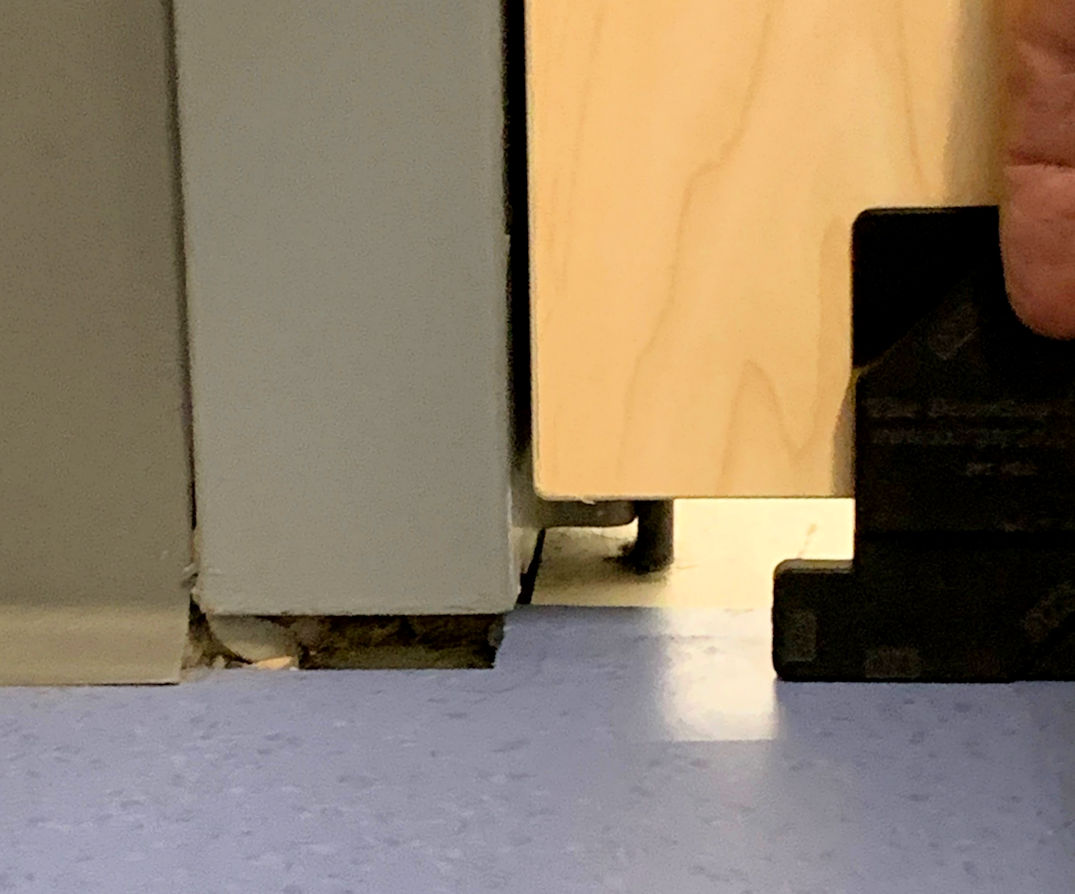
When measuring the clearances on fire door assemblies, it’s important to use a gauge or tool that can accurately measure the gaps. Photo: Hal Kelton
Fire door clearance problems can be tough to resolve in the field. Shimming hinges with steel shims or replacing hinges may help. There are edge guards, continuous hinges, and other products that are listed for use on fire doors where the clearance at the vertical edges exceeds what is allowed by NFPA 80. With such narrow tolerances of 1/8 inch or 3/16 inch at the head, jambs, and meeting stiles, complying with the clearance requirements while still allowing the door to operate properly can be a difficult balance.
At the bottom of the door, adding a threshold may help to reduce the gap, but care must be taken to comply with the accessibility standards where applicable. There are door shoes and sweeps that have been specifically tested and listed for use at the bottom of the door where the clearance is greater than 3/4 inch, but be sure to check the limitations on door material, rating, and gap size. Standard door shoes and sweeps do not solve the clearance problem; the products must be listed for use on doors with excess clearance.
Door shoes, seals, and other products used to mitigate clearances greater than those permitted by NFPA 80 are addressed in the standard. The 2025 edition of NFPA 80 states:
4.8.4.3* Listed fire door accessories for mitigating bottom clearance more than 3/4 inch (19 mm) shall be permitted.
6.3.1.8.3* Listed fire door accessories for mitigating excessive clearances between the top and vertical edges of doors and frames, and the meeting stiles of doors swinging in pairs shall be permitted.
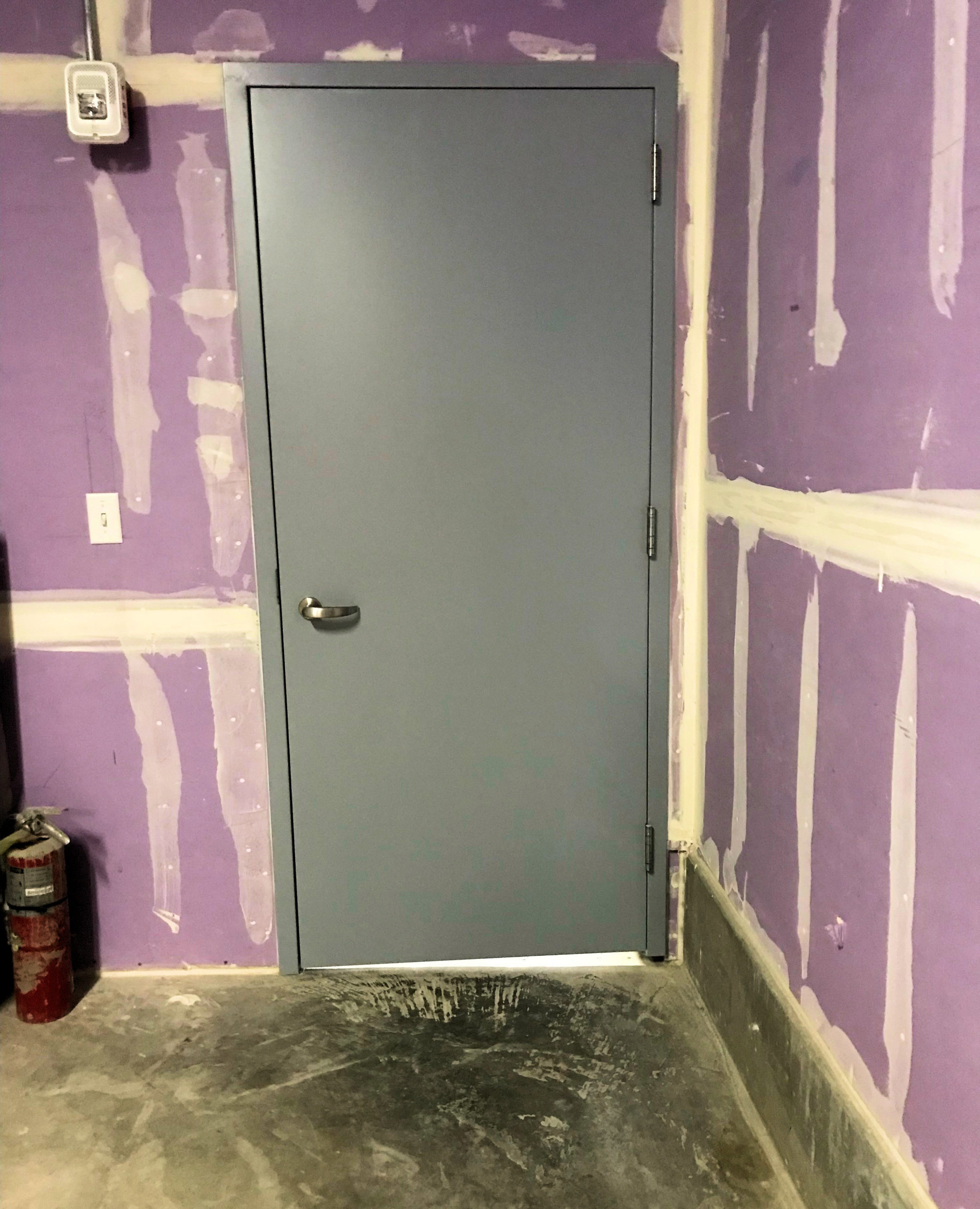
The clearance under this fire door looks like it is in excess of 3/4 inch at the hinge jamb. Photo: Hal Kelton
Annex A of the 2025 edition further explains:
A.4.8.4.3 Where clearance under the bottom of a fire door exceeds 3/4 inch (19 mm), door sweeps, door bottoms, or other devices specifically listed for use on fire doors and addressing the excess clearance could be a viable option. Utilization of such devices cannot prohibit the full engagement of the bottom latchbolt.
A.6.3.1.8.3 Where clearances between the top and vertical edges and the meeting stiles of doors swinging in pairs are greater than the prescribed limit, application of products evaluated for mitigation of excessive clearance are an option if installed in accordance with their listings.
One other way to avoid fire door issues is to help ensure that they are code-compliant from the beginning, by conducting the initial fire door inspection after installation as required by NFPA 80 (2013 edition and subsequent editions). This inspection should be included in the project specifications and will likely reduce future problems for the end user. Without the post-installation inspection, a facility manager may be faced with the responsibility for bring new assemblies into compliance with NFPA 80.
Thank you to Hal Kelton of DOORDATA Solutions for the photos used in this post.
You need to login or register to bookmark/favorite this content.






I would doubt that any building I have ever been in in Downtown Toronto or any other city for that matter would meet this code required to comply. It’s the same as access control companies installing card access on stairwell doors using standard electric strikes instead of fire rated devices. Or grade 3 residential hardware on office doors … I could shut the city down on the buildings I would condemn.
Another great post, Lori!
Thanks Kathy!
– Lori