
Last month, I shared a post about the UL 10C listing for door guards, which raised another Quick Question:
Why would a push plate or door pull require a UL 10C listing, when fire doors need to having latching hardware?
The question came from the image from the UL directory that I posted, showing the listings of the door guards and other Ives accessories. The list of accessories included door pulls, along with pull and push plates:
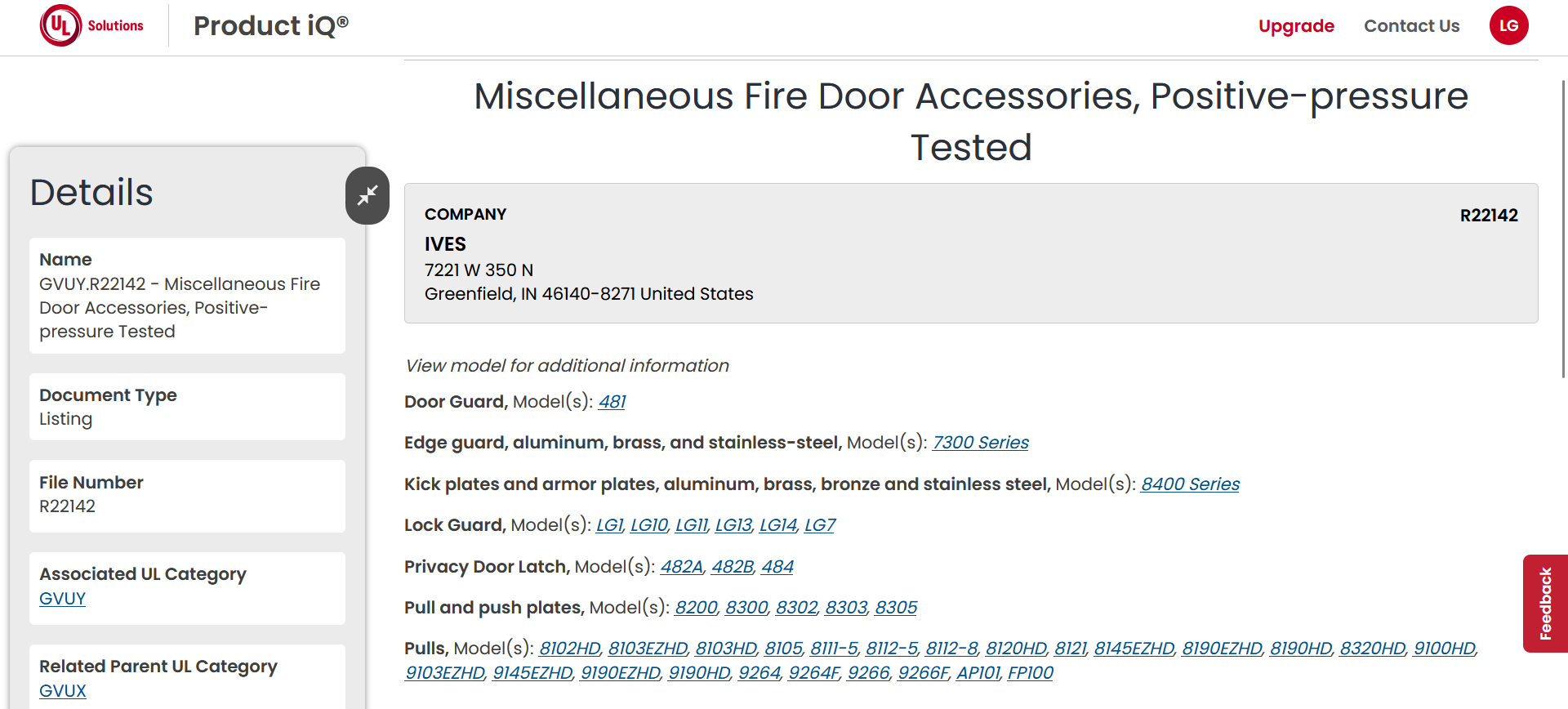
When a piece of hardware is installed as part of a swinging fire door assembly, it must carry the required listing for that purpose, typically UL 10C. As shown on the UL listing information above, Ives has some push plates, pulls, and pull plates that carry the listing. Although it is not common to have these products on fire door assemblies, it is a possibility – especially on doors with electrified hardware.
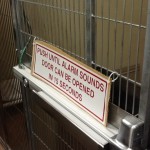
 While it is true that fire doors require latching hardware – usually a lockset or fire exit hardware – electrified hardware can be used to create a push/pull function. This could be accomplished using an electric strike (fail secure), fire exit hardware with electric latch retraction/electric dogging, or an electric latch retraction lockset. With these products installed on fire doors, the latch must project automatically and latch the door upon activation of the fire alarm system. The latch will also project if there is a power failure, ensuring positive latching.
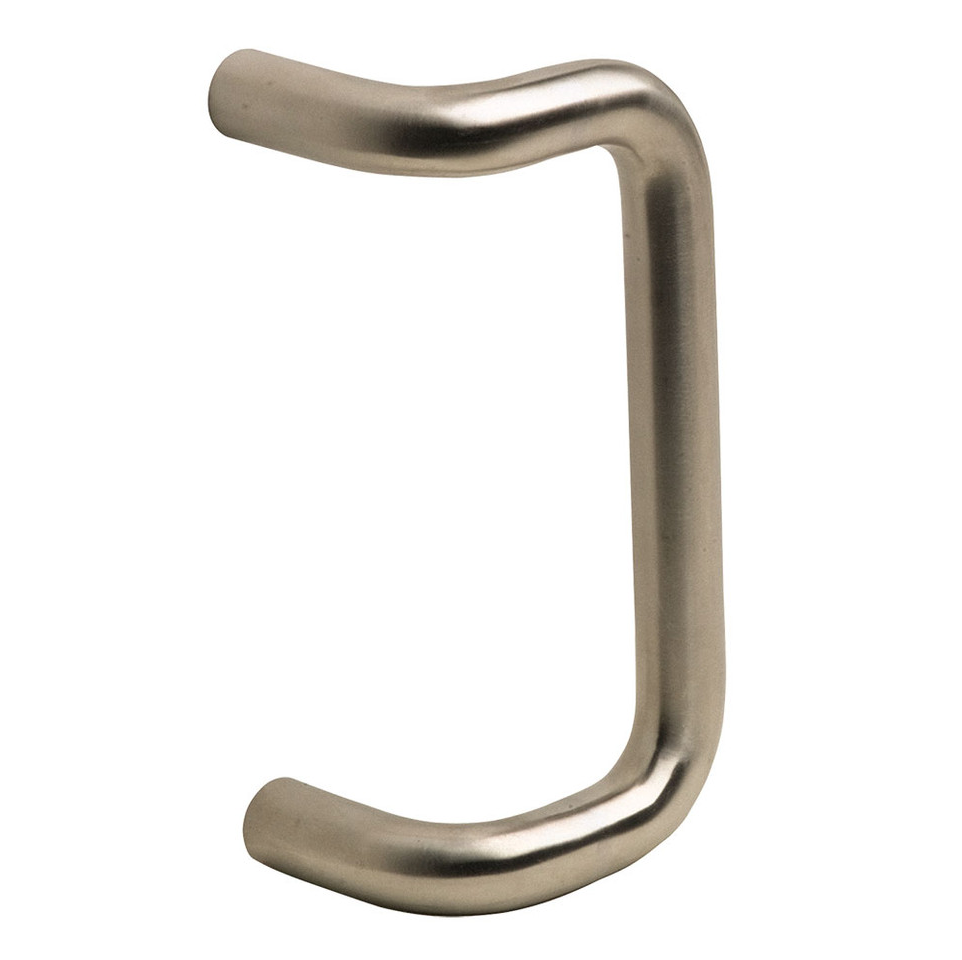
With an application like electric latch retraction, a push plate and pull could be used along with the electrified hardware to allow push/pull operation. And because each component of a fire door assembly must be listed, the push plates and pulls shown in the UL directory carry the UL 10C listing.
Have you seen push/pull hardware installed on a fire door assembly? What was the application?
You need to login or register to bookmark/favorite this content.


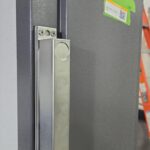
I’ve never personally seen push plates on fire doors but pulls, definitely. They are typically paired with Von Duprin 98NL-OP(F) exit devices. Sometimes with QEL and sometimes not, as a direct replacement for Von Duprin’s standard pulls.
Yes! That’s another common application!
– Lori
Installed many BF-158 pulls, some with back plates, mostly exterior doors, stair exits, employee’s entrance with rim cyl’s or access readers and HES 9400’s mostly all with exit devices. Security wise, and exterior door with just a pull and rim strike exit is more secure than a cylinder lockset.
Store fronts with mag locks and push/pulls.
Could you be reading that listing as a “common” listing for any and all applications in general?
Hi Bob –
This QQ was related to fire door assemblies where the listing would be required…there are lots of applications where it wouldn’t be needed.
– Lori