
 I spent this week in Indianapolis, where I felt temperatures unlike any that I can remember experiencing in at least 25 years. Motivated by the will to survive (after learning that hypothermia can become fatal in less than an hour), I spent some time learning to navigate downtown Indy without going outside. Yes! It’s possible to use the convention center and connecting bridges to go quite a long way!
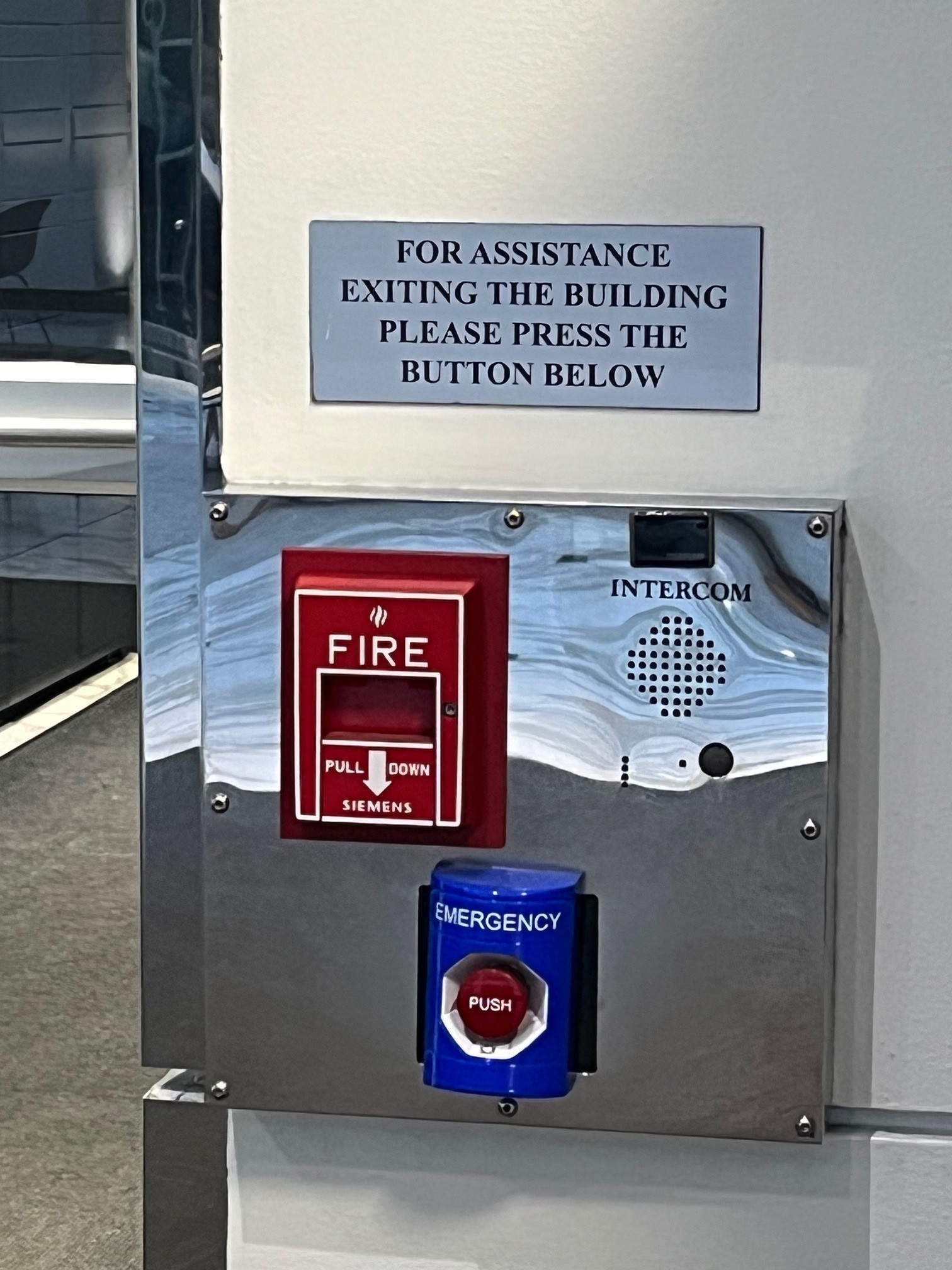
One of my mostly-interior power walks took me to one of the larger office buildings in the city, and I noticed this set-up in the lobby. There were actually two “situations” that we can all learn from. The most obvious was this signage offering help to exit the building – just press the button. As you can imagine, that caught my attention.
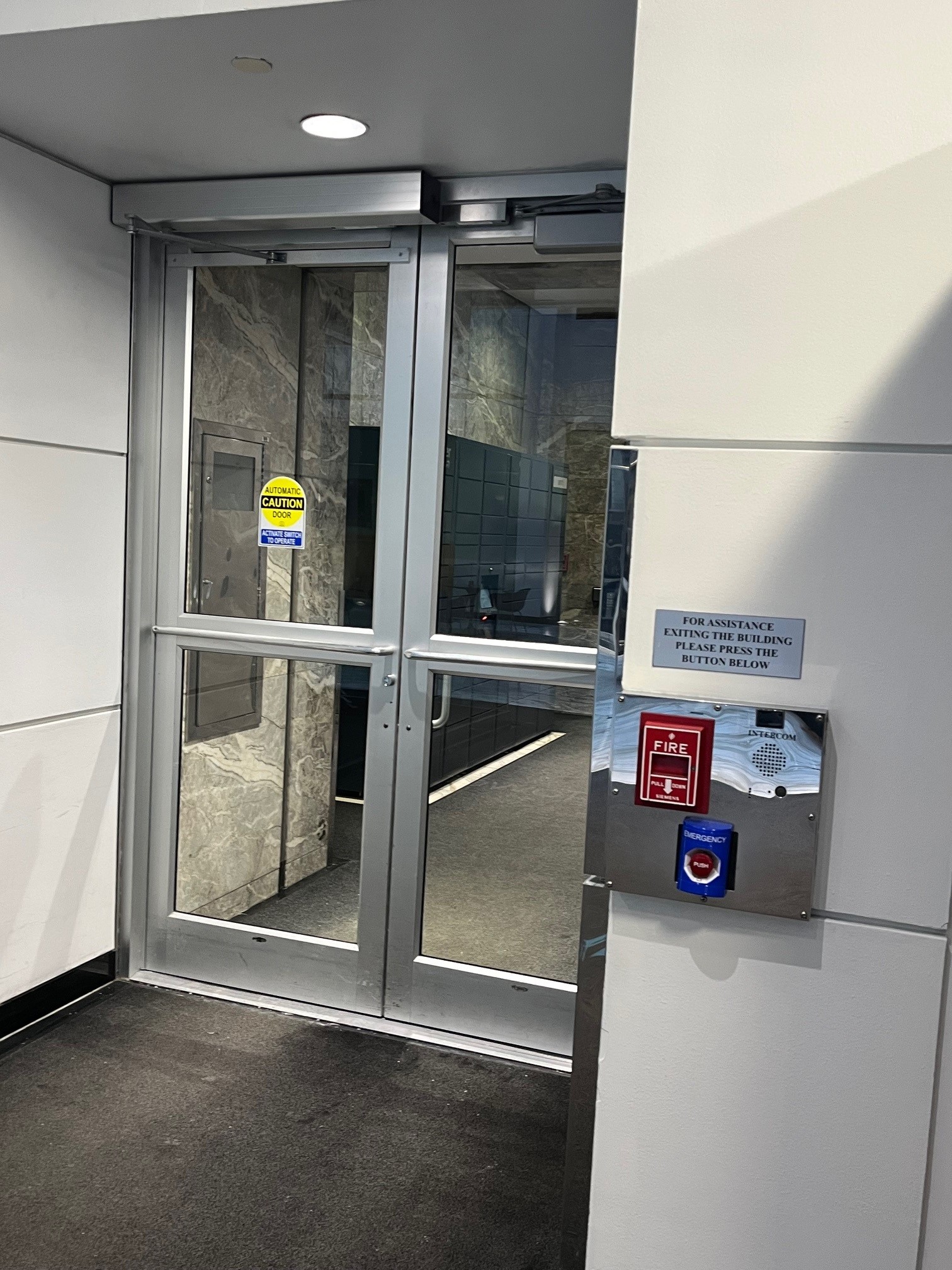
So is this acceptable? Let’s assume the security station is attended 24/7, and the person at the desk has a way to let someone exit through a door that is equipped with an electromagnetic lock. There is no exit sign over this particular door, and there is another door nearby (see below).
In my opinion – no, this does not meet the intent of the I-Codes, because as I stood in the lobby, I saw at least 10 people leave through that door (apparently it’s only locked at night). To me, that’s a door that is “provided for egress purposes”, and the I-Codes require those doors to be code-compliant, even if they are considered “extra” doors. The door should have a sensor to unlock it for egress when a building occupant approaches, along with a push-to-exit button, and fire alarm/power failure release.
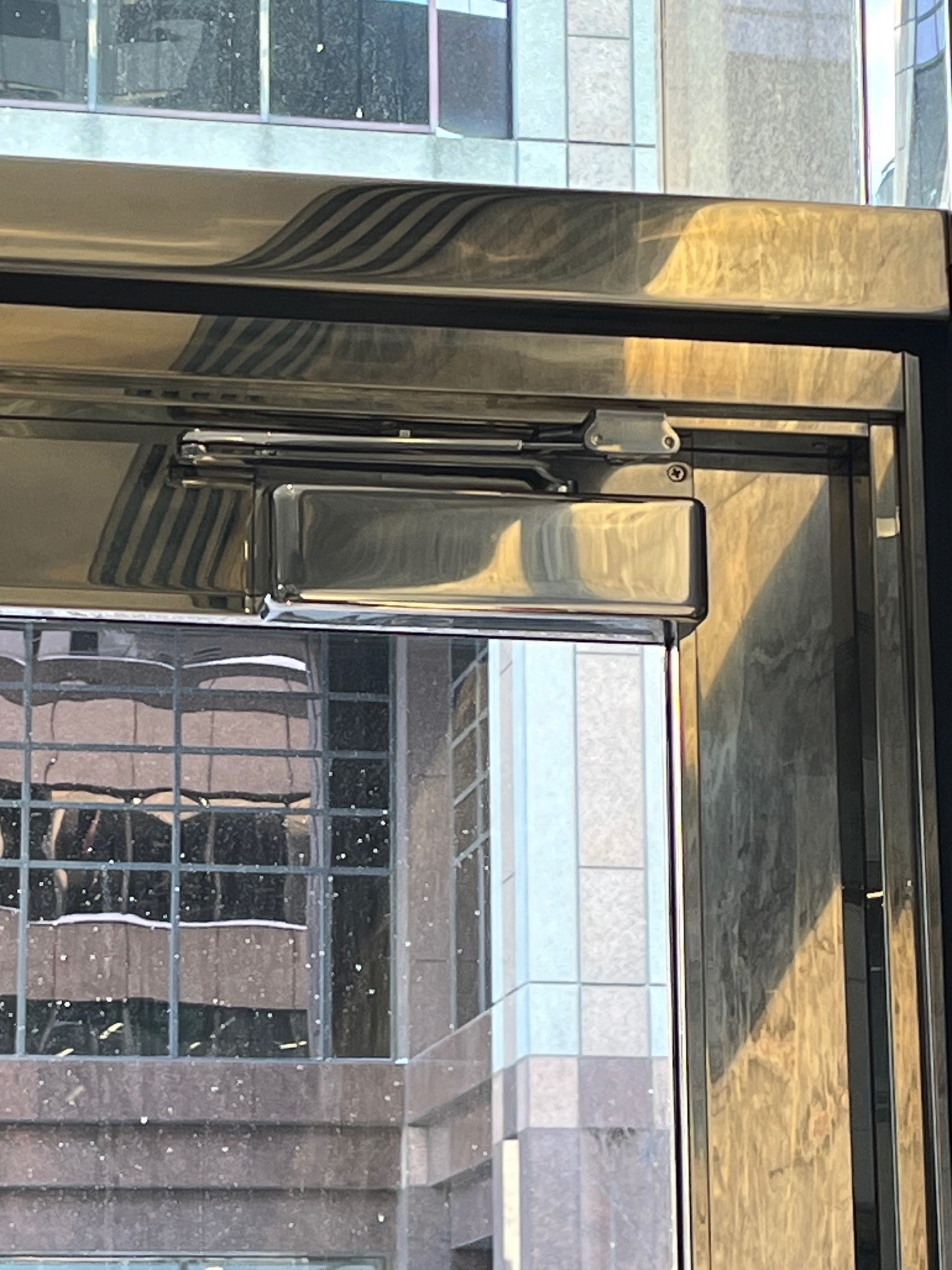
The door with the auto operator does have a creative fix for the flush ceiling condition…
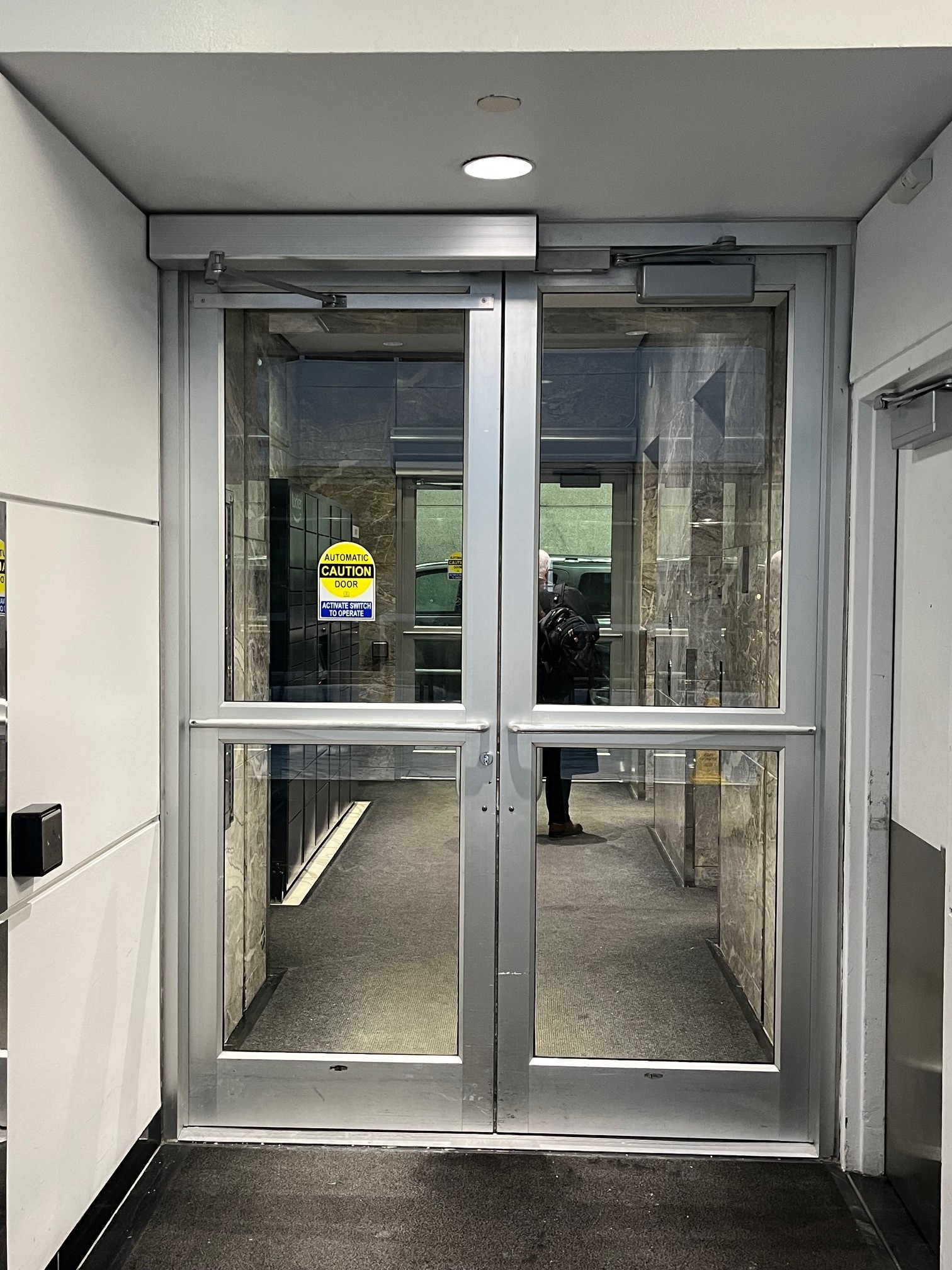
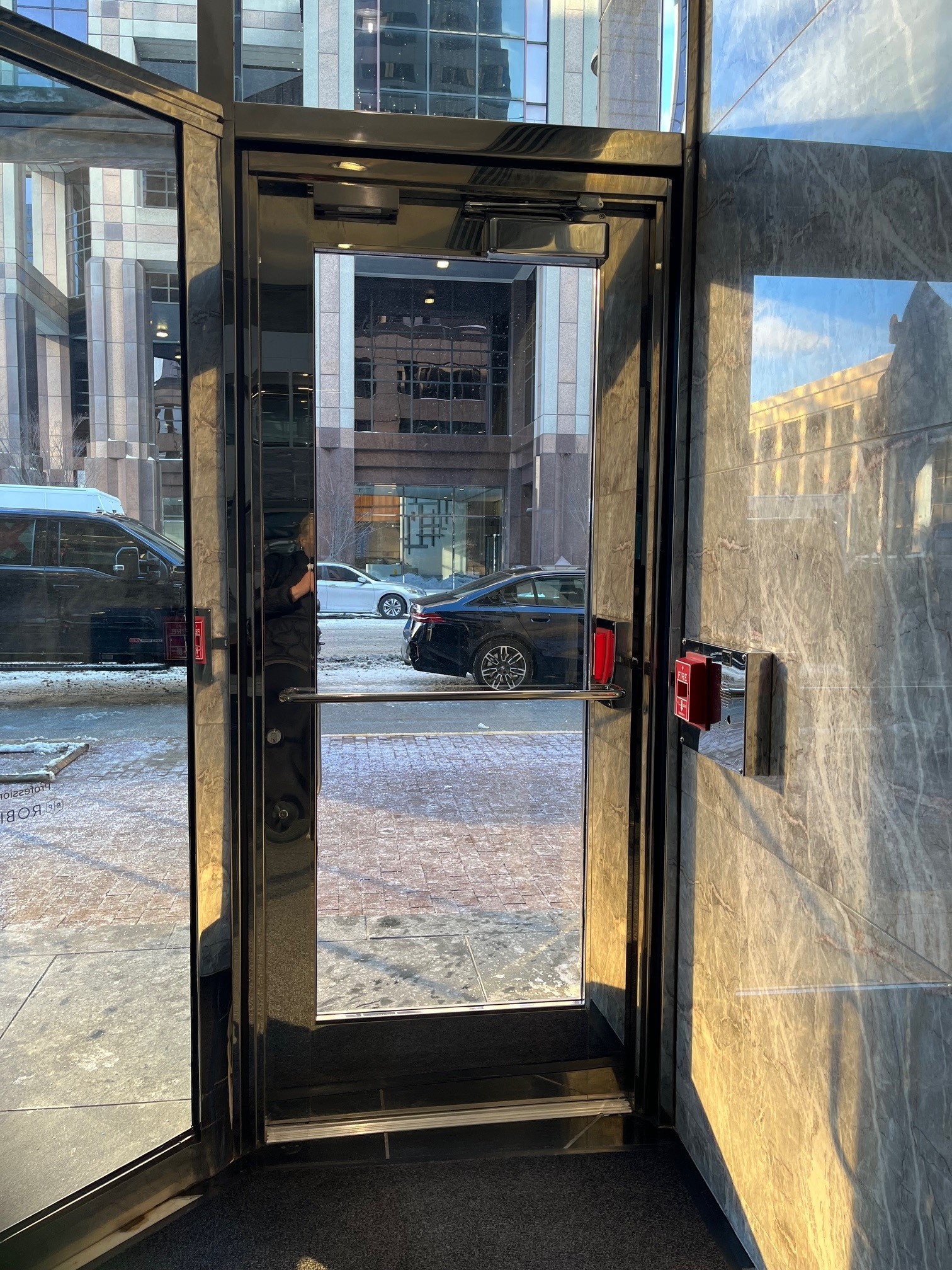
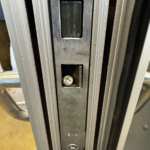
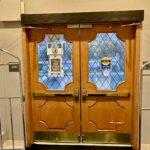
Here’s the other door that’s nearby – this one does have an exit sign – it’s just not showing in the photo. As I stood there, I saw someone try to exit through one of the swinging doors, and her coworker said, “Oh, that door’s locked.” This was not “after hours” – it was during normal working hours. The swinging doors had double-cylinder deadbolts which we know must be unlocked when the building is occupied, and the locks were not the indicator type or otherwise readily distinguishable as locked. The doors were also missing the signage stating: This door to remain unlocked when this space is occupied.
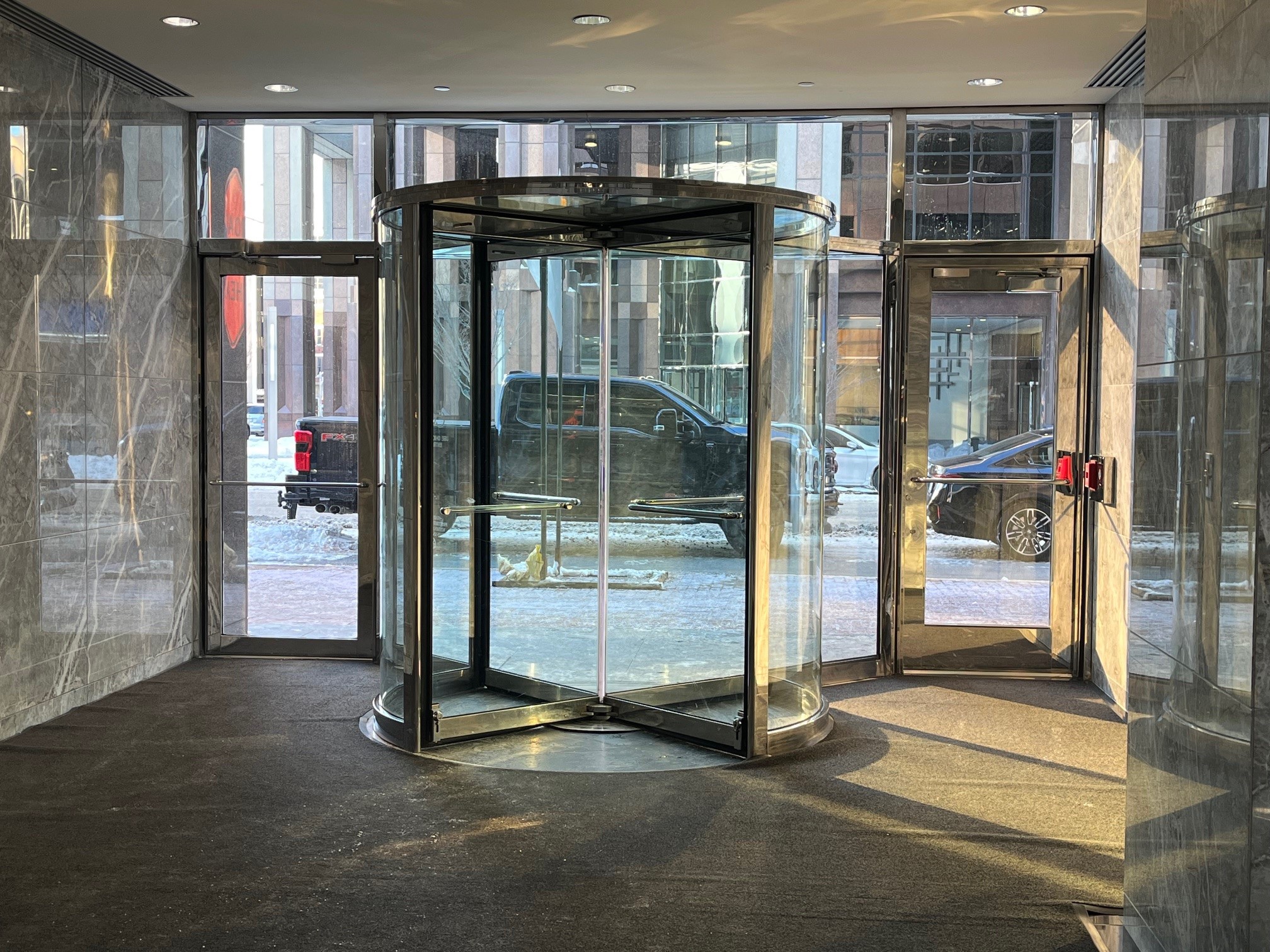
The swinging doors did have very nice bright chrome plated LCN 4040 closers!
Any thoughts on these?
You need to login or register to bookmark/favorite this content.



Never push a blue button!!
I am not a revolving door user,,, I will normally use one of the walk through doors.
Did you snoop, I mean investigate where the non exit sign door leads to?
I wonder what happens when the auto door push is used, when the doors mag locks are active??
I didn’t snoop – I was too cold!!
– Lori
What is the “creative fix” you mentioned for the auto operator?
Also, what do you do in situations like this (locked doors that should be unlocked while building is occupied? Do you say something to someone at that facility? Report to fire marshal?
On a separate note, I recently discovered a facility that has SVR-LBR devices on fire doors. It appears they were ordered as top & bottom rod devices because the head case has a plug where the bottom rod was removed and the factory labeled doors do NOT have preps for the bottom fire bolts (which is required for LBR devices). This was at an existing nursing home built a few years ago. I’m working on a new location of that same company and visited the other facility to get a better understanding of a few hardware items.
When I discovered the missing fire bolts, I mentioned it to the GC that has built ALL 22 of the facilities in my state (this is the first one I have handled). I was told that NONE of the previous facilities were ever required to have fire bolts and all of them have had the bottom rods removed.
Annual fire door inspections are not enforced in my area yet. I just can’t believe the hardware supplier nor the inspectors have picked up on this issue yet. The GC does not want to believe me when I tell them the fire bolts are required. Not sure if I should draw more attention to this or pretend I didn’t see it.
Hi Eric –
I was referring to the horizontal strip of metal across the vision light to attach the shoe to.
I have talked to management and/or the fire marshal before…in this case I didn’t push the button and there was no one around to talk to. The lack of auxiliary fire pins is a scary one, I can only hope that fire door inspections will eventually be enforced everywhere and the deficiencies corrected.
– Lori
Maybe the blue button releases the door?
PS: The signage is really poorly placed as it might cause a confused person to set off the fire alarm.