
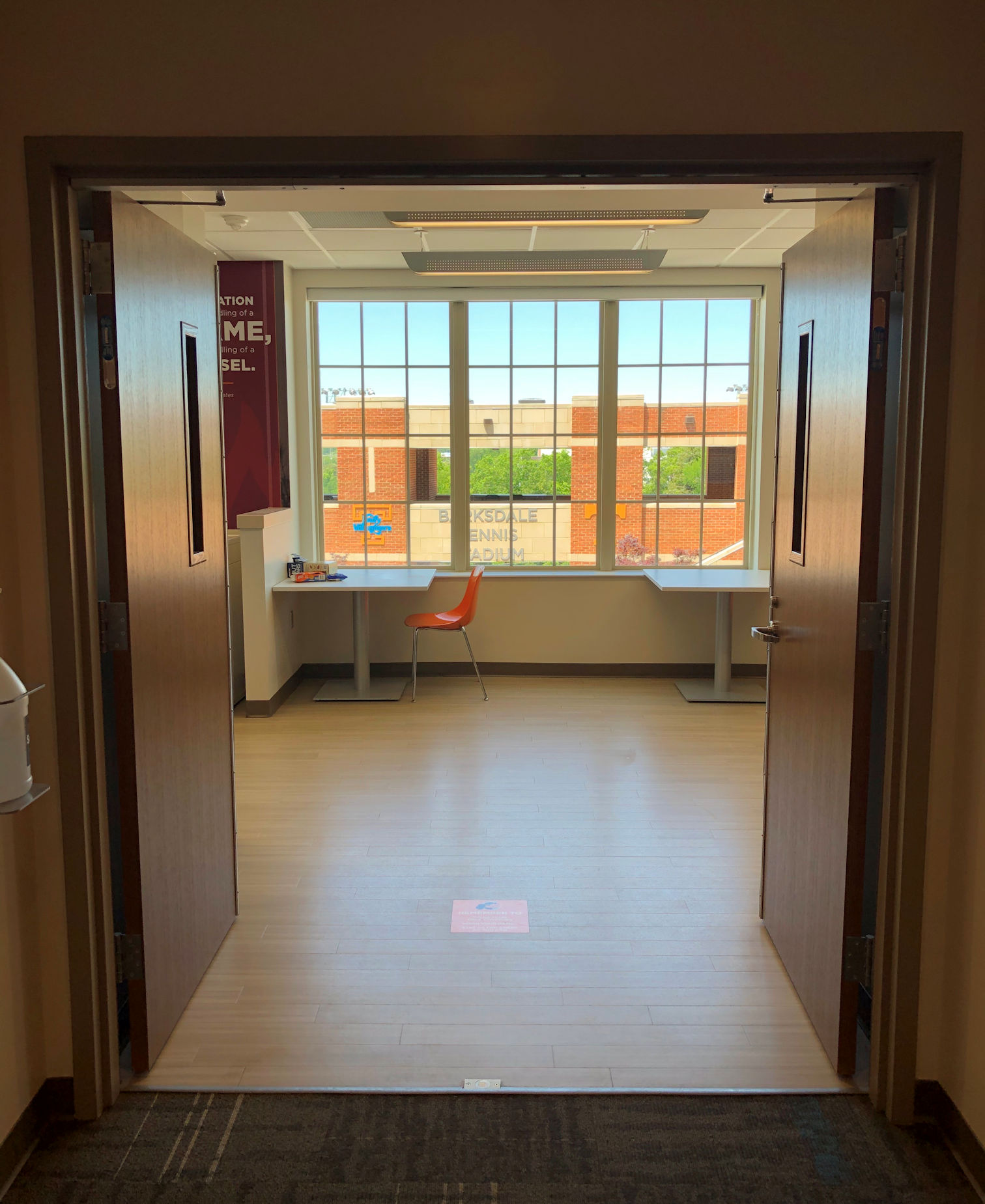
Today’s post is the eighth post exploring the inspection criteria for fire door assemblies. The eighth criterion listed in NFPA 80 for the inspection of swinging doors is:
(8) If a coordinator is installed, the inactive leaf closes before the active leaf.
This guest post by Ian Heckman of Allegion covers the basics of coordinators – the function, available types, and other considerations for pairs of fire doors.
Click here to read other posts in this series and learn more about fire door inspection.
~~~
Coordinators for Paired Door Assemblies: Ensuring Proper Closing Sequence
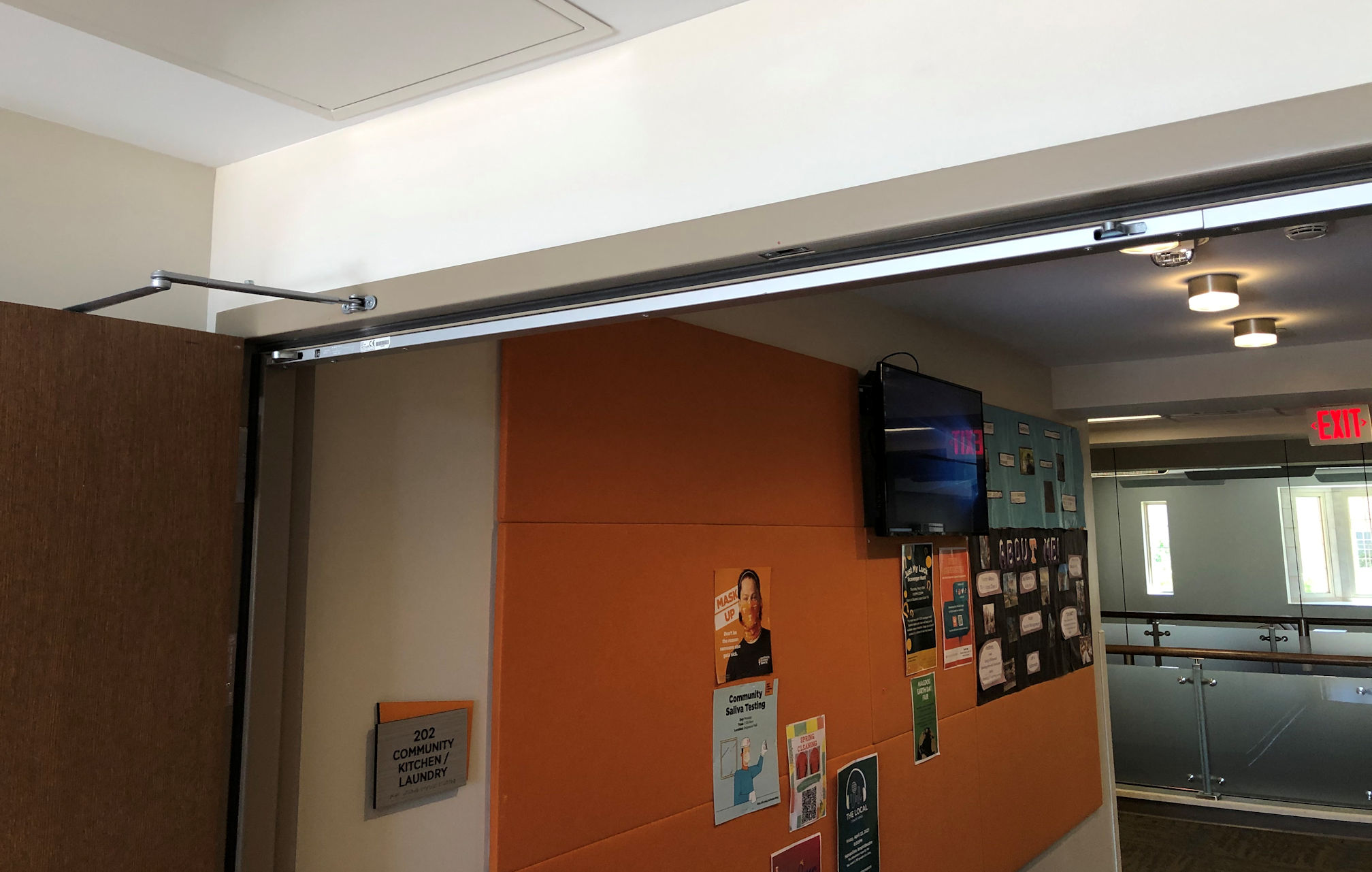 In paired door assemblies, closing sequence isn’t just about appearance—it’s a critical function that ensures proper latching, code compliance, and safety. The component that makes this possible is the door coordinator. A door coordinator is a device, mounted on the frame header, that controls the order in which two door leaves close to ensure the inactive leaf closes first so the active leaf can latch securely. Coordinators are essential in openings with overlapping astragals, flush bolts, or any hardware configuration that requires precise sequencing for performance and protection.
Functional Role of a Coordinator
A door coordinator is a mechanical device mounted on the header (top frame) of a double-door opening. Its primary job is to control the closing sequence of two door leaves—the inactive leaf must close first so the active leaf can latch properly. This is critical for fire-rated openings (to ensure that the door is closed and latched during a fire) and security compliance.
A coordinator is needed when you have an overlapping astragal, automatic or constant-latching flush bolts, or any other requirement that requires the doors to close in sequence to latch properly. It interacts with the door closers and any auxiliary hardware to ensure the inactive leaf closes first, followed by the active leaf.
Types of Coordinators
 There are two types of door coordinators – Bar Coordinators and Gravity Coordinators.
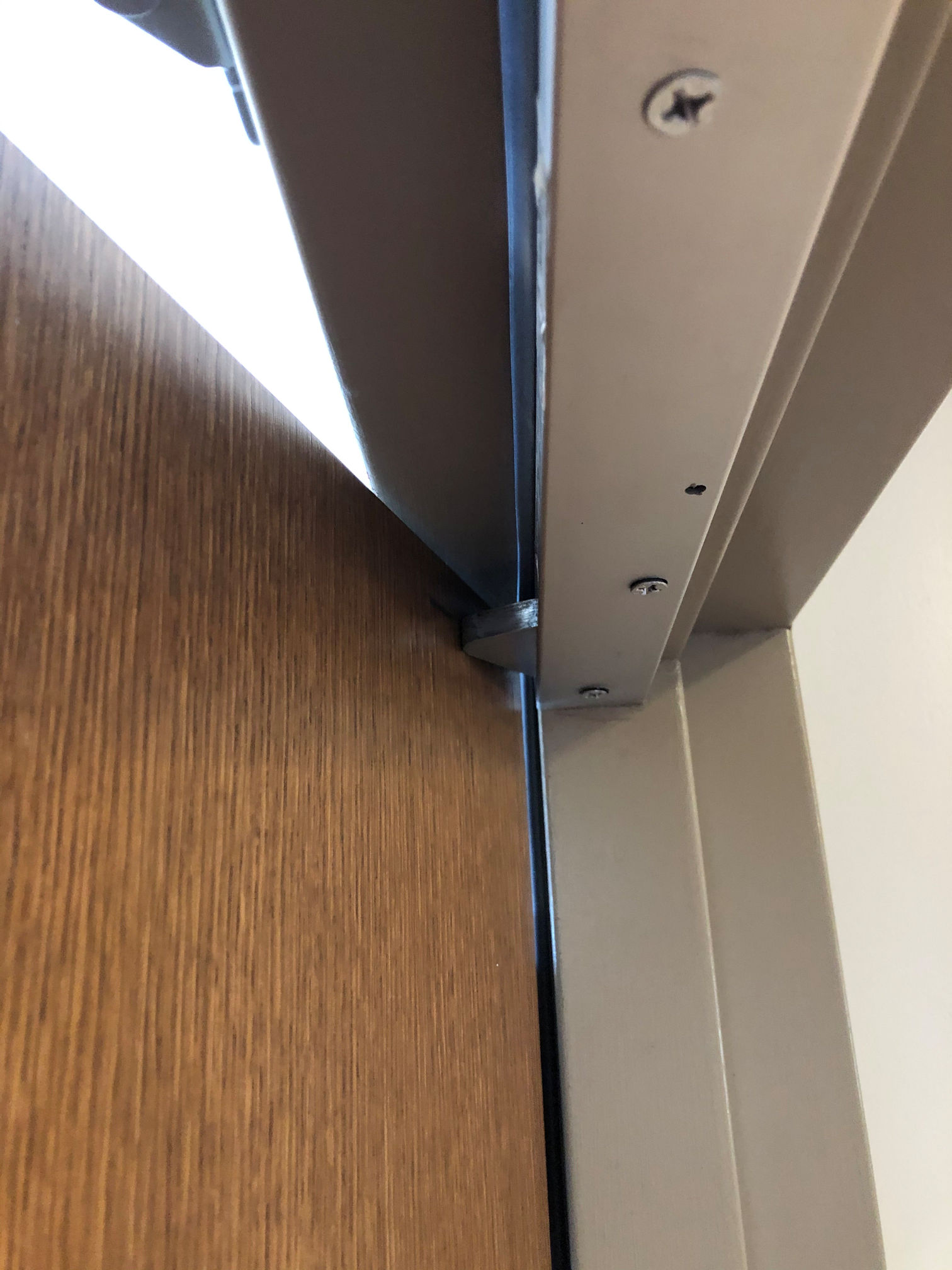
Bar coordinators are surface mounted to the bottom surface of the frame soffit. They use an active door lever, located nearest to the active stop, to hold the active door open until the trigger mechanism is released by the closing of the inactive leaf. This makes them ideal for heavy-duty, high-traffic openings where soffit space is available, and durability is key.
Gravity coordinators are surface mounted on the face of the frame head on the pull side of the opening. When the active door is open, the coordinator prevents it from closing until the inactive door closes. As the inactive door closes, its strike plate contacts the cam and lifts the arm, allowing the active door to close. The roller then rides over the strike plate onto the door bracket, holding the arm above the active door. Gravity coordinators are ideals for applications where soffit mounting isn’t practical, or aesthetics and retrofit flexibility matter.
Key Considerations
- Application
- Coordinators are only required on paired doors where closing sequence matters.
- Consider compliance with fire and life safety codes, as coordinators often play a critical role in meeting these requirements.
- Compatibility
- Must be coordinated with door closers, automatic operators, and any concealed hardware to avoid interference.
- They must be compatible with additional hardware like flush bolts or astragals.
- Hardware mounted on the underside of the frame head (e.g., parallel arm closers) may require a mounting bracket when used with a coordinator.
- Mounting Location
- Bar-type coordinators are mounted under the frame head; gravity coordinators are mounted on the face of the frame.
- Performance
- Verify the coordinator’s capacity against door weight and width.
- Regular inspection and maintenance are essential to ensure reliable performance.
- Design
- Account for aesthetics and space constraints—visible components or additional brackets may impact design.
Maintenance Checklist
- Visual Inspection
- Check arms, cams, and strike plates for wear or damage.
- Ensure the coordinator is securely mounted.
- Alignment Check
- Confirm doors close in the correct sequence (inactive leaf first).
- Adjust arm or mounting if needed.
- Lubrication
- Apply light lubricant to moving parts (cam, roller, pivot points).
- Hardware Compatibility
- Inspect for interference with closers, operators, or brackets.Verify mounting brackets are intact and properly positioned.
- Cleaning
- Remove dust and debris from the mechanism.
- Functional Testing
- Open and close both doors several times to ensure smooth operation.
- Periodic Adjustment
- Re-adjust if door sag or frame shifts affect sequencing.
Conclusion
Specifying a coordinator for paired doors is not optional when closing sequence impacts hardware engagement or code compliance. Proper selection, installation and maintenance help ensure life safety, security, and operational integrity of the opening.
For more information on coordinators, check out this Decoded article, view the whiteboard video, see a coordinator in action in this post, review the information on the Allegion website, or contact an Allegion representative.
You need to login or register to bookmark/favorite this content.



Leave A Comment