
Today’s post is the tenth post exploring the inspection criteria for fire door assemblies. The tenth criterion listed in NFPA 80 for the inspection of swinging doors is:
(10) Auxiliary hardware items that interfere or prohibit operation are not installed on the door or frame.
In this guest post, Allison Messer and Bill Lawliss of Allegion discuss specifying the right hardware from the beginning, to avoid non-code-compliant retrofits.
Click here to read other posts in this series and learn more about fire door inspection.
~~~
 Auxiliary Hardware May Compromise Fire Door Operation and Code Compliance
Fire and life safety codes require that fire doors remain operable and unobstructed. NFPA 80 specifically states that openings must not be equipped with auxiliary hardware items that interfere with operation. Unfortunately, well-meaning modifications like retrofit hardware, wedges, or aftermarket lockdown devices often interfere with door operation and may violate NFPA 80 requirements. These changes can leave doors unable to close or latch properly, creating serious life safety risks. While architects are typically well-versed in codes, hardware details can be complex.
The best way to prevent these issues?
Engaging a qualified door hardware professional early in the design process ensures that required components aren’t omitted and that openings function as intended throughout the building’s life cycle. Allegion’s Architectural Services Specwriters go beyond simply listing products, we act as a strategic partner for architects. Our team understands the nuances of fire and life safety codes and helps translate operational needs into compliant, functional openings. By leveraging tools like Overtur, we streamline collaboration, provide accurate hardware schedules, and ensure that every detail aligns with code requirements. This proactive approach reduces costly field changes, minimizes project delays, and delivers peace of mind that every opening will perform when it matters most.
Allegion’s Architectural Services help architects achieve fire code compliance by:
- Applying deep knowledge of building and fire codes to hardware selection.
- Using Overtur for real-time collaboration and accurate door schedules.
- Reviewing openings holistically within the egress path, not just individually.
- Preventing omissions of required hardware that could compromise fire door performance.
- Offering inspection tools and guidance for existing openings and retrofits.
Q&A with Bill Lawliss, Allegion Architectural Services
Q: Why do auxiliary hardware items pose such a risk on fire doors?
Bill: Auxiliary hardware—like surface bolts, wedges, or aftermarket lockdown devices—often seems harmless, but it can interfere with the door’s ability to latch or close properly. NFPA 80 requires that fire doors operate as intended, and these modifications may violate that standard. Beyond code compliance, they create real safety hazards. For example, a door that’s wedged open during a fire won’t contain smoke or flames, putting lives and property at risk.
Q: Do architects typically struggle with fire codes?
Bill: Architects are generally very good with codes—they have to be. Where they rely on us is in the details of door hardware. Fire-rated openings can be complex, especially when you add access control, special locking arrangements, or specialty functions. We help interpret those requirements and apply them correctly to each opening.
Q: What advice would you give architects to ensure their openings pass inspection?
Bill: Start by telling us how you want the door to operate—access control, auto operators, locking functions. That gives us the context to select hardware that meets both operational needs and code requirements. Avoid trying to specify every piece of hardware yourself; it often leads to omissions or misapplications. Let us handle the details so you can focus on design.
Q: How does Allegion’s Overtur platform enhance this process?
Bill: Overtur is a game-changer. It allows architects, spec writers, and other stakeholders to collaborate in real time, review door schedules, and share photos of existing conditions. That visual context helps us catch issues early—before they become costly field changes. It’s efficient, accurate, and keeps everyone on the same page.
 Q: Can you share a real-world example where proper specification prevented a problem?
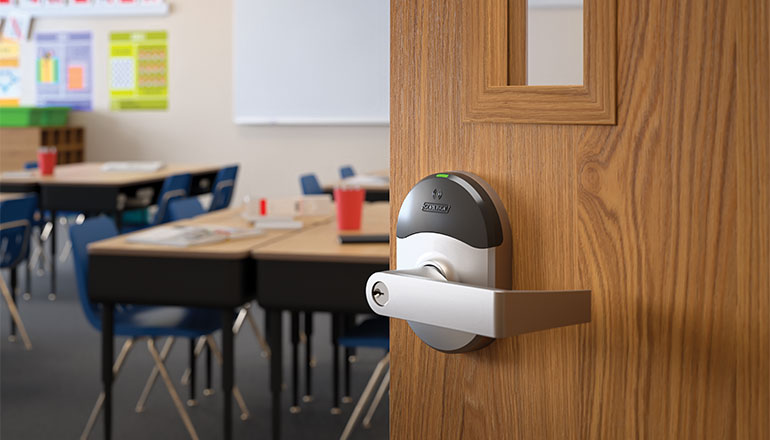
Bill: Absolutely. We recently worked on a school project where the architect wanted a specific lockdown function. Initially, the design included aftermarket devices that would have violated egress codes. By collaborating early, we proposed a compliant solution using electronic hardware that met both security and life safety requirements. The result? No code violations, no delays, and a safer environment for students.
Q: What trends or upcoming changes in fire safety codes should architects prepare for?
Bill: We’re seeing more emphasis on integrated solutions—hardware that combines security and life safety without compromising compliance. Also, expect continued scrutiny on aftermarket devices. Codes are evolving to address these risks, so staying informed and working with a knowledgeable specwriter is critical.
Fire doors are a critical life safety feature, but compliance depends on details. By partnering with Allegion’s specification team early, architects can avoid code violations, reduce project risk, and deliver safer buildings—lives depend on it.
Want to Learn More About Fire Door Compliance?
Fire and life safety codes can be complex, and even small hardware changes can impact compliance. If you have questions about specifications or need guidance on ensuring your openings meet code, Allegion’s architectural experts are here to help.
Connect with a specification professional for resources and support.
Allison Messer is Marketing Manager for Allegion, specializing in architect-focused strategies. With a strong background in the AEC industry, she develops targeted marketing programs and technical content that empower design professionals. Her experience includes leading strategic marketing initiatives, brand positioning, and integrated campaigns that strengthen visibility and drive engagement.
Bill Lawliss brings 37 years of industry expertise—including 21 years at Allegion—to his role as Architectural Services Director. His deep knowledge of commercial doors, hardware, and security, gained through experience as a distributor, specification consultant, project manager, and business leader, adds exceptional value to project teams. Bill leverages this background to guide successful outcomes across diverse construction projects, aligning resources and personnel to deliver on schedule and exceed client expectations.
You need to login or register to bookmark/favorite this content.




Leave A Comment