
This feature article will be published in the January/February 2026 issue of Door Security + Safety .

With the new year comes the adoption of new codes in many states, with most adopting one or more of the I-Codes – the International Building Code (IBC) and/or the International Fire Code (IFC). These codes are revised every three years, and given the length of time between state adoptions, it can be difficult to keep up with what’s new.
When a new state code is adopted, it’s important to review the state modifications to see what differs from the model codes. This should be relatively simple as states typically either publish the modifications separately or note them in the state code with a change in font. Studying only the model codes without taking the state-specific requirements into account can result in non-code-compliant projects, so this review is critical.
This article is intended to serve as a summary of some of the more impactful changes to the code requirements related to door openings. A quick read through the list will help determine whether you are up to date, or whether you should take a deeper dive and read a past Decoded article to learn more about the code change. Some of the changes may be clarifications that can be implemented immediately. Some may not apply until the edition of the code is adopted in the project’s jurisdiction but could be used to request approval from the Authority Having Jurisdiction (AHJ) before adoption of the complete code.
School Security
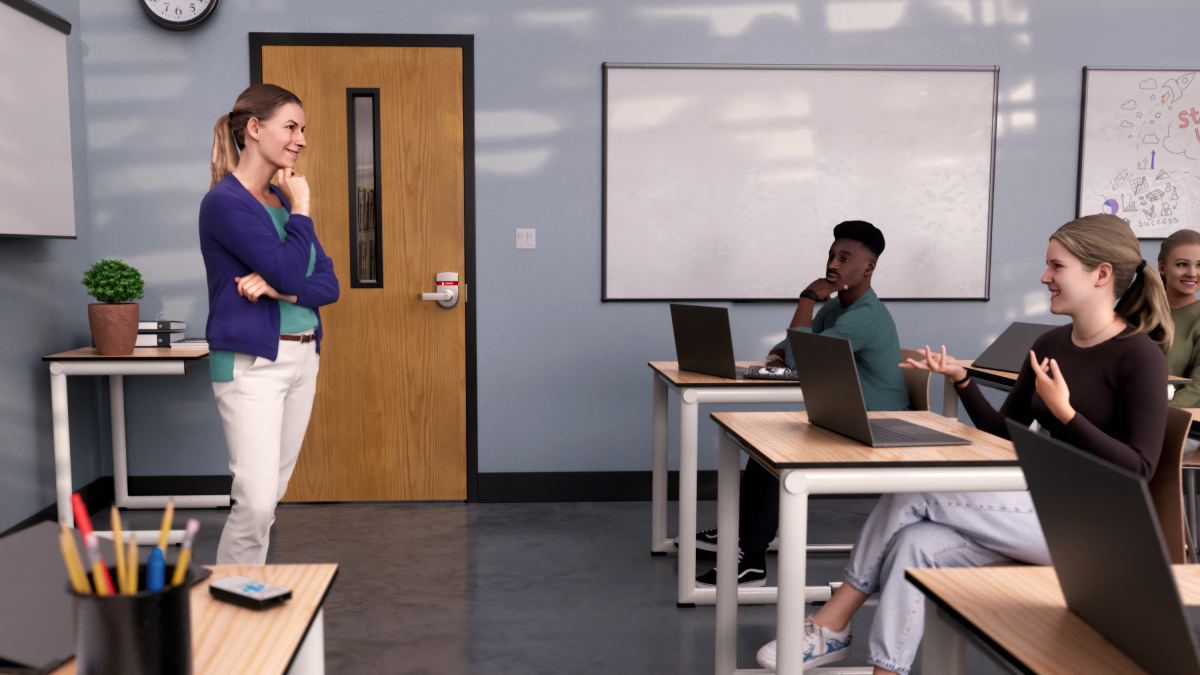
Currently, the I-Codes permit classroom doors to be locked if certain criteria are met. A change has been approved for the 2027 edition which will require these doors to be lockable from within the room.
The increased focus on school security and safety has led to changes in the I-Codes. Beginning with the 2018 edition, a section was added addressing locking arrangements in educational occupancies. This section permits doors to classrooms, offices, and other occupied rooms to be lockable, as long as certain criteria are met. The section reiterates that the locking method must be compliant with the Means of Egress chapter and that no modifications may be made to listed hardware.
The 2018 edition added a requirement for the doors to be able to be unlocked from the outside with a key or other approved means, which allows authorized access for school staff and emergency responders. The 2027 edition of the I-Codes will require these doors, as well as exterior doors, to be lockable from the inside, which means that traditional classroom function locksets will not be compliant. This edition will also require key access from the exterior via at least one door on each building face.
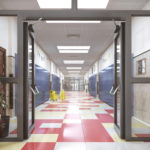
A couple of other changes affecting school security and safety have been added in recent editions of the I-Codes. Although much of the school-security focus is on classroom doors, there are other areas in schools that could be used as safe areas during a lockdown. Prior to the 2024 edition, the IBC did not permit doors serving multiple occupant restrooms to be locked from the inside, to help prevent mischief within the restroom. In order to allow an authorized person using a key or other approved means to secure the restroom from the inside, the International Plumbing Code (IPC) had to be modified. This change was then incorporated into the IBC. When locked, the door must allow free egress as required by the code; this is typically accomplished with a special deadbolt function that has a key cylinder on the outside and inside to project and retract the bolt, and a thumbturn on the inside that only retracts the bolt for egress.
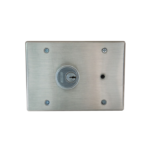
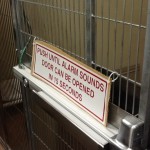
Moving into the next section of this article about electrified hardware, many schools are seeking a solution for “elopement”, which occurs when small children or those with special needs attempt to leave the school unaccompanied. One option for deterring egress is a delayed egress lock, which delays egress for 15 seconds, or 30 seconds when approved by the AHJ. Until the 2018 edition, the I-Codes did not permit the use of delayed egress locks in educational or assembly occupancies, so these locks were not an option for schools. The 2018 edition was changed to allow the delayed egress application on classroom doors serving a calculated occupant load of less than 50 people. This edition and subsequent editions also permit the use of delayed egress locks on secondary exits serving courtrooms – typically assembly occupancies – if certain criteria are met.
More On Electrified Hardware
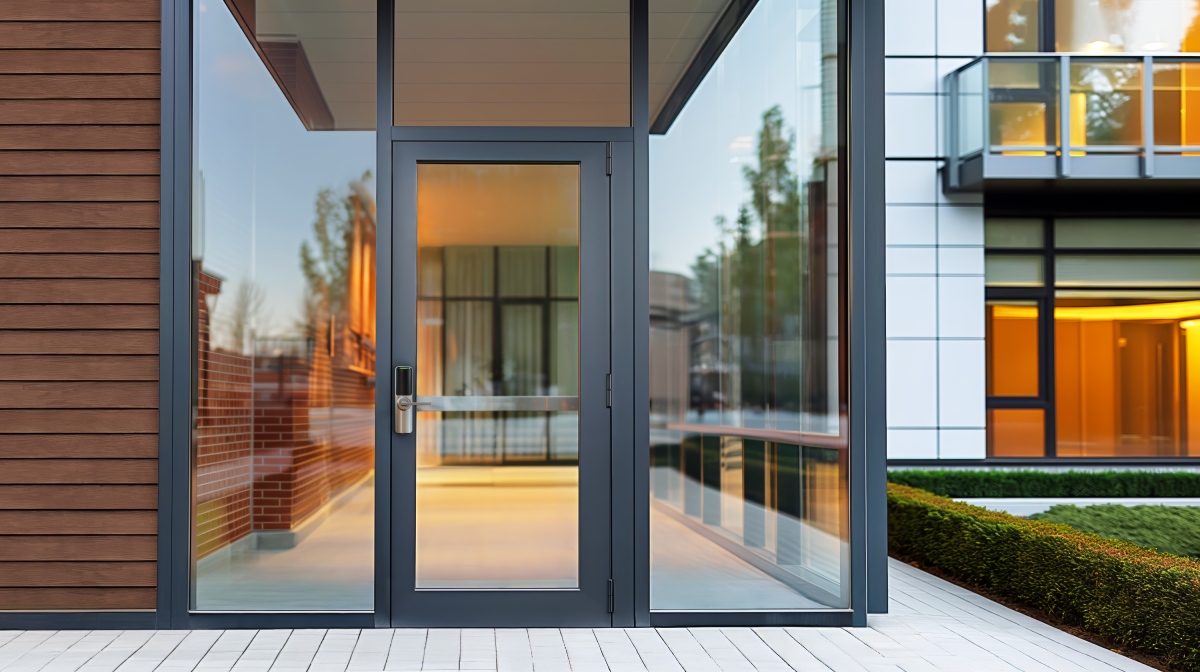
When a door is equipped with an access control system, the 2024 I-Codes clarify that it must be readily openable from the egress side or must comply with the requirements for special locking arrangements.
In addition to the delayed egress locks mentioned above, there have been many other changes to the code requirements addressing electrified hardware. Just to summarize a handful:
- Normal Locking Arrangements: A very important clarification was made in the 2024 I-Codes, addressing the most common electrified hardware application. Although the codes included sections which applied to “special locking arrangements” (delayed egress, controlled egress, sensor release, etc.) there was no code section for “normal locking arrangements” (doors with access control hardware that allows free egress at all times). The codes now state that if a door is equipped with an access control system, it must be “readily openable from the egress side without the use of a key or special knowledge or effort.” If not, it must comply with one of the sections applicable to special locking arrangements.
- Electrified Hardware Listings: For years, there has been confusion about the listings required for electrified hardware used in special locking arrangements. The 2024 codes were clarified to state that the electromechanical or electromagnetic locking devices are the components of these systems that must be listed. In addition, a second listing option was added, so electrified locks used in special locking arrangements may be listed to either UL 294 – Standard for Access Control System Units or UL 1034 – Standard for Burglary-Resistant Electric Locking Mechanisms. Note that these listings are not required by the model codes for normal locking arrangements.
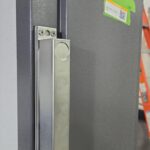
- Electromagnetic Locks: The mandates for electromagnetic locks have been clarified and categorized into two groups – sensor release and door hardware release. In the 2024 I-Codes, a change was made which prohibits the use of sensor release locks on doors with panic hardware.
- Controlled Egress Locks: Requirements addressing electrified controlled egress locks in health care facilities were first added to the 2009 I-Codes, and the section was clarified over several editions. These locks are permitted to prevent egress until evacuation is needed, for health care units where patients require containment for their safety or security.
- Stairwell Reentry: In the 2024 editions, the requirements for releasing stairway doors for reentry were changed. If stair doors are locked on the stairwell side, they must be released for reentry upon activation of a switch at the fire command center or other approved location, by activation of the fire alarm or sprinkler system, and also upon power failure.
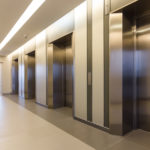
- Elevator Lobby Egress: A new section was added to the 2024 I-Codes addressing electrified hardware on doors serving elevator lobbies that do not have direct access to an exit. Prior editions required elevator lobbies to have a code-compliant means of egress, which could allow free access to the tenant space, jeopardizing security. The added section permits fail safe electrified locks on these doors if all of the requirements of the code are met.
- Interlocks/Control Vestibules: To date, the model codes have not included requirements for interlocks, which are vestibules with one or more doors where electrified hardware prevents more than one door from being opened at any time. A section has been approved for the 2027 model codes that will address this application, which will be defined as a control vestibule.
Panic Hardware
The general requirements for panic hardware have not changed for many editions of the I-Codes. Since 2006, panic hardware has been required for doors equipped with a latch or lock, serving assembly and educational occupancies with a calculated occupant load of 50 people or more, and high hazard occupancies of any occupant load. For these doors, the actuating portion of the hardware (the pushpad or crossbar) must measure at least half the width of the door, and the I-Codes require the latch to retract with no more than 15 pounds of force (read on for more about operable force).
The changes related to panic hardware that have occurred in the model codes are related to other doors where panic hardware is required. The National Electrical Code requires panic hardware on doors serving rooms housing certain electrical equipment; each edition of the code varies slightly, so it’s best to consult the adopted code for details. Beginning with the 2021 edition of the I-Codes, panic hardware is also required for refrigeration machinery rooms with an area of more than 1,000 square feet.
Exterior Spaces
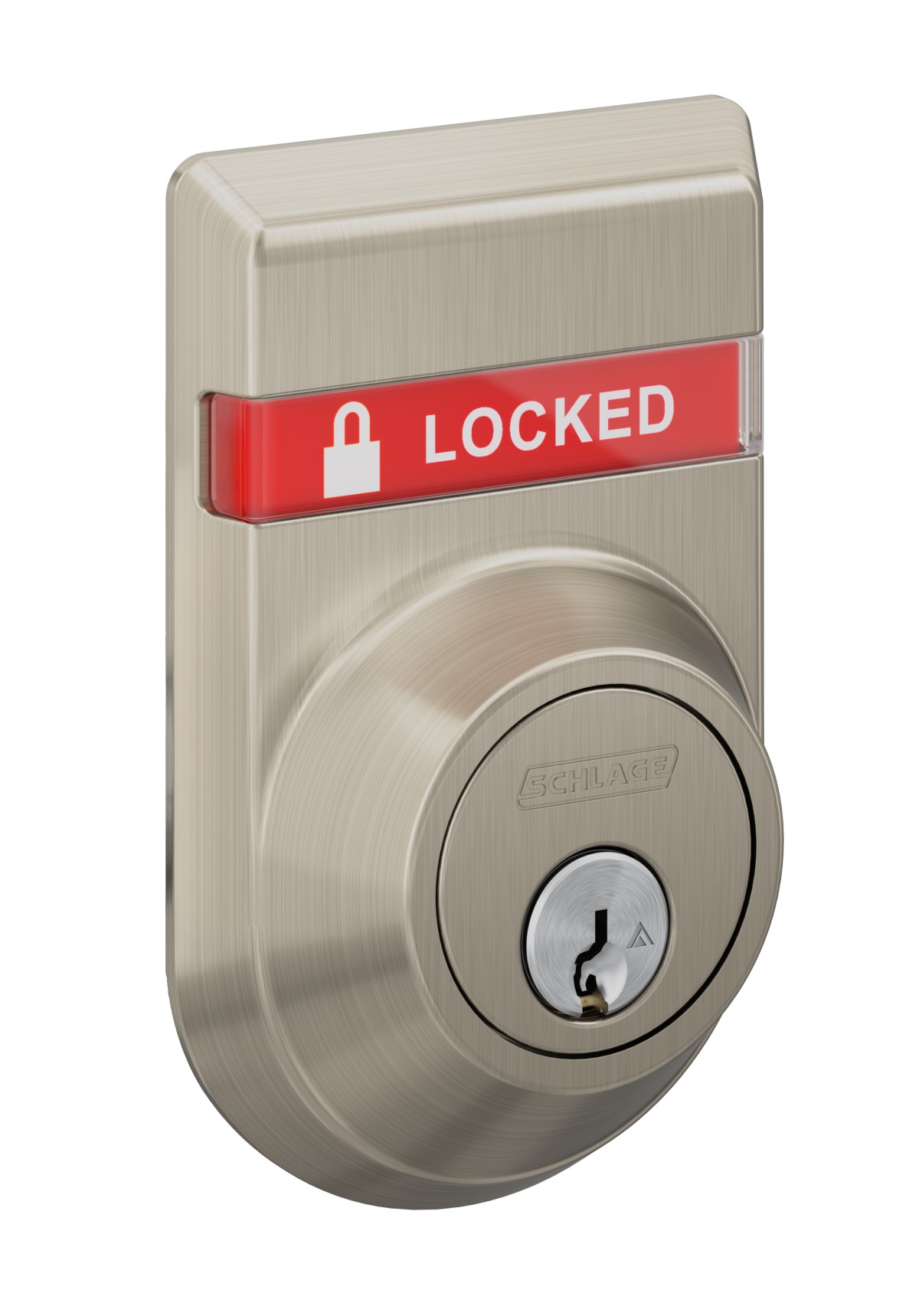
The I-Codes now address the locking of exterior spaces when the egress path passes through the interior of the building. One of the requirements is that the lock is key-operated and readily distinguishable as locked, like a double-cylinder deadbolt with an indicator.
Exterior spaces with an egress route passing through the interior of the building have always been a challenge from a security standpoint. Whether it’s an enclosed courtyard, a roof terrace or balcony, or even an unoccupied roof used only for mechanical equipment, the door providing egress for these areas could also serve as an entry point for unauthorized access.
Prior to the 2018 editions of the IBC and IFC, these codes did not include requirements specific to unoccupied roofs, such as those intended to be accessed only by technicians servicing mechanical equipment. A reference was added to the 2018 editions in the section called “Locks and Latches” which lists some locations where locks and latches are allowed to prevent the operation of doors. This section states: “Doors serving roofs not intended to be occupied shall be permitted to be locked preventing entry to the building from the roof.”
In past editions of the I-Codes, occupied roofs and other exterior spaces had to have the required number of code-compliant means of egress; prior to the 2021 IBC/IFC, this would typically include doors that allow free egress from the courtyard, balcony, or roof terrace into the building. A change was made to the 2021 editions, which allows these doors to be locked if certain criteria are met, preventing access from the exterior space to the building when the exterior space is not occupied. Some of the requirements for these doors include a weatherproof telephone on the exterior side of the door, a key-operated lock that is readily distinguishable as locked, and a window on or adjacent to the exit for viewing of the exterior area. This change also addresses private balconies in residences and offices, allowing them to be locked without requiring the extra safety measures.
Accessibility
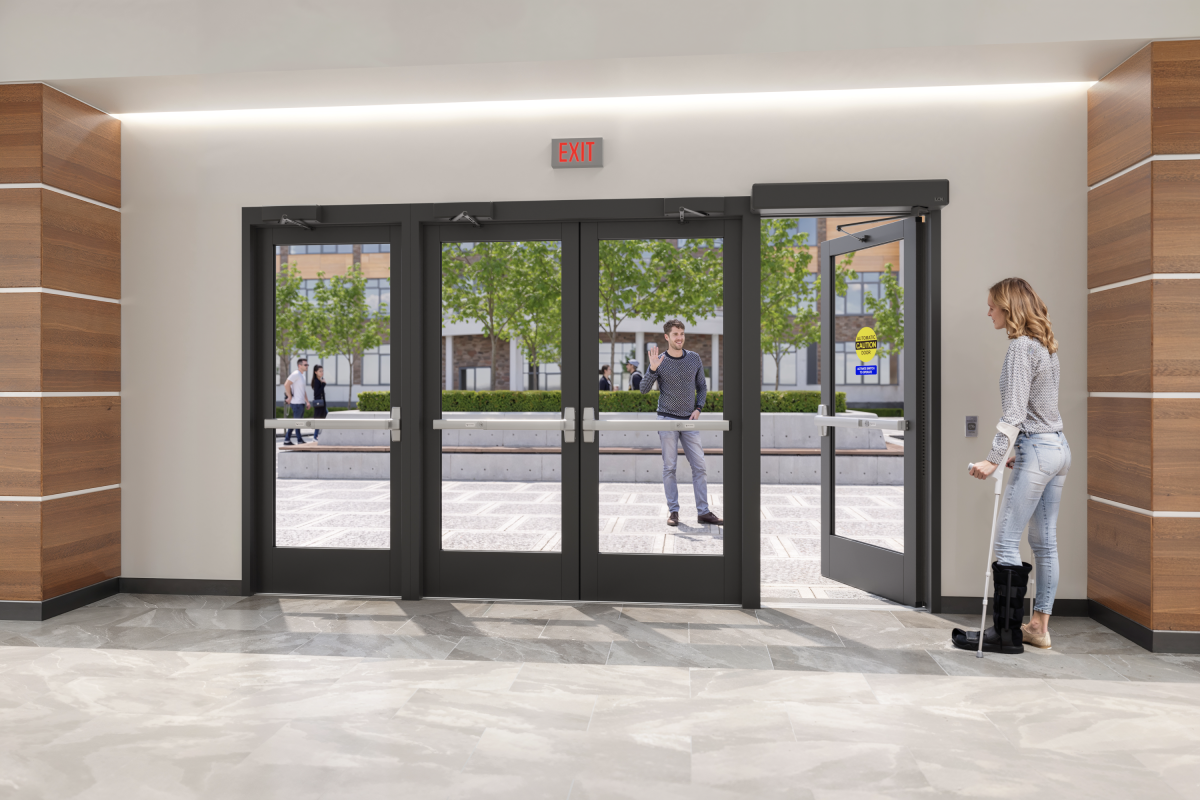
A change to the 2021 I-Codes requires the accessible public entrances to buildings of certain types and occupant loads to be equipped with automatic operators.
It has been many years since we have seen a new accessibility standard. The most recent edition of the ADA Standards for Accessible Design were published in 2010 and went into effect in 2012. A new edition of ICC A117.1 – Accessible and Usable Buildings and Facilities is expected to be released soon, but currently the 2017 edition of this standard is the most recent.
Regardless, a few changes have been made to the I-Codes that affect accessibility. One is related to the limitations on the operable force for door hardware. An editorial change was made to the 2010 ADA standards requiring door hardware to comply with the section on operable parts, including a limit of 5 pounds of operable force. This requirement is still in effect, however, the I-Codes and A117.1 have been updated to include limits of 15 pounds of pushing or pulling motion (ex. panic hardware) and 28 inch-pounds of rotational motion (ex. lever handle).
Another change to the I-Codes affects the clear opening height of openings, where door hardware projecting down into the opening could create a point of impact for someone with a visual impairment. Prior editions of the codes and standards allowed door closers and door stops to project down to 78 inches above the floor but did not address other types of hardware mounted in this area. Beginning with the 2021 edition, the IBC now states, “Door closers, overhead door stops, power door operators, and electromagnetic door locks shall be permitted to be 78 inches (1980 mm) minimum above the floor.” The accessibility standards have not yet been updated to address projections beyond those related to door closers and door stops.
Finally, a change was made to the 2021 IBC requiring accessible public entrances in certain buildings to be equipped with automatic operators. The requirement applies to all assembly use groups except A-5 (used for participation in or viewing outdoor activities) with a calculated occupant load of 300 people or more, and for business, mercantile, and R-1 transient residential occupancies (including hotels) with an occupant load of 500 people or more. These facilities require automatic operators on at least one door or one set of doors, for example, the exterior door and the corresponding vestibule door.
Conclusion
Many of these recent changes are due to the efforts of the Builders Hardware Manufacturers Association (BHMA) Codes, Government, and Industry Affairs Committee (CGIA). This committee proposes dozens of door-related changes to the codes and standards during each code development cycle, aimed at making the codes more consistent, and easier to understand and apply. Changes may also be proposed to address emerging threats and new technologies.
Staying up to date on the current codes is crucial for anyone working in the design and construction industry, or in any field that affects door openings. Compliance with the codes and standards helps to ensure that building occupants have free egress, fire protection, and accessibility regardless of physical ability. Lack of awareness can lead to project delays, increased costs, and negative impacts on the safety of the built environment. Reference the adopted codes for detailed requirements, and consult with the AHJ for additional assistance.
You need to login or register to bookmark/favorite this content.

“””Although much of the school-security focus is on classroom doors, there are other areas in schools that could be used as safe areas during a lockdown”””
I always think of outdoor areas,
But, how about interior areas, that might be in use at the time of a lock down, that require panic hardware?
Hi Charles –
Doors with panic hardware can be locked to prevent access, but not egress.
– Lori
Good point,,
who has the key? Is always the question.
I know and it is seen, schools will never have total lock down capabilities.