
As part of an ongoing project, I’m updating my Decoded articles – the previous version of this one was first written in 2012! Originally addressing two topics (door swing and encroachment), I’m separating this into two articles. (Part 2 is here.)
This Decoded article was published in Door Security + Safety
.

 What determines the direction in which a door must swing?
According to the International Building Code (IBC)*, if a door is a required egress door, it generally needs to be a swinging door that is hung on hinges or pivots. A clarification was added in the 2021 edition addressing balanced doors. There are several exceptions to this requirement, which would allow a different type of door to be used in certain applications:
- Private garages, office areas, factory and storage areas with an occupant load of 10 or less.
- Group I-3 occupancies used as a place of detention.
- Critical or intensive care patient rooms within suites of health care facilities.
- Doors within or serving a single dwelling unit in Groups R-2 and R-3.
- In other than Group H occupancies, revolving doors complying with the applicable sections of the IBC.
- In other than Group H occupancies, horizontal sliding doors complying with the applicable sections of the IBC.
- Power-operated doors in accordance with the applicable sections of the IBC.
- Doors serving a bathroom within an individual sleeping unit in Group R-1.
- In other than Group H occupancies, manually operated horizontal sliding doors are permitted in a means of egress from spaces with an occupant load of 10 or less.
Several of these exceptions address horizontal sliding doors – including the sliding office doors that have become more common due to the high cost of square footage and the amount of floor space a typical swinging door requires. Sliding doors to individual bathrooms are also being used more often due to space constraints. The exceptions for power-operated doors, horizontal sliding doors, and revolving doors refer to additional requirements that include provisions for egress through these doors – revolving doors must “collapse”, sliders must be able to be opened with a force perpendicular to the door – commonly referred to as “breakout” or “breakaway”, and there are maximum force limitations for these operations.
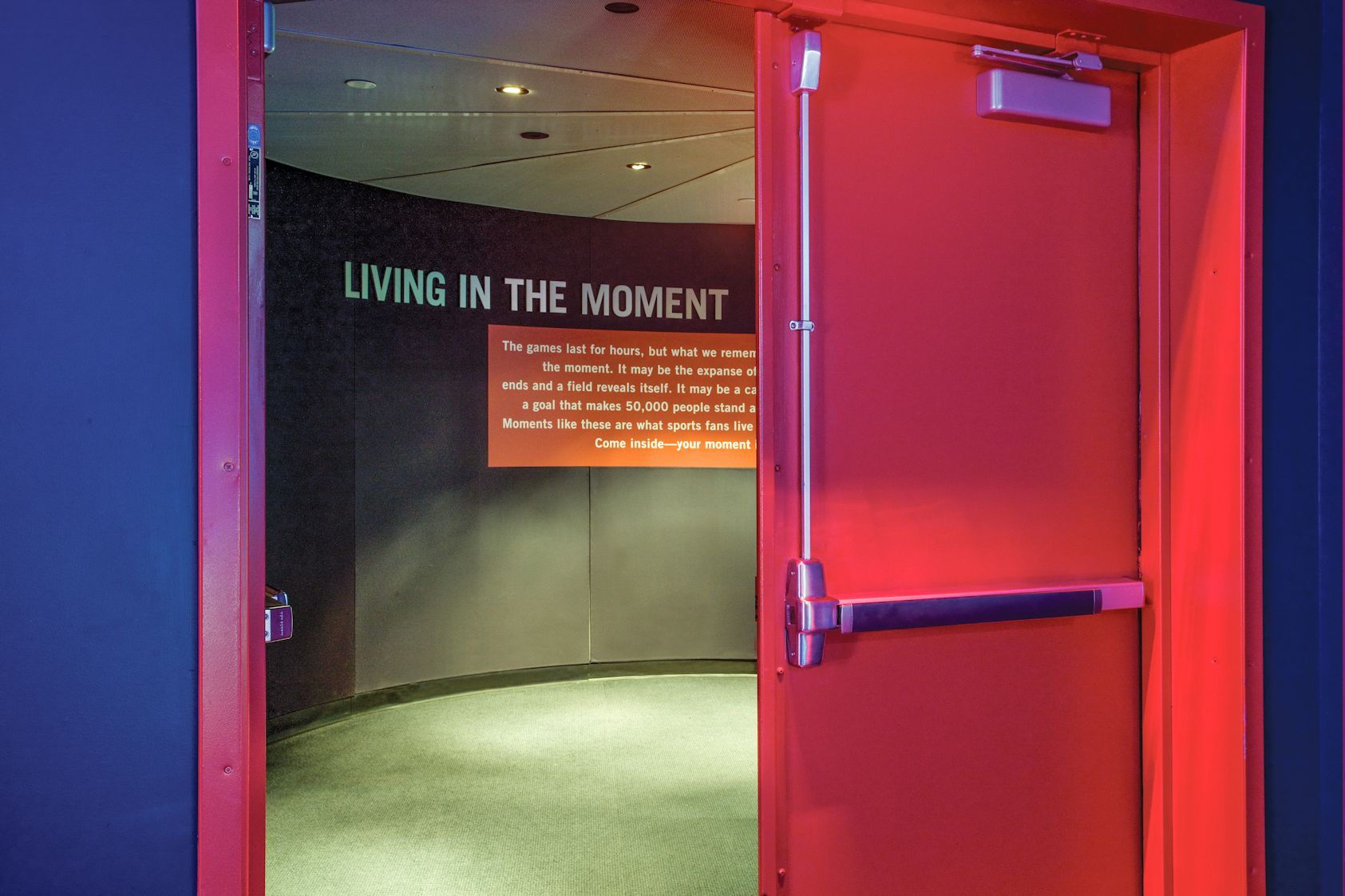
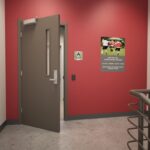
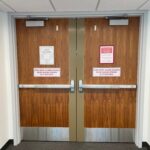
This section of the IBC also addresses the direction of door swing. In high hazard (Group H) occupancies, all doors must swing in the direction of egress travel, regardless of the occupant load. In other occupancy types, the door must swing in the direction of egress travel when the door is serving a calculated occupant load of 50 or more occupants.
“Doors shall swing in the direction of egress travel where serving an occupant load of 50 or more persons or a Group H occupancy.”
NFPA 101 – The Life Safety Code also requires doors to swing in the direction of egress travel when serving an area of high hazard contents of any occupant load, or other occupancy types with an occupant load of 50 or more (with limited exceptions for horizontal sliding doors and smoke barrier doors in existing health care occupancies). In addition, NFPA 101 requires doors leading to an exit enclosure to swing in the direction of egress travel, except when the door serves an individual living unit that opens directly into the exit enclosure.
Depending on the code being enforced, other locations where doors are required to swing in the direction of egress travel may include refrigeration machinery rooms (IBC), certain electric rooms (NFPA 70 – National Electric Code, and the IBC), some stair doors in mercantile occupancies (NFPA 101), and doors in aircraft loading walkways (NFPA 101 and NFPA 415). Consult the applicable code or standard for more information on these requirements.
In Summary
Doors must typically swing in the direction of egress travel when serving:
- A high-hazard occupancy of any occupant load.
- Any occupancy type with a calculated occupant load of 50 or more occupants (consult the codes for exceptions).
- Exit enclosure doors except when serving one living unit (NFPA 101).
- Additional locations as specified in the codes, such as electrical rooms and refrigeration machinery rooms.
Codes may vary depending on the edition adopted as well as local requirements. Consult the applicable codes for more information. The Authority Having Jurisdiction makes the final determination on matters related to code compliance.
* For more information about these requirements, refer to the following sections in the IBC: 2024-2015: 1010.1.2, 2012 and 2009: 1008.1.2.
You need to login or register to bookmark/favorite this content.
Leave A Comment