
When designing a doorway to be inclusive, the goal is to remove friction for all users and provide safe and easy access. Inclusive design considers a broad range of user needs and looks for solutions that elevate the experience for everyone. ADA mandates strict tolerances for floor transition and threshold height, clear opening size and maneuvering clearance. To provide the desired user experience and meet the code requirements, door hardware professionals turn to solutions that are purposefully engineered with accessibility in mind. In today’s guest post, Colleen Furlong of Allegion explores these concepts further.
~~~
 Why Reducing Physical Barriers Is Essential to Inclusive Opening Design
When designing a doorway to be inclusive, the goal is to remove friction for all users and provide safe and easy access. To help achieve this, physical barriers must be addressed, and code compliant ramps, thresholds and hardware are helpful tools in doing so.
Empathy in Form and Function
A user centric approach is key to understanding potential points of friction and addressing them to make movement through a space easier and more intuitive. The intent is to create an environment where the hardware and floor transitions support an uninterrupted path of travel.
Ana Sofia Esquivel, industrial designer at Allegion, explains, “Inclusive design considers a broad range of user needs and looks for solutions that elevate the experience for everyone. The goal is to provide the same seamless experience, whether the person using the opening is a parent carrying an infant, a person in a wheelchair or someone experiencing a temporary limitation. When an opening is designed to minimize barriers, it can improve usability for all.”
The Architectural Standard for Equity
When looking at requirements for an opening, a starting point in the door hardware industry is the applicable model codes and standards. When it comes to accessible openings, the Americans with Disability Act (ADA) is a frequently referenced standard. ADA mandates strict tolerances for floor transition and threshold height, clear opening size and maneuvering clearance.
Lori Greene, Allegion’s manager of codes & resources, shares key aspects of the standard:
- Changes in Level: The accessibility standards include requirements intended to allow building occupants to move through doorways without encountering obstacles. For example, changes in level can make it more difficult for someone using a wheelchair to maneuver through a door opening. To help mitigate these challenges, the standards limit thresholds for both manually-operated and automatic doors to ½-inch maximum height (¾-inch for existing or altered thresholds). For these thresholds, a change of level of up to ¼-inch is permitted to be vertical, and changes in level of ¼-inch to ½-inch must be beveled with a slope not greater than 1:2. If the rise is greater than ½-inch, a ramp with a slope of 1:12 maximum must be used (with some exceptions for existing locations).
- Clear Opening Width: For most doors, the minimum clear opening width is 32 inches (there are some exceptions). For single doors, this is measured from the face of the door – open to 90 degrees – to the stop on the strike side of the frame. For pairs of doors, at least one door must provide a minimum of 32 inches of clear opening width. Again, this is measured with the door open to 90 degrees, and the measurement is taken from the face of the open door to the edge of the other door in the closed position or to the side of the mullion, if present.
- Projections: To address panic hardware and other latching hardware, projections into the required clear opening width of up to 4 inches are allowed at a height of 34 inches or more. If a door opening does not provide sufficient clear opening width, swing clear hinges may help to meet the clear width requirement. On manual doors, within the bottom 10 inches of the door height (measured up from the floor), hardware may not project off the door. This area must be flush and smooth to avoid catching a crutch, cane, or wheelchair footpad as the person moves through the doorway.
- Clear Opening Height: The minimum clear opening height is typically 80 inches. The model codes and referenced standards permit some types of hardware to project down into the opening as long as a clear opening height of 78 inches is maintained, measured to the projecting hardware. While the accessibility standards reference the projection of door closers and door stops, the International Building Code (IBC) has added additional exceptions for automatic operators and electromagnetic locks.
- Maneuvering Clearance: The area around a manually operated door is required to be kept clear of obstructions, to allow a person using a wheelchair, walker, or crutches sufficient space to maneuver when opening the door. This area is called the maneuvering clearance, and the size of the required clear space can vary depending on whether it is on the push side or pull side of the door, and if the approach to the door is from the front, the latch side or the hinge side. If a door does not have the required maneuvering clearance, adding an automatic operator may bring the opening into compliance. Refer to the adopted accessibility standard for specific maneuvering clearance dimensions.
Erasing the Physical Divide
To provide the desired user experience and meet the code requirements, door hardware professionals turn to solutions that are purposefully engineered with accessibility in mind, to overcome challenges with uneven surfaces, floor transitions, opening widths and other accessibility challenges.
 Zero International ADA Thresholds
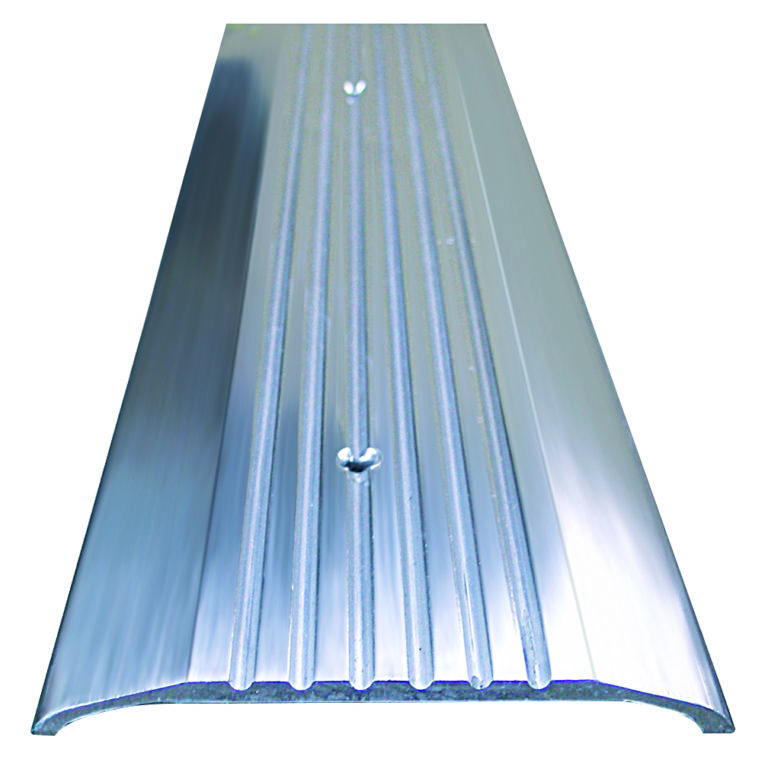
Thresholds can help smooth the transition between surfaces. Zero offers a wide array of thresholds to address a variety of opening conditions, including uneven floor heights, different flooring materials, and demanding environmental conditions. A wide range of Zero thresholds are ADA compliant—simply look for the ADA icon in the catalog to identify these models.
When addressing changes in floor elevation, Zero’s ADA ramps offer a gradual, sloped design. For more complex floor transitions, Zero’s Traction Tread™ Adjustable Thresholds feature an adjustable height mechanism to level uneven floors.
In retrofit applications where new flooring meets an existing surface, creating a flush transition can be difficult. Zero’s Half-Saddle thresholds feature a flat profile on one side and a sloped edge on the other, making them an effective, ADA-compliant solution for bridging the gap between flush surfaces and raised floors without creating a tripping hazard.
Because accessibility also relies heavily on slip resistance, safety is built into the surface of these products. Many Zero thresholds can be customized with Traction Tread™ Non-Slip Epoxy Abrasives. These finishes provide a high friction coefficient and can support safe passage for users, even in wet conditions.
For applications where environmental protection is needed in addition to accessibility, Zero offers specialized ADA-compliant solutions. Rabbeted thresholds, for example, help control demanding environments where temperature or acoustic performance is a primary concern. Additionally, thermal break thresholds are effective for exterior openings at mitigating cold transfer and condensation build up on the interior and at helping keep the floor dry and safe while maintaining an accessible path of travel.
Zero Automatic Door Bottoms with Light Spring (LS) Option
While Automatic Door Bottoms (ADBs) are highly effective at sealing the gap beneath a door, the friction of standard models can sometimes increase the force needed to open the door, potentially exceeding ADA limits. To solve this, Zero offers ‘Light Spring’ (LS) Automatic Door Bottoms. These models utilize a specialized spring mechanism that requires significantly less operating force, allowing facilities to achieve superior sound and draft control while maintaining the ADA 5 lbf maximum opening force requirement.
Keep in mind, both the ADA Standards for Accessible Design and ICC A117.1 Accessible and Usable Buildings and Facilities require manually operated doors to have a flush smooth surface on the push side, measured 10 inches up from the floor, so mortised or semi-mortised ADBs are an effective solution in such circumstances.
 LCN Closers | Holding the Door
A door could have all the bells and whistles—proper maneuvering clearance, a proper threshold, correct hinges, but there’s still one thing left for consideration—the door itself. Even a properly hung door that is fully code compliant can present a challenge to those with limited mobility. So, what are the options to help with this unavoidable barrier?
One is to mechanically hold the door open at a full 180-degree swing. This can not only clear the opening itself but also keep the door from becoming an unintentional barrier in the room or corridor it opens into. One important note: a mechanical hold open cannot be used on a fire door.
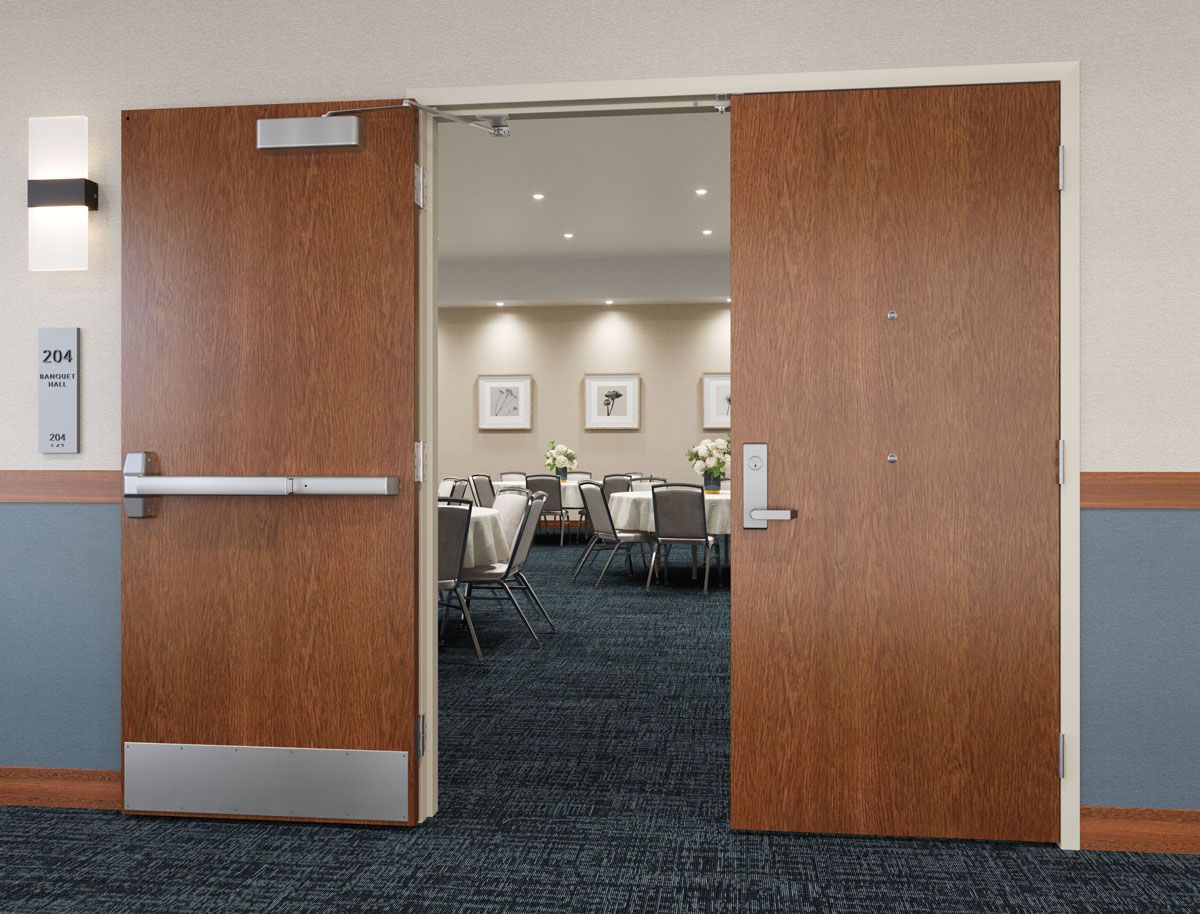
For a high-traffic opening, the cast iron LCN 4040XP with a hold open extra duty arm (HEDA) is an excellent option. This configuration mounts on the push side of a door and has an adjustable hold open point up to 180°. Simply set the desired hold point during installation, and any user can activate it by pushing past that point or disengaging the hold open by pulling the door in the closing direction.
For a lighter traffic opening, the LCN cast iron 1460 with a standard hold open arm (H) is another great choice. This closer can mount on the push or pull side of a door for a full 180° swing, providing the installer some flexibility based on the expected flow of traffic.
For fire-rated doors, our 4310ME SENTRONIC closer with a swing free arm is a great configuration to make navigating an opening simpler—particularly for those who need additional time. As opposed to immediately closing upon release, the 4310ME holds the door in place where it was released, whether that be 35° or 90°. The swing free arm then allows the door to act similarly to a door without a closer between that release point and fully closed.
This functionality can allow a person with mobility challenges to gradually make their way through an opening without the need to consistently apply pressure to open the door. The door can be pushed open in small increments, allowing the individual to make their way through the opening at a pace that is comfortable within their abilities.
While removing the door entirely isn’t usually a realistic option, LCN provides a variety of applications that can at least minimize the door as a barrier to accessibility. To further explore LCN’s many accessible configurations, please visit LCNClosers.com.
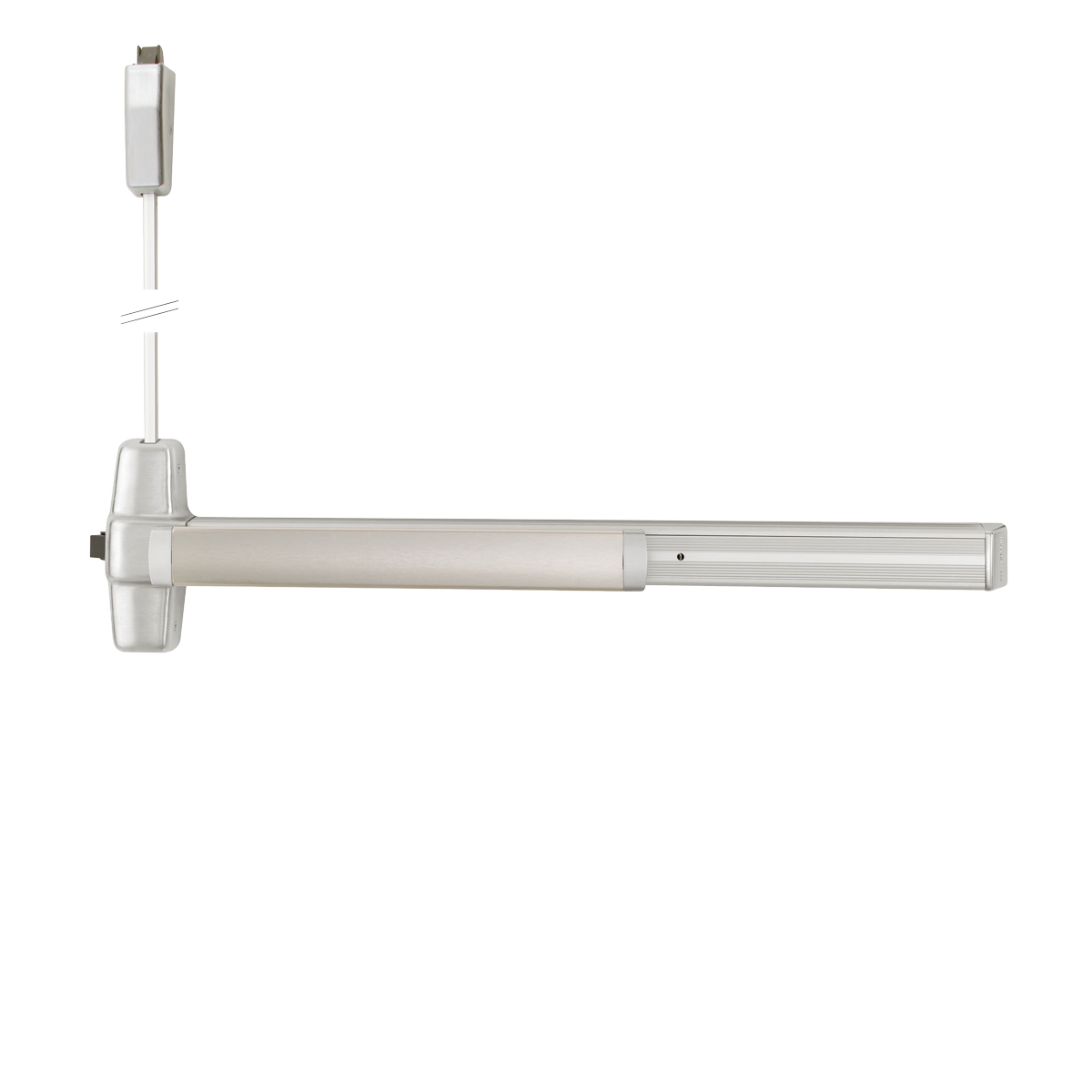 Von Duprin Panic Devices Less Bottom Rod (LBR)
Each type of exit device has a specific door and frame prep. For vertical rod devices this may require the need for a floor strike. For accessible openings, the Von Duprin less bottom rod (LBR) solution is an attractive option because it eliminates the floor strike and hardware at the bottom of the door. This leaves the threshold clear and minimizes protruding hardware. Should a bottom latch be required, Von Duprin offers rod guards and latch guards, which have smooth sloped surfaces to minimize the possibility of interference when accessibility is a concern.
In the case where the LBR solution is on a fire-rated opening, an auxiliary fire latch (AFL) must be paired with the device. Fire-rated openings require secure, multi-point latching to prevent door warpage and maintain compartmentalization during extreme heat. To address this, an AFL is installed within the door edge. This heat-activated mechanism automatically deploys when exposed to high temperatures, securely pinning the doors together or to the frame. By integrating an auxiliary fire latch, facilities can leverage the operational and architectural benefits of an LBR device while maintaining compliance with life-safety and fire-rating standards.
A Seamless Path Forward
Removing physical barriers at the doorway is a technical challenge that requires precise specification and a clear understanding of how people move through a space. By aligning empathetic industrial design principles with knowledge of codes, delivering environments that are fundamentally accessible, safe and welcoming to everyone becomes a greater possibility.
You need to login or register to bookmark/favorite this content.





Leave A Comment