
Optimizing the performance of an opening is a delicate balancing act. To enhance accessibility, it is desirable for force required to operate door hardware to be minimized, making the opening easier to use for a larger portion of the population. However, that aspect is just one of many important considerations. An opening must also reliably and securely latch for life safety and security. Striking the right balance requires a deep understanding of the codes that govern these topics and familiarity with the door hardware commonly used to address these challenges. Today’s guest post from Colleen Furlong of Allegion explores these considerations further.
~~~
 How Low-Force Door Operation Supports Accessibility and More Seamless Access
A door is more than just an entryway—it is a critical component of life safety, security and accessibility and must balance two vital needs: a door must be easy enough for anyone to open, yet close with enough power to latch securely and protect the building and its occupants.
Designing for Inclusivity
Standard door hardware may present significant usability challenges for individuals with a physical disability. If interaction with the hardware requires excessive force, it can transform an otherwise simple doorway into a potential physical barrier. Designing solutions requires a thoughtful and intentional process.
Ana Sofia Esquivel, Allegion industrial designer, shared, “You must consider all different types of users and use cases, as well as the variability in state and local code requirements related to this topic. To understand the full impact of a design on a user, you must see how the user interacts with the product. Therefore, significant prototyping and user testing is included in the design process.”
Code Considerations: Unlatching vs. Opening Force
Ease of using hardware is often evaluated in terms of the amount of force required to operate it. That is where many different types of forces come into play: the force required to unlatch the hardware, the force required to engage a thumb turn or lever and the force required to open the door are all important to consider and are also frequently confused and misunderstood.
The primary codes and standards governing these forces are the Americans with Disabilities Act (ADA) Standards for Accessible Design, the International Building Code (IBC), and ICC A117.1, Accessible and Usable Buildings and Facilities. One misunderstood and often misapplied element of these codes and standards is the 5-pound limit. Historically, there has been confusion over whether the 5-pound maximum applies to pushing the door open vs operating or unlatching the hardware.
According to Lori Greene, Allegion codes and resources manager, “The ADA standards and the model codes clearly mandate that interior, non-fire-rated doors must require no more than 5 pounds of force to open. However, a conflict between the ADA standards and the IBC/A117.1 requirements has created confusion about the limitations on the allowable force to operate the hardware.
Prior to 2010, the ADA standards were not specific about the force needed to operate door hardware such as lever handles or panic hardware. However, in the 2010 edition of the ADA standards, an editorial change was made that now requires door hardware to meet the limitations for operable parts, including a maximum operable force of 5 pounds.
The IBC has historically limited the operation of panic hardware to a maximum of 15 pounds of force but did not get into detail regarding the operable force of other door hardware. Modifications to the 2017 edition of ICC A117.1 and the 2021 edition of the IBC establish limits of 15 pounds of pushing or pulling motion (ex. panic hardware or a hospital latch) and 28 inch-pounds of rotational motion (ex. lever handle).”
The Solutions: Purpose-Built Hardware
With these challenges in mind, Allegion offers a broad portfolio of solutions that let you tailor functionality to the operational requirements of your opening.
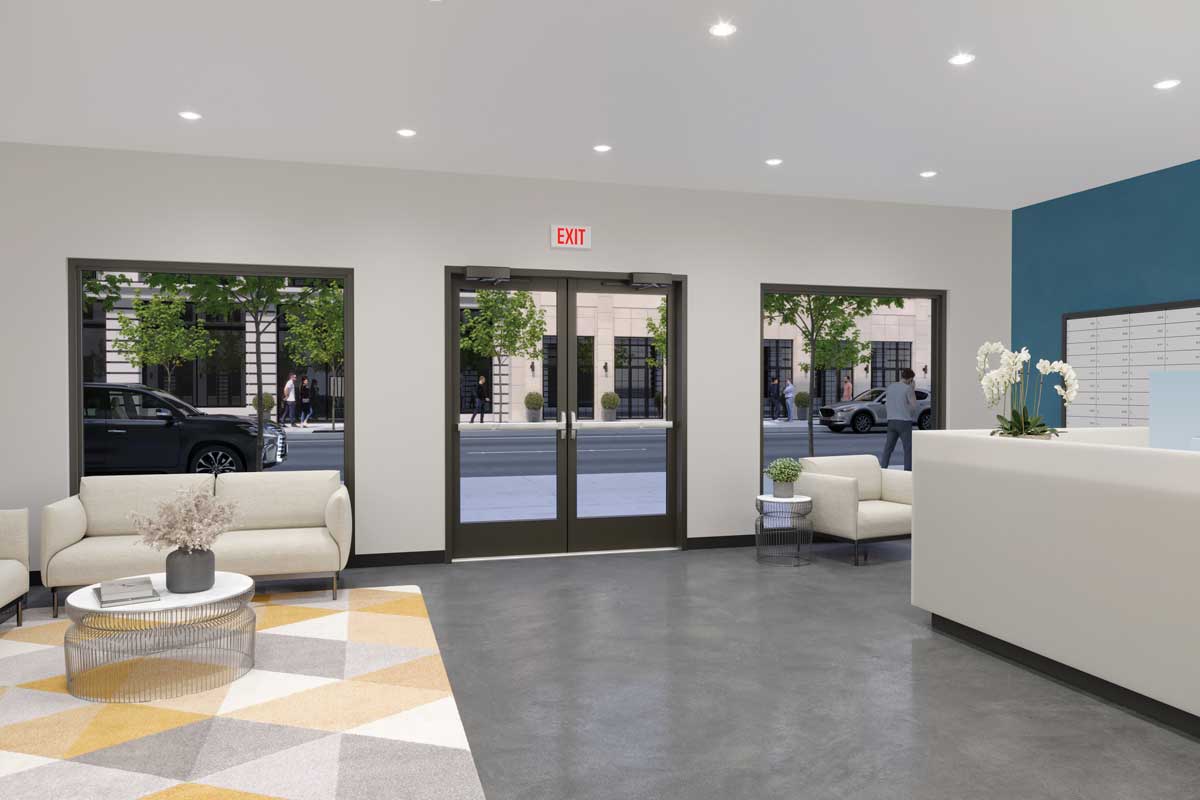 Allegion Door Control Solutions from LCN, Falcon & Dexter
Often looked at from the security viewpoint of reliably closing a door, closers also have a direct effect on the force required to open a door and are an excellent tool to elevate accessibility.
Adam Fisk, Allegion marketing manager, shares, “The majority of LCN®, Falcon and Dexter surface mounted closers have an adjustable spring size—or spring force—from either 1-5 or 1-6. This allows our customers to tailor each door to perform as needed, offering the blend of security and inclusivity that works best for them. When it comes to the 5-pounds-of-force limit, the size 1 setting is a great place to start. This setting can typically provide the closing force required for an interior, non-fire rated door to latch reliably, while minimizing the necessary opening force. It’s a careful balance that can, at times, get tricky.
There are applications where size 1 isn’t going to provide enough force to close the door. In a situation with heavy stack pressure, the spring force may need to be set at a size 3 or 4 to reliably close and latch the door. The door may now be secure, but the opening force is likely going to exceed that 5-pound limit. In these situations, an automatic door operator may be a better option than a traditional closer.”
Automatic door operators turn compliance to convenience, opening any door with a simple hand wave or button press. Not only does this remove the concern over opening force limits, but it also accommodates minimal maneuvering clearances, adding accessibility to tight corners and narrow corridors. The 9500IQ Senior Swing is a great option for high-use-and-abuse applications, while the 6400 COMPACT may be a better choice for lower traffic openings.
When it comes to accessibility, door closers and automatic door operators can help a facility raise the bar on being “just compliant,” and add the inclusivity required to better serve those who need it.
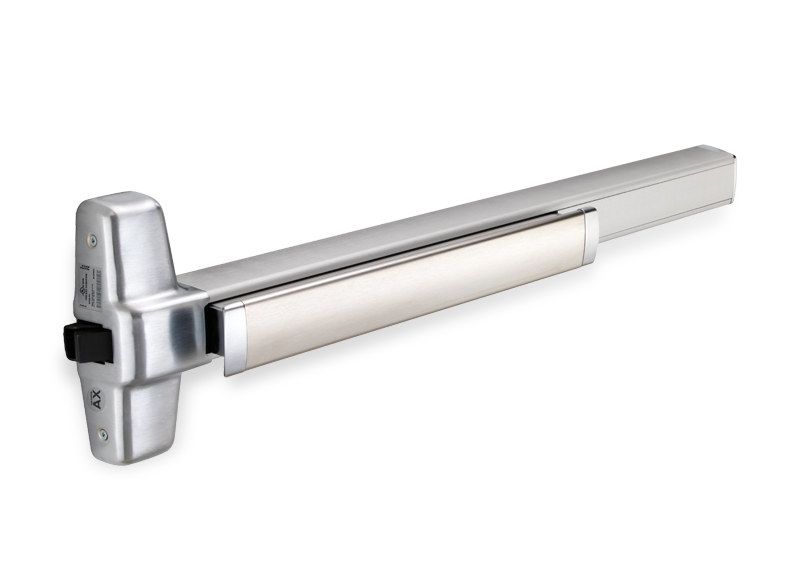 The Von Duprin AX Series
To address modern accessibility challenges and comply with the most stringent building codes, Von Duprin® engineered the AX device option. Designed to minimize the physical effort required for egress, the AX device is UL-certified to meet the strict 5-pound maximum operating force requirement, supporting compliance with both the ADA and California Building Code (CBC).
Unlike standard panic hardware that often require significantly higher push force to retract the latch, the AX device utilizes an innovative internal mechanical design to achieve this ultra-low operating force. This accessible, low-force solution empowers individuals with limited mobility to navigate doorways independently and safely. Available on Von Duprin’s industry-leading 98/99, 94/95, 75/78 and 22 Series exit devices, the AX offering delivers ANSI/BHMA Grade 1 performance, helping facilities to provide equitable access without sacrificing the heavy-duty durability and security required in demanding, high-traffic environments.
 Schlage Lock Portfolio
In lock hardware, there is also a need to strike a balance between those mechanisms required to serve the function and longevity of the product while still meeting ADA requirements. Kimberley Haymaker, Allegion marketing manager, shares “Function and longevity in the construction of many locks relies on complex mechanisms alongside the use of springs within the spring cage, chassis and latch. Springs must provide proper resistance to reliably move lock mechanism components to fully retract and extend the latch, while also minimizing lever droop or sag over time and providing the lock with a “quality feel” all within the 5-pound maximum force rule.”
Other features of the lock may come into play as well. Examples here include interconnect type locks and the use of visual indication on a lock which is activated by a push button or thumb turn. Larger visual indication elements are preferred because they allow the locked or unlocked status of the door to be seen at a distance. However, larger often means heavier elements within the lock are being engaged. In the case of an interconnected lock, the function type may mean more than one locking or latching mechanism is being retracted. In both examples, balancing features and functions against the 5-pound rule can be challenging.
Within the Schlage portfolio of locks, all meet ADA guidelines for unlatching and operational force. A standout in terms of meeting these guidelines while delivering the largest visual indication messaging in the market is the ND Series cylindrical lock. Its patented design centers on meeting the 5-pound rule without sacrificing anything in terms of message size.
Conclusion
Addressing usability challenges and making openings more accessible and inclusive, is a complex challenge that must be addressed in a balanced way, with an understanding of code requirements and competing needs such as fire, life safety and security. Allegion offers a broad range of hardware solutions, including Schlage locks, Von Duprin panic hardware and LCN closers.
You need to login or register to bookmark/favorite this content.



Leave A Comment