
If you have any questions or comments, please let me know before this article goes to print!
~~~
This Decoded article will be published in Door Security + Safety
.

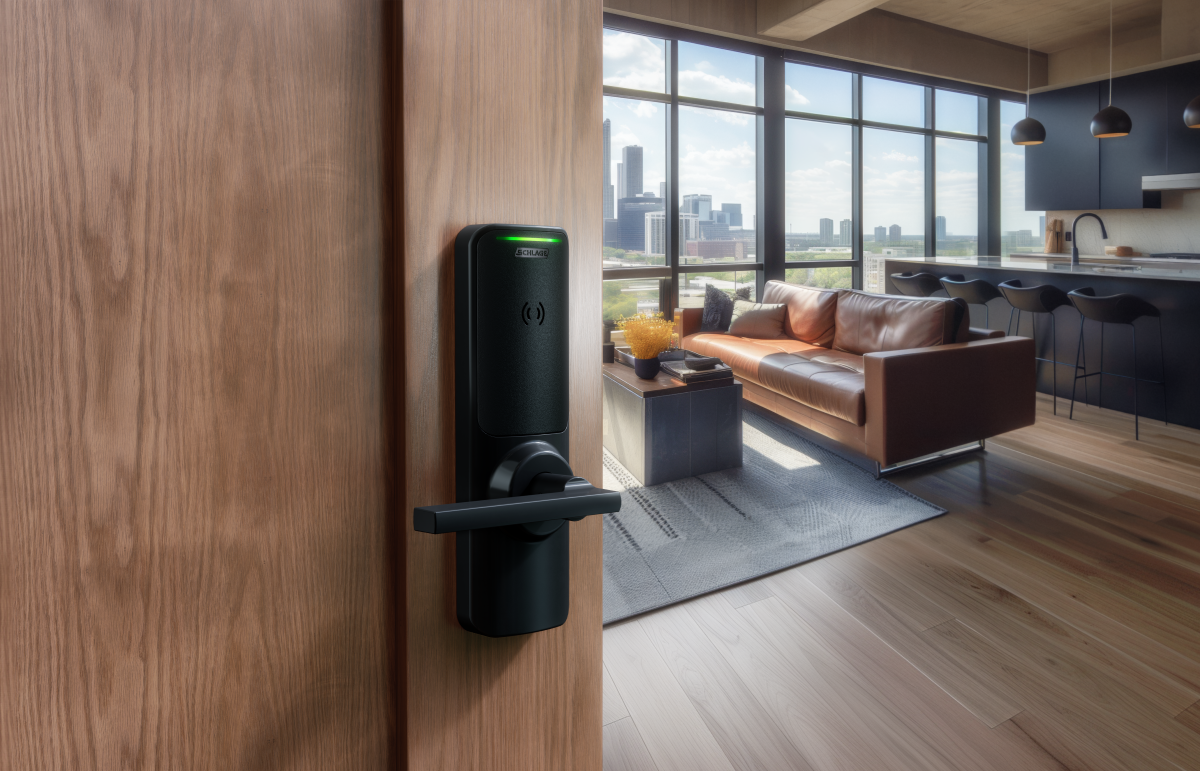
Electrified locks that are readily openable from the egress side are addressed by a code section that was modified in the 2024 edition of the I-Codes.
This month’s question for my Decoded column focuses on residential dwelling units and sleeping units:
Are the electromechanical locks typically used for individual residential entry doors required to be listed to UL 294 or UL 1034 in order to comply with the model codes?
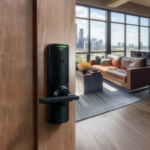
Dwelling units (ex. apartments) and sleeping units (ex. hotel rooms and dormitories) are often equipped with electrified locks and access control readers. The electronic credentials used with this hardware have many advantages over traditional keys when it comes to access control and credential management. The locks typically used are electromechanical locks – either stand-alone products or networked systems, battery-operated or hard-wired.
Although these products are electrified, the model codes do not require them to be listed to UL 294 – Standard for Access Control System Units or to UL 1034 – Standard for Burglary-Resistant Electric Locking Mechanisms, as long as the doors are readily openable from the egress side without the use of a key or special knowledge or effort. If the doors do not meet this criteria (if they are not readily openable for egress), the hardware must comply with one of the code sections addressing special locking arrangements, but that would be very unusual for a residential unit entry door.
Over the years, there has been a lot of confusion about the code requirements for normal locking arrangements vs. special locking arrangements, but many clarifications have been made to the model codes over the past few editions. The I-Codes are the International Building Code (IBC) and the International Fire Code (IFC), and the 2024 editions include a new clarification adding doors with access control systems to the section on monitored and recorded egress:
1010.2.9 Monitored or recorded egress, and access control systems. Where electrical systems that monitor or record egress activity are incorporated, or where the door has an access control system, the locking system on the egress side of the door shall comply with Section 1010.2.10, 1010.2.11, 1010.2.12, 1010.2.13, 1010.2.14 or 1010.2.15 or shall be readily openable from the egress side without the use of a key or special knowledge or effort.
When a door with an access control system is not readily openable from the egress side, it must comply with one of the sections referenced in the paragraph above, which address the applications commonly known as the special locking arrangements:
- 1010.2.10 – Door hardware release of electrically locked egress doors – Electrified locking hardware (typically electromagnetic locks) released by a switch in the door-mounted hardware
- 1010.2.11 – Sensor release of electrically locked egress doors – Electrified locking hardware (typically electromagnetic locks) released by a sensor to allow egress
- 1010.2.12 – Delayed egress – Delayed egress locks that release to allow egress within 15 seconds after actuation of the release timer (or 30 seconds when approved by the AHJ)
- 1010.2.13 – Controlled egress doors in Groups I-1 and I-2 – Electrified locking of egress doors in certain types of units in a health care facility
- 1010.2.14 – Elevator lobby exit access doors – Elevator lobby doors that unlock during a fire alarm to allow occupants of the elevator lobby to pass through a tenant space to reach an exit
- 1010.2.15 – Locking arrangements in buildings within correctional facilities – Doors serving areas in a detention or correctional facility where movement of occupants is controlled for security reasons
In the 2024 edition of the I-Codes, for each of these sections except 1010.2.15, one of the criteria for the installation of a compliant system is: The electromechanical or electromagnetic locking device shall be listed in accordance with either UL 294 or UL 1034. As this requirement is not included in the section addressing monitored or recorded egress and access control systems (1010.2.9), the listings are not required by the model codes when the access controlled door is readily openable from the egress side. This applies not only to the residential doors covered by this article, but to electrified locks in general that provide access control and free egress.
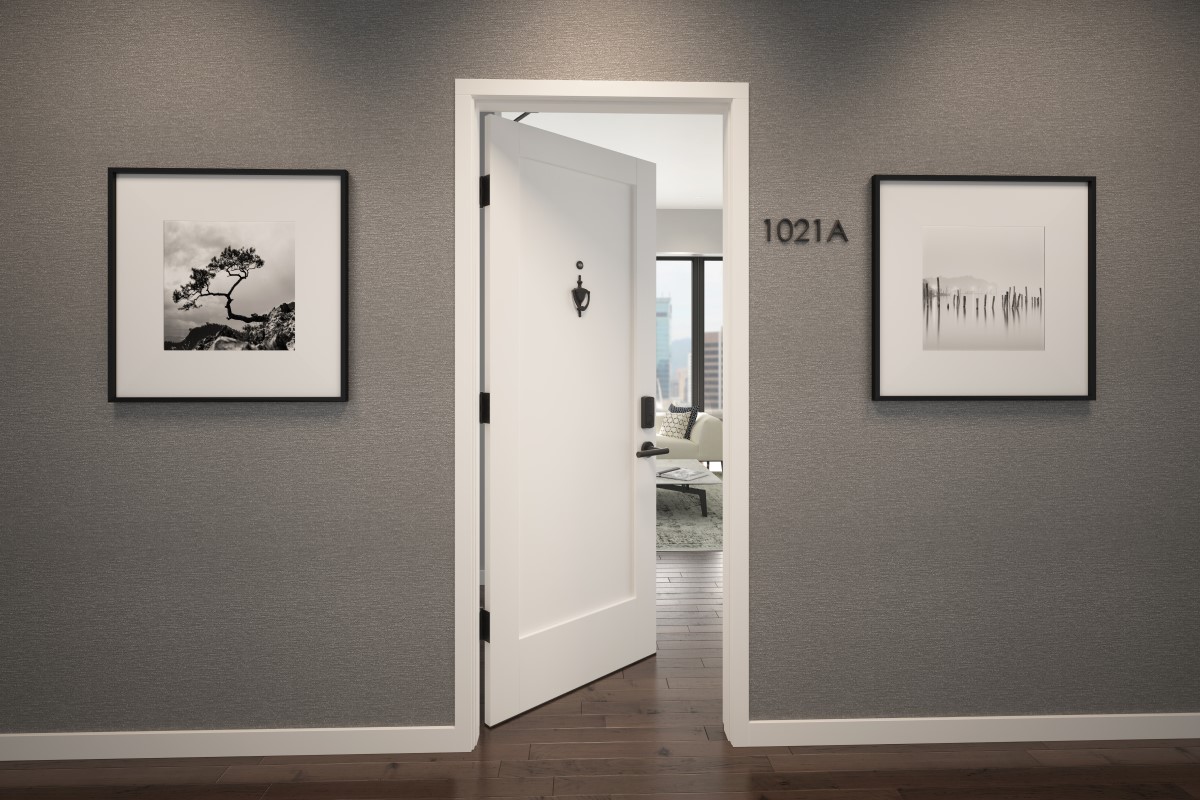
In addition to requirements related to egress, interior unit entry doors are typically fire door assemblies and are also subject to the requirements of the Fair Housing Act.
Other Considerations
Egress – In most locations within a building, the unlatching of any door for egress must require no more than one releasing motion. There is an exception to this requirement that applies to individual dwelling unit and sleeping unit entry doors in Group R (residential) occupancies, and allows a second releasing motion for a night latch, dead bolt, or security chain as long as the device is openable from the inside without a key or tool. The 2027 edition of the I-Codes will include a change addressing sleeping rooms, such as bedrooms within a dormitory suite. In certain occupancies, these rooms will be allowed to have hardware requiring a second releasing motion, as long as the main entry door serving the dwelling unit/suite can be unlatched with one motion.
Fire Protection – There are other requirements to consider in conjunction with entry doors for dwelling units and sleeping units. First, when these doors are interior doors entering the unit from a corridor, they are typically fire door assemblies designed to deter the passage of smoke and flames for 20 minutes. As such, they must close and latch automatically if a fire occurs, without intervention from the resident of the dwelling unit or sleeping unit. The model codes and referenced standards include other requirements for fire doors, and the annual inspections of these assemblies required by code are crucial to ensure the protection provided by the passive fire protection system.
Accessibility – Almost all residential units are required to comply with the Fair Housing Act, which addresses accessibility. Depending on the type of unit, these requirements may apply only to the common areas and the unit entry doors, or may apply to the door openings within the unit as well. Some of the mandates of the Fair Housing Act include minimum clear opening width and maneuvering clearances, limitations on opening force, closing speed, and threshold height and slope. The guidelines also require operable hardware that is “easy to grasp with one hand and does not require tight grasping, pinching, or twisting of the wrist to operate,” and is mounted within the allowable range – either less than 48 inches above the floor, or between 34 inches and 48 inches above the floor depending on which accessibility standard is used.
State and local codes may differ from the requirements of the I-Codes, so it’s important to consult the adopted codes and standards for a project’s jurisdiction. The Authority Having Jurisdiction (AHJ) is responsible for official interpretations and decisions related to code-compliance.
~~~
Dwelling units, sleeping units, and sleeping rooms – what’s the difference? According to the IBC:
- A dwelling unit provides independent living facilities for one or more residents, including permanent provisions for living, sleeping, eating, cooking, and sanitation.
- A sleeping unit includes permanent provisions for sleeping, and may include provisions for living, eating, and either sanitation or kitchen facilities, but not both. If these rooms are part of a dwelling unit, they are not considered sleeping units.
- A sleeping room is not a defined term within the IBC, but the 2027 change mentioned in the article will apply to individual sleeping rooms (i.e. bedrooms) within sleeping units of congregate living facilities of Group R-2 and R-3 occupancies, and to individual sleeping rooms within dwelling units of Group R-2 college or university residence halls.
You need to login or register to bookmark/favorite this content.

Leave A Comment