
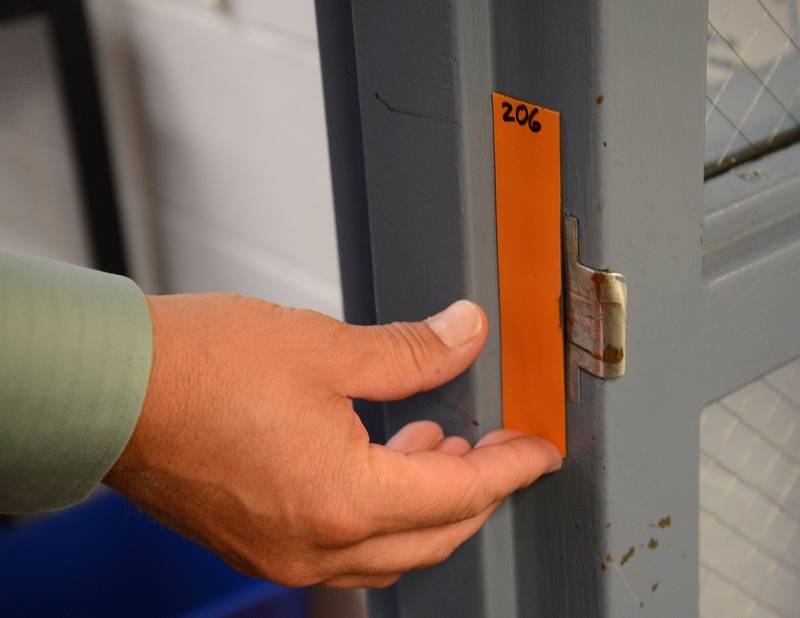
Photo: Daily Herald
We recently received a Quick Question from a large school district, and I received the same question from a school security consultant regarding a different location:
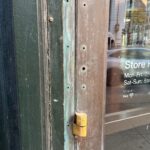
A school district has been advised that they should implement magnets to cover the strikes or other devices to prevent the classroom doors from latching. Is this permitted by code?
I asked Ken Cook, Director, National Education Safety and Advocacy for Allegion, to weigh in. His response included so many resources that I’ve divided it into two separate posts – look for Part 2 on Thursday.
Before I turn it over to Ken, I just want to say…the codes can only go so far in helping to ensure school security and safety. The model codes would not permit a magnet or other device that prevents a fire door from latching, however, the codes do not address these devices for non-fire-rated doors as they are not designed to impede egress. But that does not mean that it’s a good idea; back in 2018 I wrote about a shooting where the strike magnet had a negative effect on the outcome. Read on…
~~~
 From Ken:
The short answer is these devices are never recommended due to security concerns, and below I have shared several resources addressing the importance of locked classroom doors. Preventing doors from latching or propping them open for convenience, directly conflicts with the security recommendations.
A recent study conducted by the ALERRT Center at Texas State University reviewed 26 years of K-12 active shooter events and reported:
- 69% of attackers’ entries occurred through unsecured doors; 14% were propped open.
- Casualties were 3 times higher behind unsecured doors.
You can read more about this study and download the report from the website of the Security Industry Association (SIA).
While we recognize the various reasons schools want to prop doors open or prevent them from latching, the above data shows this isn’t safest course of action. Moreover, this has been reported extensively and consistently since the Sandy Hook Shooting in 2012. The Final Report of the Sandy Hook Commission (2015) states:
- RECOMMENDATION NO. 1: The SSIC Report includes a standard requiring classroom and other safe-haven areas to have doors that can be locked from the inside. The Commission cannot emphasize enough the importance of this recommendation. The testimony and other evidence presented to the Commission reveals that there has never been an event in which an active shooter breached a locked classroom door. Accordingly, the Commission reiterates its recommendation that all classrooms in K-12 schools should be equipped with locked doors that can be locked from the inside by the classroom teacher or substitute.
- Provide closers on these doors so that they automatically return to a closed, latched, and locked position to preclude unauthorized entry.
The report issued by the Marjory Stoneman Douglas Public Safety Commission (2019) also addresses the topic of locking classroom doors from within, while maintaining the ability to enter the classroom with a key:
- Doors leading to instructional classrooms or student-occupied space and for ingress/egress to campus or a specific building should remain locked during school hours, and if they are open they should be staffed. All teachers should be able to lock doors from within the classroom, and keys should be on their person at all times.
The Department of Justice Critical Incident Review – Active Shooter at Robb Elementary School (2024) makes a recommendation that underscores the importance of functional locks on classroom doors:
- Recommendation 9.1: School districts should invest in upgrading or replacing all doors (or locks) throughout its campuses to remedy this issue, so that doors can be locked from the inside.
Additional recommendations can be found in resources provided by the following recognized school safety organizations:
- ASIS International School Safety Standard A.2.7.1
- Doors should have the ability to be secured and locked by occupants from the interior of the space without use of a key and should include a visual lock condition indicator.
- Doors should utilize a single action release mechanism from the protected side to allow for expedited emergency egress.
- Doors should be equipped to facilitate locking and unlocking from outside the room by use of a key or authorized credential.
- Ensure doors can be secured without personnel needing to step outside the classroom.
- Consider securing classroom spaces while occupied.
- Partner Alliance for Safer Schools (PASS)
- Tier 1 – Rev 7 Guidelines/Classroom-Interior Layer/Policies and Procedures Component
- Classroom and Shelter-in-Place Doors Lockable from the Inside. Classroom doors must have one single motion to open the door for egress.
- Classroom Doors Closed and Locked When Occupied. Classroom doors should be closed and locked when classes are in session or the rooms are otherwise occupied.
- Teir 2 Rev 7 Guidelines/Classroom-Interior Layer/Policies and Procedures Component
- Classroom locks that provide a visual indicator allow the condition of the lock (locked or unlocked) to be visible to staff and room occupants, without them having to exit the room to check.
- Tier 1 – Rev 7 Guidelines/Classroom-Interior Layer/Policies and Procedures Component
- I Love U Guys Standard Response Protocol
- DOORS, LOCKS AND STRESS
- A consistent observation by first responders is that human beings have difficulty completing even routine tasks when they are under stress. The otherwise simple task of locking the classroom door may become extremely difficult for a teacher who has just heard a Lockdown order. Elevated adrenaline levels may result in the loss of fine motor skills, which can impede an act as normal as inserting a key to lock a door.
- If your classroom doors cannot be locked using gross motor skills from the inside of the classroom, keeping the classroom doors locked during instruction has proven to be a time barrier. While this may create an inconvenience if students are late or need to re-enter the classroom for other reasons, it provides an essential layer of protection against intruders.
- DOORS, LOCKS AND STRESS
These recommendations underscore the importance of locked classroom doors. Propping doors open or preventing doors from latching can negatively impact the security provided by the locks, and should be avoided. In Thursday’s post I will share state laws addressing the protocols for locked classroom doors.
You need to login or register to bookmark/favorite this content.




Leave A Comment