
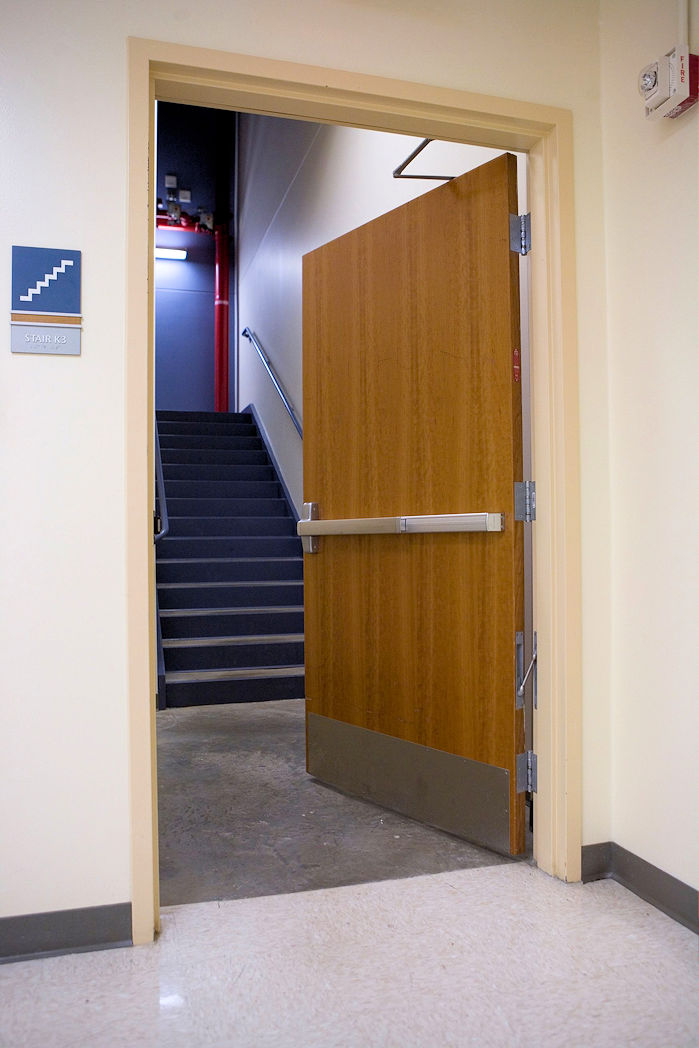
 Back in July, I wrote a post about an email sent out to a college campus from the campus’s safety compliance officer. The email began with “Why Fire Doors Matter” and talked about the purpose of fire doors and why they should not be modified.
After reading that post, an AHJ contacted me to ask if I could share the email with him so he could use it with a school district in his jurisdiction. I had promised that I wouldn’t publish the original email so I couldn’t send it to the AHJ, BUT – I think this is a GREAT idea!
As most of you know, my posts and articles tend to be on the (very) technical side, so I would love your help! What would you say to people who don’t know anything at all about doors, to help them understand the importance of fire door assemblies? Don’t prop them open, don’t attach anything to the doors…what other field issues could be avoided with a little education? I think this could really help spread the word and improve the condition of fire doors in the field.
Please leave your comments below!
You need to login or register to bookmark/favorite this content.




“Spot it. Report it. Trust the pros to get it right.”
• Don’t prop fire doors open.
• Don’t block fire doors.
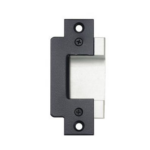
• Don’t cover the strike with a magnet.
• Don’t drill, cut, or modify them.
• Don’t attach signs, decorations, stick-on hooks, miniblinds, or other items without “pro” approval.
• Don’t disable or remove door closers or latches.
• Don’t paint over or cover fire door labels.
• Don’t make your own repairs.
• Report damaged doors, frames, glass, or hardware.
• Report doors that don’t close and latch on their own.
• When in doubt, ask before making any changes.
There are numerous convincing ways to discuss the wisdom of keeping fire doors operational but to me the photos shot from a largely unaffected area towards the area of the fire destruction has had influence. There is a picture from NFPA publication of a dark, smoked up bed where a child’s outline appears in white sheets on which she lay. I probably have a copy since I used this to illustrate the reality of what can happen. Her hair was very clear in silhouette. “What has happened can happen to you”. Another illustration occurred in a Minneapolis fire some time ago where a live Christmas tree caught fire in the lobby of a hospital that created quite a lot of dense smoke. As I recall those folks objected to opening stair tower doors so the lobby door and doors to the 2nd through 5th floor were propped open. Heavy toxic smoke poured into the stairtower and onto patient floors. If memory serves me correctly, staff were able to get the doors closed on 2nd, 3rd, and 5th floors. A nurse was running toward the 4th floor door, fell on something in the corridor and I remember all the 5 deaths occurred on that floor. I always used real examples when discussing these topics with hospital staff. The requirements for building safety are not usually based on theory but the actual experience of the school of hard knocks.
While not a full door inspection, have maintenance staff check the basics at least – does door self-close and latch? Report damage or malfunctions. For doors with electric hold opens, make sure those release and that door latches.
Not sure if this is the downloadable version?
https://idighardware.com/guide/
But would give them the link. If I had a copy, would go through some highlites.
Not sure if these cards are available or downloadable?? Great to give out.
I guess who is your audience?
If maintenance person or safety person, they seem a little more open to the message.
If a small building owner, they may be open to listening,
Plus the number of times you interact. If one time, might help. If annually, I would go over the same message. Either one or anyone, I liked to document.!!!
Towards the end of my career, we went electronic. Do besides writing a problem,,, we could take numerous pictures, and email the report. I think visual reminders are fantastic.
Don’t do anything that would prevent the door from latching in an emergency. https://idighardware.com/2026/07/ww-and-latched/
Don’t paint the label or the fire pins where present.
Don’t replace any of the hardware unless the new hardware is appropriate for use on that particular fire door (i.e. listed where a listing is required, with proper ratings). See also https://idighardware.com/2026/08/ff-heres-whats-wrong-with-this-picture/
Don’t replace a fire door with a non-fire door or a fire door with a lower rating unless the lower rating is still code compliant.
“Don’t prop them open” *except with a magnetic door holder or closer that is activated by nearby smoke detectors (and the fire alarm system in Group I-2), and keep the door closed if the holder fails for any reason. Relatedly, don’t put anything in the closing path of an automatic closing door.
Also, people may need to be educated on which doors must be maintained as fire doors, as the presence of a label or door holder does not necessarily indicate that. Cross corridor doors and stairwell doors may be obvious, but dwelling/sleeping unit entry doors and private garage/carport doors (which may be constructed slightly differently from fire doors but still need to be closed) may not be obvious. On the other hand, exterior emergency exit doors are usually not fire doors, despite some buildings marking them with “Fire Door Do Not Block” signs.
I typically find that one of the most overlooked things is that fire doors must close and latch into frame from any position. I find fire doors regularly that have “passed” recent NFPA 80 inspections and are still not latching into frame.
The pressures that are created and built during a fire are more than adequate to push an unlatched fire door open and allow heat, smoke and fire to enter a protected space.
Having worked in active high rise fires I cannot overemphasize the difference it makes to occupants and firefighters to have a safe area to egress through and work from in the event of a fire.
Lori, I have shared your post (and blog) “WW: Hospital Fire Door Win!” video to multiple facility managers. I think is an excellent example, not only of what a panel overload/electrical failure can look like but the job that a properly installed and maintained fire door can do.
Also, I have found that fire doors with holdback devices get overlooked on inspection and by building owners more often than one would hope. They have a tendency to not be used nearly as often and especially on older doors there are hardware/latching issues from lack of use and maintenance as well as the building settling and throwing off the door and the frame.
A common one I see is the want/need to remove the door closer. This goes hand in hand with wedging the door open but I find rated doors with closer arms removed from time to time.
Signage is a good one for educational institutions. What can/cannot be affixed to the door as well as glazing. I see a lot of “we need privacy” and so they cover the glazing in a fire door with paper.
Also, reporting to maintenance when a door doesn’t latch on its own.
Good morning, Lori,
would suggest a RED-HOT bulletin to reach out to the school districts superintendents who oversee the day-to-day issues to relate to their maintenance group about the seriousness of life and death when altering doors within their premises.
best regards!
In a fire, you want a door securely sealed up to keep the fire from moving from one space to another. Your mission is to protect life and property. Anything that interferes with this safety mission- like a fire door not closing on its own, not latching shut, or hardware failing to hold up- is historically proven to cause preventable, yet devastating consequences for people and places.
I love this question!! Just as important is for us architects to understand how and why people modify fire doors in unsafe ways. If users end up modifying it – usually there was something bad about the original design. Senior residents putting kick-down door stops on apartment doors (or the maintenance man is removing closers entirely)? The closers were probably not adjusted appropriately, or should have had delayed action specified. Kick-down door stops on a community room or laundry door? Could have been prevented if an electromagnetic door holder was provided.
Well, there’s certainly a lot of people who don’t understand most code requirements, and door stuff seems to be one that everyone is blown away by the requirements. I will say, in the fire service, most who should be better educated on the importance, rarely understand the details.
When building owners and facility managers don’t understand the “why” they are appalled by the expenses that a set of fire doors can represent. From upfront costs, to inspections and proper maintenance, who knew?
Aren’t doors just ways to pass through walls that keep unwanted things on one side or the other? Most everyone understands how a door keeps the rain out, or unwanted guests, but fire is thankfully rare enough, that most don’t understand how many differences there are in the hardware or even the door slab, nevermind proper modifications.
And even the fire service is just widely grasping the concepts of flow paths and how openings can effect fire spread. Closers on residential exterior doors may become required in the future as we come to understand how important it is to limit outside oxygen from entering.
As an educational tool, a short animated video on how smoke, heat and fire travel might show how important doors are to minimizing damage and protecting lives.