
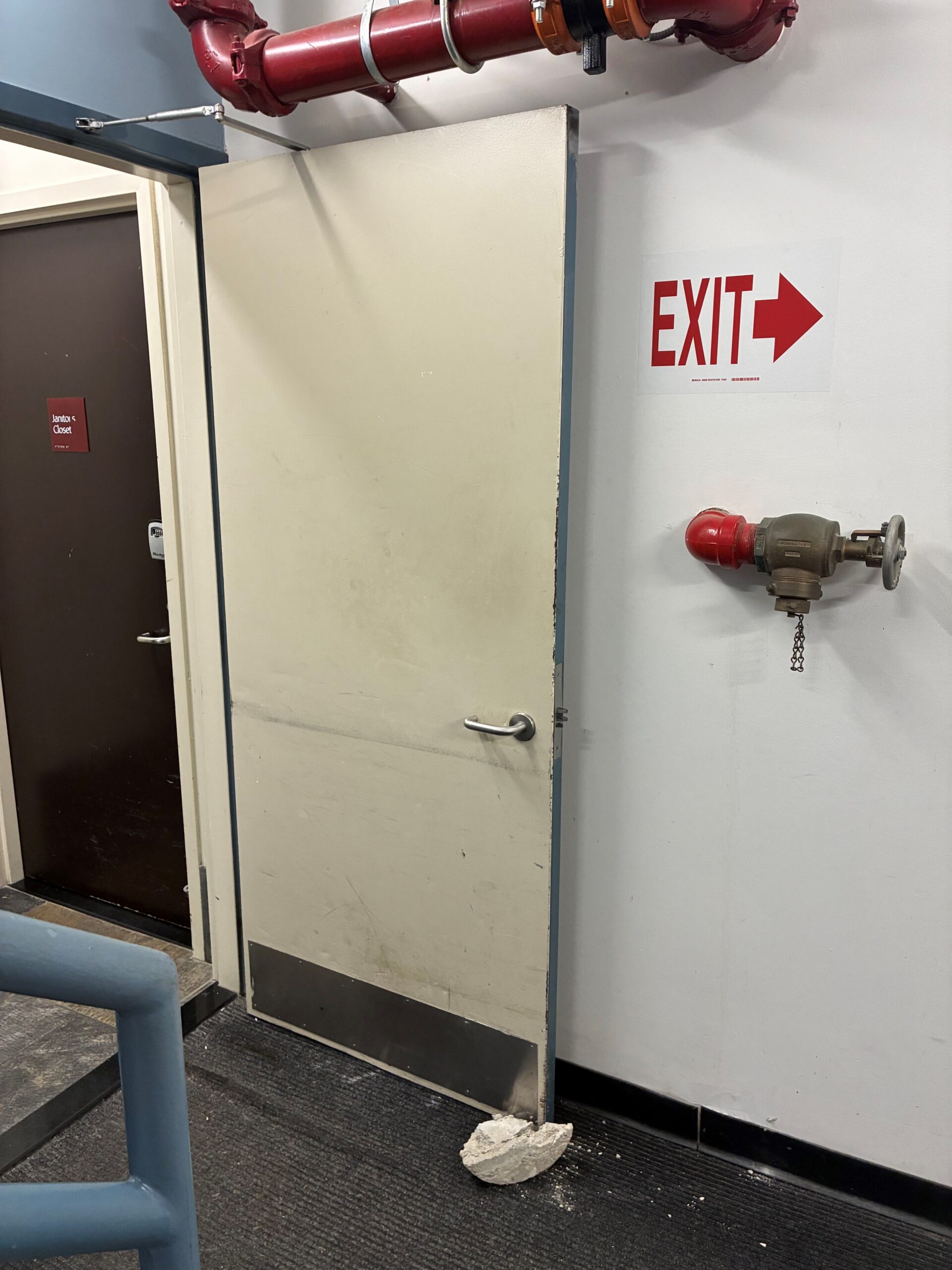
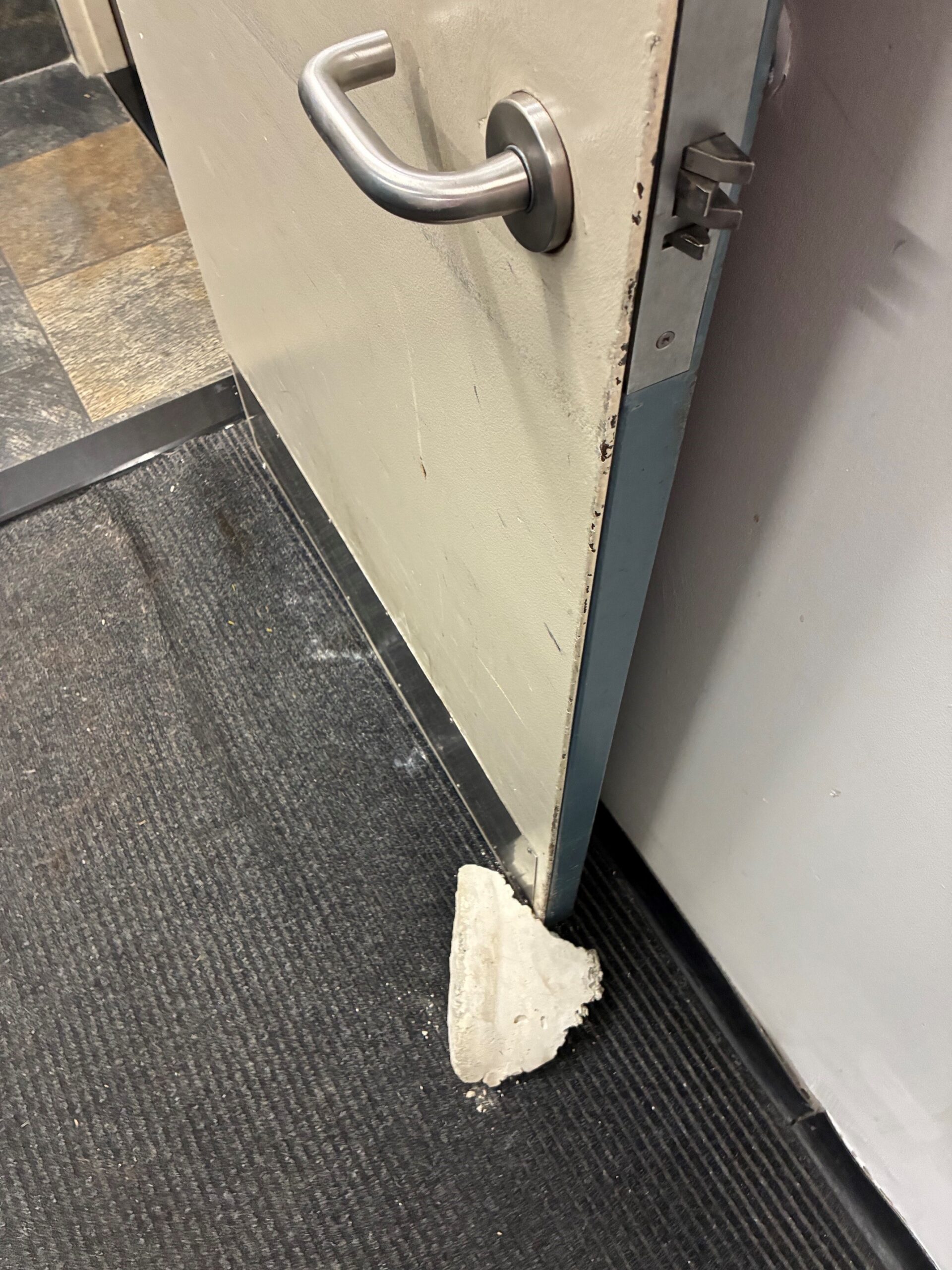
Earlier this week, I shared some photos from Steve Quinn of Flylock Security Solutions of a fire door with at least two problems and asked, “What’s wrong with this picture?” One problem is very obvious…the large piece of concrete holding the fire door open. If a fire occurs, this open door will allow smoke to spread between the corridor to the stairwell, making the means of egress unusable. Without knowing much about the building, I would say that the exit “sign” is also an issue.
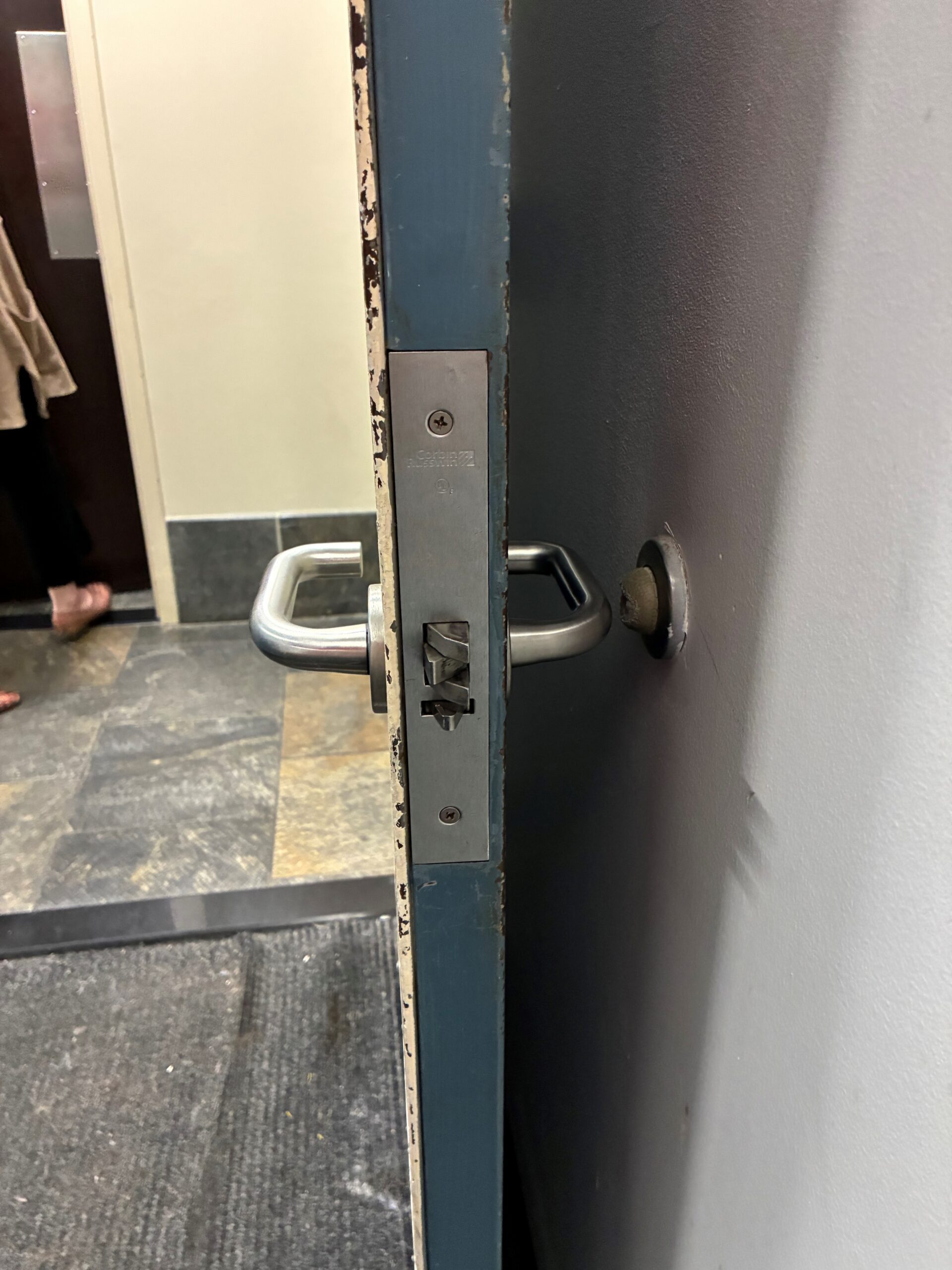
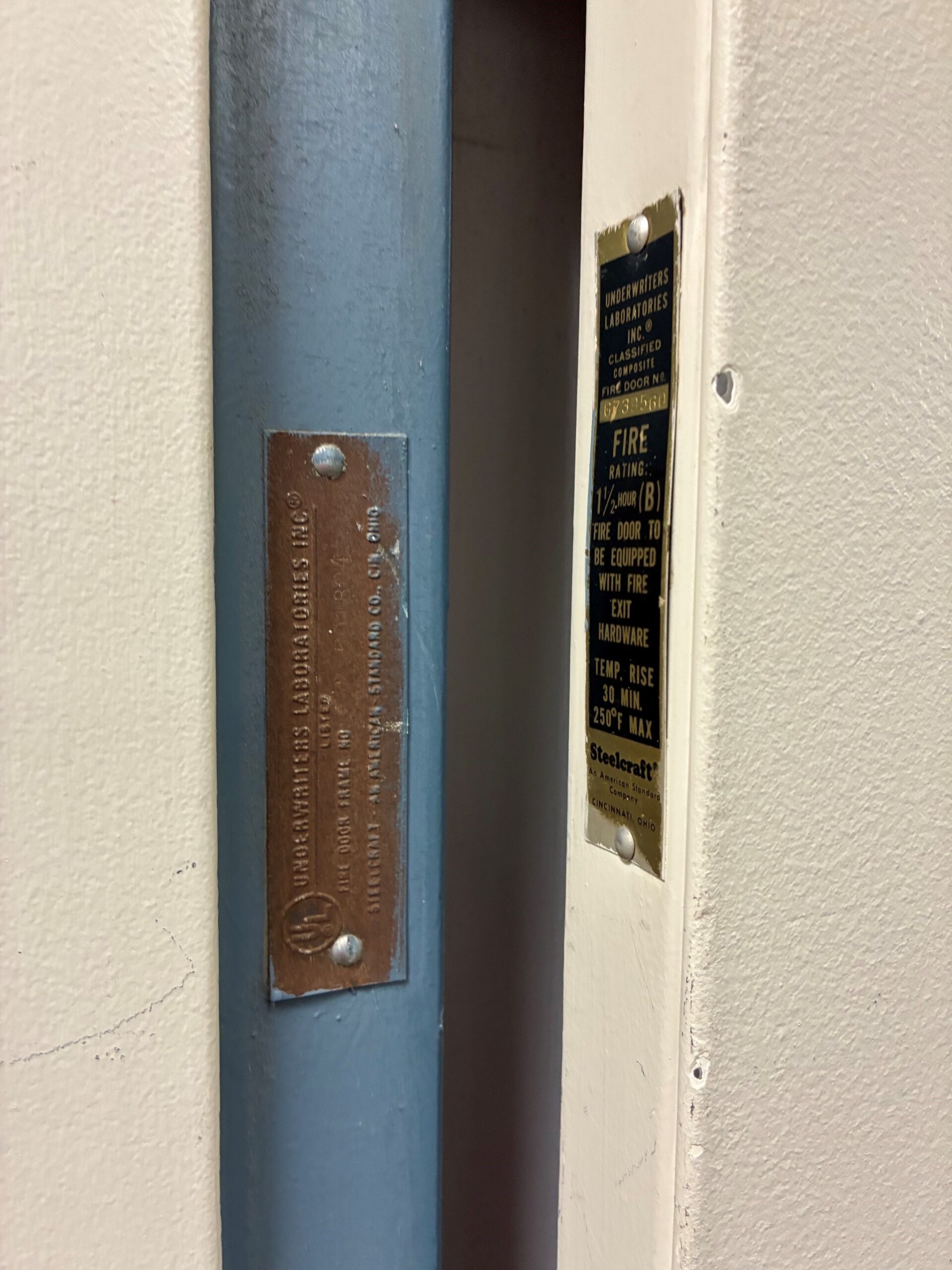
The deficiency I was going for was the fire door label stating, “Fire door to be equipped with fire exit hardware.” Fire exit hardware is panic hardware that is listed for use on a fire door assembly (UL 10C) as well as being listed as panic hardware (UL 305). This door does not have fire exit hardware, it has a lever handle. NFPA 80 states:
Fire doors furnished with or prepared for fire exit hardware shall bear a label, stating “Fire door to Be Equipped with Fire Exit Hardware.”
I have always understood the intent of the standard to be that if the door has the fire exit hardware label, it needs to have fire exit hardware installed. Otherwise, it would have the label stating the minimum latch throw for the lockset or latchset. These notations on the label help to ensure that the door is properly prepped and reinforced for the hardware that is installed.
Any fire door inspectors and fire door aficionados out there…what do you think?
You need to login or register to bookmark/favorite this content.
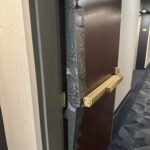

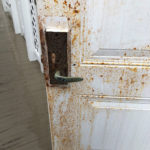


I read the label and the standard the opposite of the way you read them. The standard says “Fire doors furnished with or prepared for fire exit hardware shall bear a label, stating ‘Fire door to Be Equipped with Fire Exit Hardware.’ ”
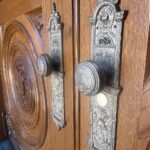
The door in the photos obviously was not furnished with or prepared for fire exit hardware. It was prepared for a mortise latchset. The problem is not that the wrong hardware was put on the door, the problem is that the wrong label was put on the door.
It is the door manufacturer’s liability. They have probably put the wrong label, because the door is prepped for mortise lock.
Hi Khozema –
Maybe the hardware was supposed to be mortise fire exit hardware.
– Lori
Obviously this assembly either had the Door replaced or it was overlooked in the initial specification of the opening.
What ever reason it should be corrected.
Can’t the label be changed now?
Hi Tim –
It would have to be changed by someone authorized to do that, so it would be pretty costly.
– Lori
It is costly. We recently had a fire door with a missing label and had an authorized inspector re-label the door. The final bill was over $1500. In retrospect, replacing the door may have been the better option.
WOW! That’s even more than I thought!!
– Lori
Lori,
I agree with your interpretation (I’m not an idiot) of the labeling requirement and that, as installed, the label does not correctly reflect the hardware on the door. I wouldn’t disagree that, technically, this opening is noncompliant for improper labeling.
For argument’s sake, though, I think there is a distinction between the labeling issue and whether the door preparation itself creates a compliance concern. If the door was originally factory prepared and reinforced for mortise fire exit hardware, and a mortise lock or latch is now installed using that same preparation (only adding function holes to a flush, 86-edge door), the door is essential underutilizing the existing reinforcement rather than introducing a preparation the door was not designed to accommodate.
If you reverse the scenario, a door prepped for a mortise lock with mortise fire exit hardware installed without the “Fire Door to be Equipped with Fire Exit Hardware” label, I would see that as more of an issue.
The mortise lock/latch is still providing the required positive latching, so I don’t see the concern as inadequate reinforcement or an improper field preparation. The issue, in my view, is simply that the existing fire door label identifies the door as being prepared for fire exit hardware when that is not actually the hardware installed.
To muddy the waters a little more, I’m seeing more universal labeling that identifies the latchbolt requirements “or” the door is to be equipped with fire exit hardware. At that point, the fire door inspector would need to verify that the installed hardware complies with the manufacturer’s listings and installation instructions.
The question then becomes: If the manufacturer has labeled the door for either application, can we reasonably assume in the field that the door was properly reinforced for both?
I agree with you 100%, and I think I would make a very bad fire door inspector (even though I’m an FDAI). Considering all of the potential deficiencies, this one wouldn’t keep me up at night…that’s why I wanted to hear what others would do in this situation. Thanks so much for sharing your insight!
– Lori
As a former fire inspector, I honestly would likely not have read the label beyond seeing that it was present and represented the rating required for the opening, but may have questioned the latch on a door to a stairwell depending on the occupancy.
That said, in an old New England town, we seemed to constantly find discrepancies in old buildings where everything from hardware to the occupancy had been changed many times. In the end, I always looked at the Life Safety requirements for the opening, does this door and latch fit the current use? Are the occupants being provided the requisite safety measures? If the answer is yes, we’d figure a way out to just document the error or issue. Most of our challenges in these old buildings were poorly documented exceptions which can often lead to near 100% rigidity in anything that was not previously existing.
Thanks Adam! I really appreciate you sharing your insight!
– Lori