
 I wrote the first version of this post 10 years ago, and someone recently asked for the letter to be updated. I have added current code references and the new letter.
~~~
Tuck this away for future reference…
With regard to filling holes in fire door assemblies, NFPA 80 (2025) states:
5.5.7 – When fastener holes are left in a door or frame due to changes or removal of hardware or plant-ons, the holes shall be repaired by the following methods:
1. Install steel fasteners that completely fill the holes.
2. Fill the screw or bolt holes with the same material as the door or frame.
3. Fill holes with material listed for this use and installed in accordance with the manufacturer’s procedures.
5.5.8 – Holes, other than those as described by 5.5.7, shall be treated as a field modification in accordance with 5.1.4.1.
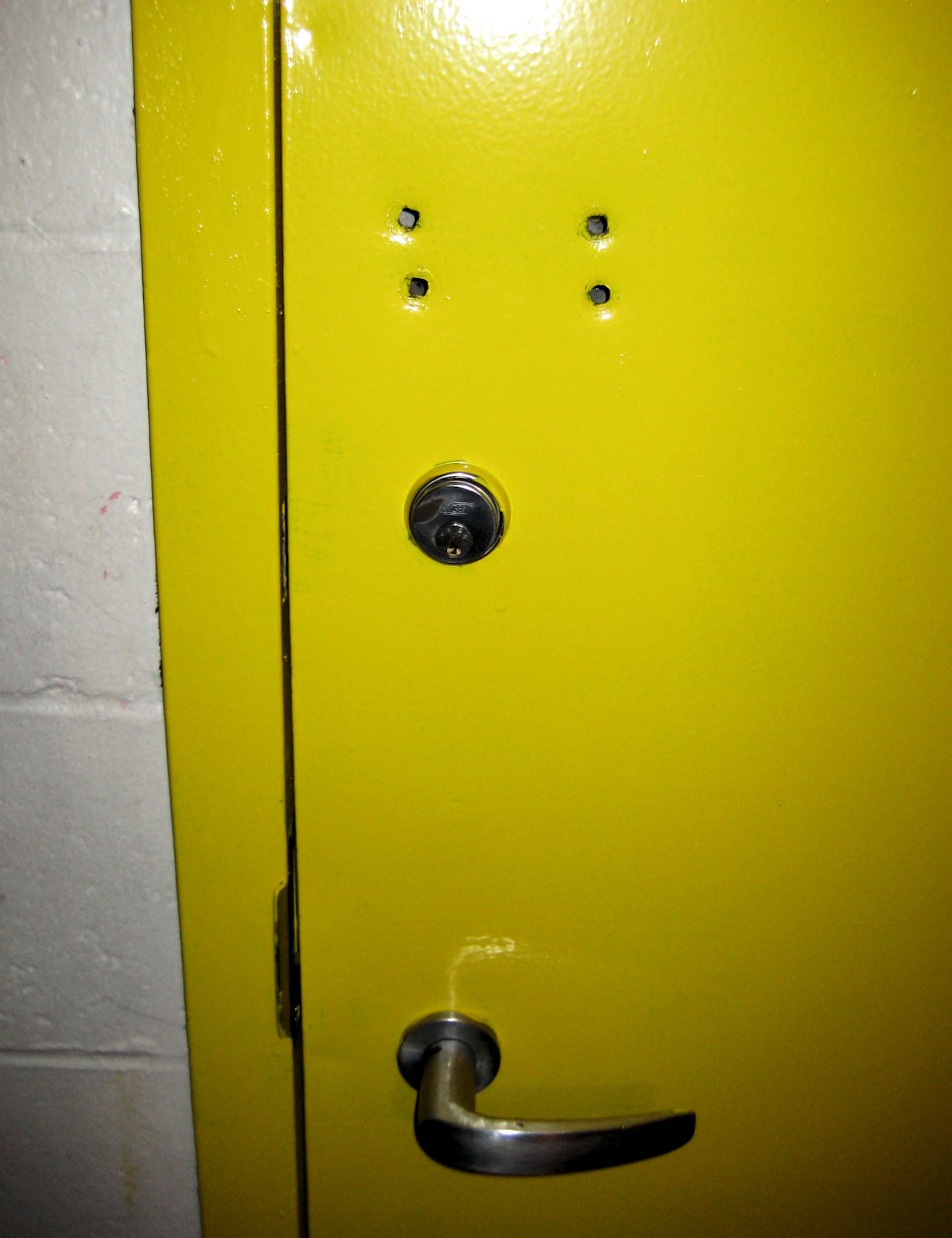
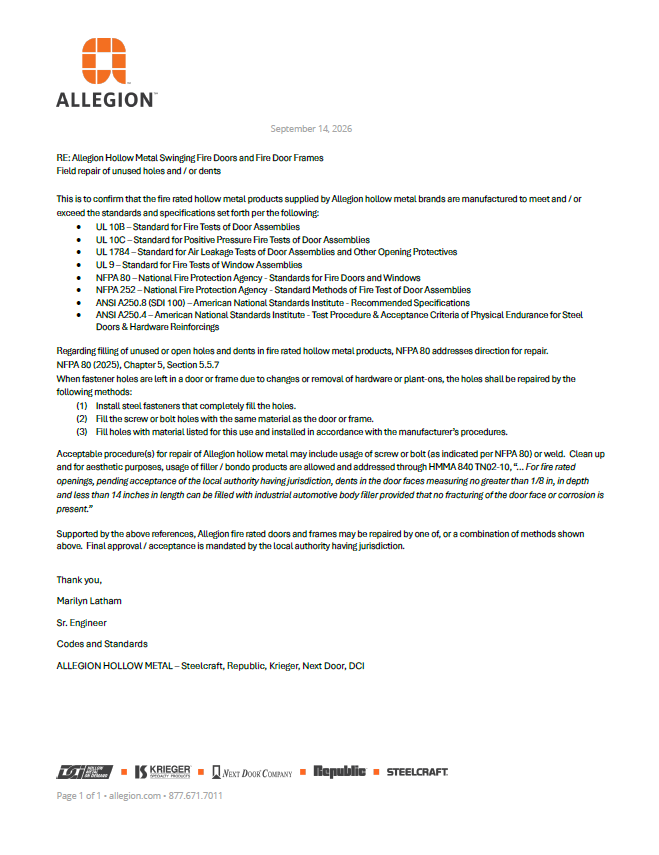
A very common repair includes installing steel fasteners in unused holes, grinding off the fastener heads, and concealing the repair with a filler material like Bondo, but this is not specifically mentioned in NFPA 80. Luckily, Marilyn Latham of Allegion has fielded this question before, and prepared a letter stating that this method is acceptable for Steelcraft and Republic fire-rated doors and frames if certain criteria are met.
The letter, which can be downloaded here, confirms that a screw or weld can be used to fill the hole, and then ground smooth. Bondo-type filler is allowed for the repair of dents and creases (not holes) in fire-rated hollow metal doors and frames. These repairs are limited to dents that are no greater than 1/8-inch deep and 14 inches long. As always, the final decision is left up to the code official, but when a manufacturer authorizes a repair method, especially in writing, the code officially typically approves the modification.
If you have any questions or insight on this issue, feel free to leave a comment below.
You need to login or register to bookmark/favorite this content.

Leave A Comment