
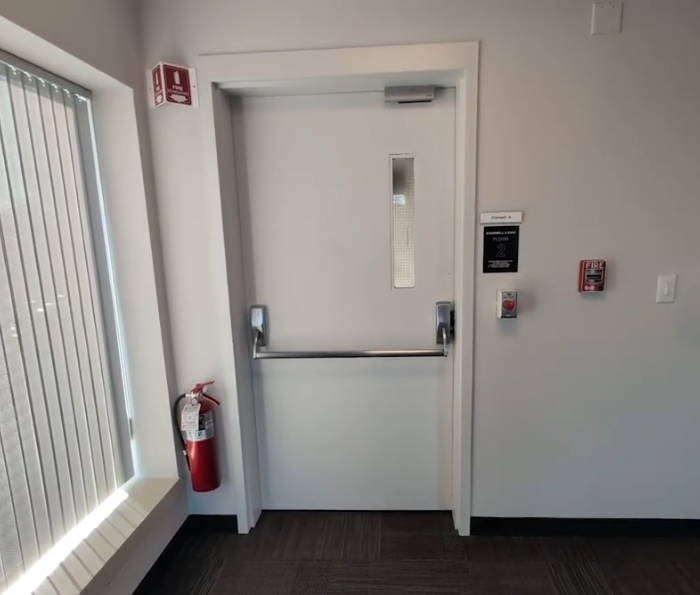
To supplement our recent series on fire door assembly inspections, this video from NFPA goes through the basics of NFPA’s inspection requirements on an actual fire door. I did hear a couple of “verbal typos” where the speaker meant one thing and said another, but overall I think the video would be helpful for AHJs and others who may not be intimately familiar with the NFPA 80 standard.
What would you add to the information presented in the video?
You need to login or register to bookmark/favorite this content.





1. Yea,,, he talked about a gap tool!!
2. The closure device ? Check condition.
3. The glazing,,, is the frame original or has it been replaced?? Is it metal or wood.
4. The old what came first,,, the chicken or the chicken,,,,, What position to you check closing/ latching in??? Full open, half open, any position????
5. Condition of the hinges.
I wonder what the red strap is for???
Decisions makers will only watch the beginning of the video. Shawn’s delivery of that normally boring content is so powerful that anyone who opens the video will watch the entire first minute. When he starts talking about the code, many people will leave but they will see there’s 7 more minutes of code detail. The goal of this video is go get people started on fire door inspection and it will do exactly that. It’s perfect.
What about all the issues with the mag lock and re-entry (there is a key cylinder on the pull side)? I did not realize these issues need not be addressed as the inspection is more about things that would just impact the rating, no?
That door has a maglock and a Push to Exit button.
NFPA101 7.2.1.5.6
(1) The hardware for egress-side occupant release of the electrical lock is affixed to the door leaf.
(2) The hardware has an obvious method of operation that is readily operated in the direction of egress under all lighting conditions.
(3) The hardware is capable of being operated with one hand in the direction of egress.
(4) Operation of the hardware directly interrupts the power supply to the electric lock and unlocks the door assembly in the direction of egress.
Unless the exit device on that door has an internal switch interrupting the power to the maglock, that door should not pass inspection.