
Today’s post is the second in a series of posts looking at each of the inspection criteria for fire door assemblies. The second criterion listed in NFPA 80 for the inspection of swinging doors is:
(2) No open holes or breaks exist in surfaces of either the door or frame.
Marilyn Latham, senior engineer for hollow metal at Steelcraft and Republic, agreed to share her insight on this topic in today’s guest blog post.
Click here to read other posts in this series and learn more about fire door inspection.
~~~
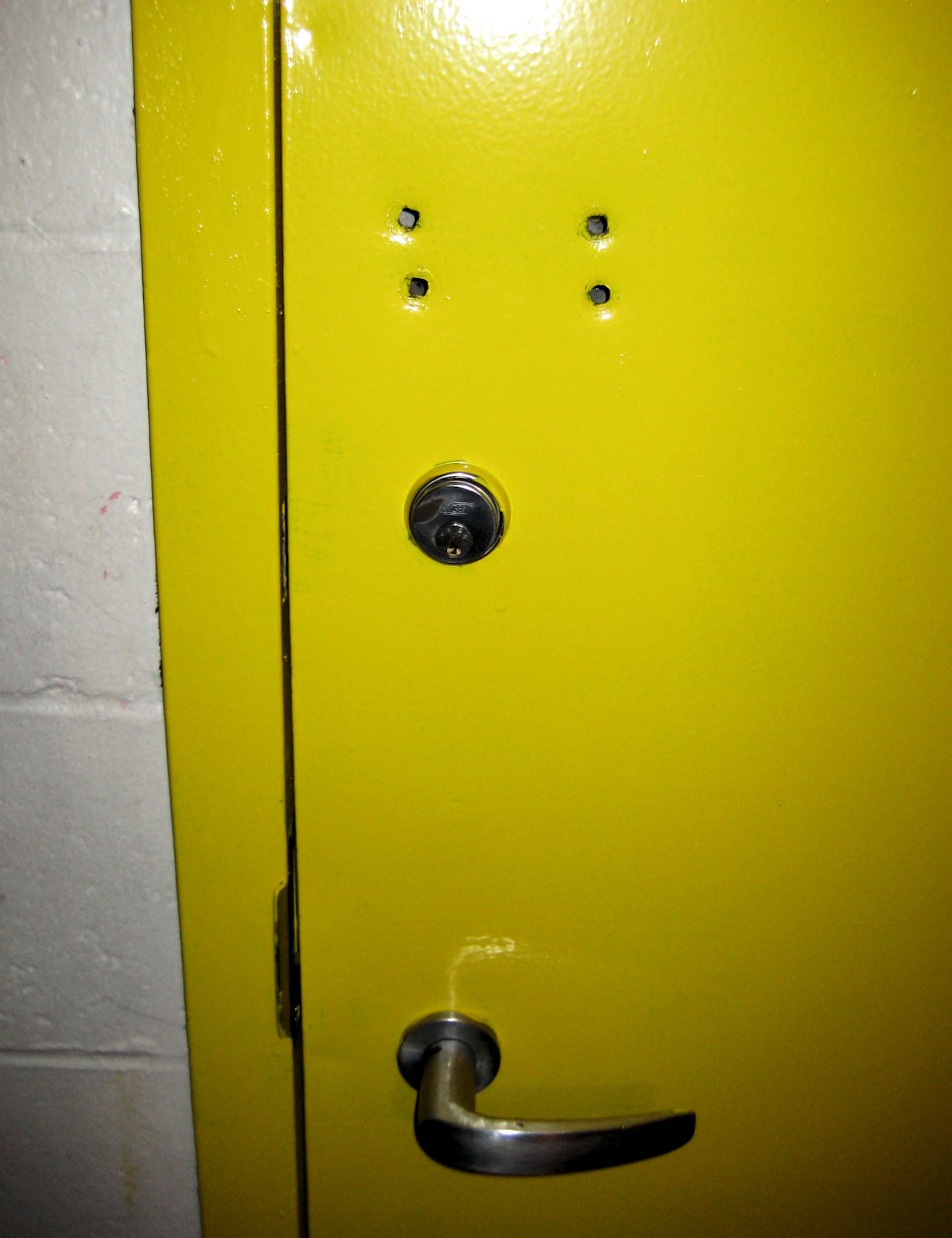
These fastener holes can not be left open as shown in the photo, but may be filled using steel screws.
Why Fire Doors Need to Be Free of Holes and Breaks (And How to Keep Them That Way)
Fire doors are a vital part of building safety, helping to slow the spread of fire and smoke and giving people time to evacuate. But a common issue that inspectors see is holes or breaks in the door or frame — and those can really compromise how well the door performs in a fire. So, what should you look for, and what’s okay? Let’s walk through it.
First off, not every hole in a fire door is a red flag (for example, the hole for the rachet release assembly). Some holes are actually part of the original design and testing, and they’re allowed as long as they’re shown in the door’s UL listing and installation instructions. For example, holes for hardware like cylinders, spindles, electrified hardware, and through-bolts are typically included in the tested assembly. Function holes for mortise locks, holes for labeled viewers, and small gaps at the perimeter of the door are also permitted. These holes are there because they were part of the fire testing process, so they’re considered acceptable — but always double-check the UL documentation and the manufacturer’s instructions to be sure.
When inspecting a fire door, it’s important to look for anything that doesn’t match those approved holes. Holes or breaks that aren’t shown in the instructions or UL listing, leftover holes from hardware that’s been removed, or visible cracks and dents that could weaken the door are all issues to note. And a quick tip: avoid drilling holes just to see what the core looks like. Instead, rely on the door’s label or temporarily remove existing hardware screws to peek inside.
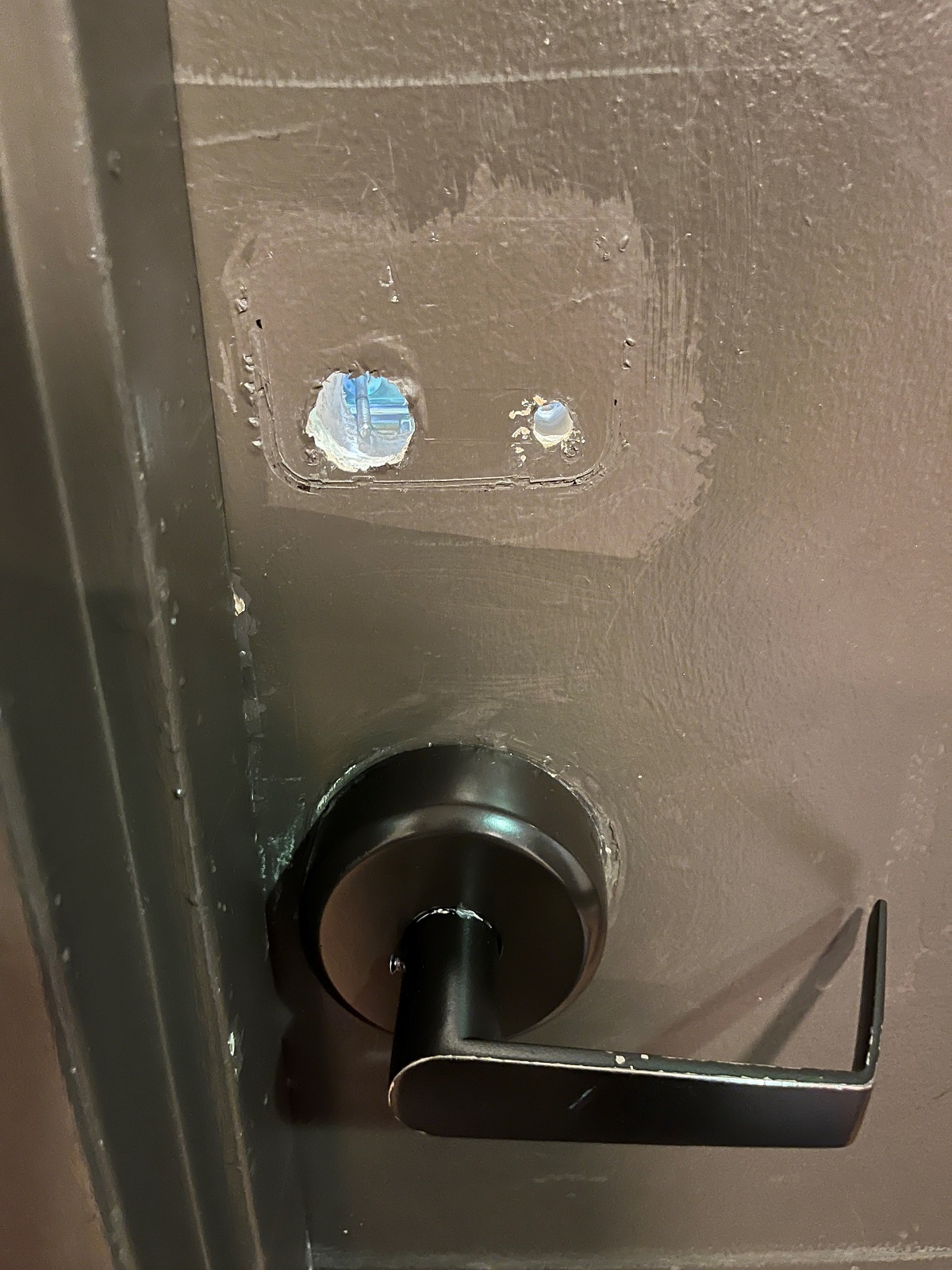
When hardware is removed, holes that are not fastener holes must be filled with the same material as the door or frame, or a material or method that is permitted by the manufacturer’s listings. These holes may be considered field modifications.
If you find holes that aren’t part of the original design, they’ll usually need to be repaired, but not all repairs are the same. The allowable methods for filling holes are addressed by NFPA 80 – Standard for Fire Doors and Other Opening Protectives. For holes that are small and meant for fasteners, you can fill them with steel fasteners, the same material as the door or frame, or a tested, listed filler. These repairs are necessary to maintain the fire- protection integrity. On the other hand, fillers like Bondo or other cosmetic compounds are only for smoothing the surface after a proper fix — they don’t replace the repair. For larger holes or those resulting from hardware removal, you need approval for a field modification from the manufacturer and testing lab before proceeding.
Some folks think that simply covering a hole with a metal plate or with new hardware solves the problem. Unfortunately, that’s not the case. Covering a hole doesn’t eliminate the opening — smoke and fire can still pass through. The NFPA 80 Handbook states: “If the new lockset does not use the existing function and fastener holes and these holes are concealed/covered by the lock trim, then the fire rating of the door has been voided because there are unfilled holes in the door.” The proper method is to fill or patch with approved, tested materials.
Do you have questions about fire door inspection? Leave them in the comment box!
Click here to learn more about Allegion fire rated solutions, or visit iDigHardware.com/firedoor.
You need to login or register to bookmark/favorite this content.





How about paired door frames than have cut outs where vertical rod electric strikes have been removed. Can the frames have patches welded in and then reinspected by a third party like Intertek? Does the welding and grinding need to be done by a certified metal worker? May not be able to get ahold of original door and frame manufacturer.
Removal of frames in masonry is a mess, and we would like to avoid if possible.
Hi Charles –
That would be up to the listing lab, but I do think it’s a possibility. I have not seen requirements for certified installers with these approvals for field modifications.
– Lori
A project that installs fire rated electric strikes in a rated frames needs some cutting to accomodate the strike. Is the door still rated?
Hi Jim –
If it’s a single door, the door will still be fire rated but the frame will require permission from the manufacturer/listing lab for a field modification if the strike needs something more than a round hole for a field prep.
– Lori
Can a 90 minute labeled door have 1/8″ cutoff the bottom still be rated?
Hi David –
I would recommend checking with the door manufacturer to see how much their listings will allow the door to be cut in the field.
– Lori
[…] fire door calls for a manufacturer-approved, lab-listed repair, or full replacement of the door (1). If your garage-entry or stairwell door wears a fire-rating label and it has a hole, plan to […]