

Although hardware schedules look like Greek to most people, there is a specific sequence for the products listed there. In the U.S. we typically use DHI’s Standard Sequence and Format for the Hardware Schedule – a document published decades ago. Personally, I think about hardware in this order and find it very difficult to read a hardware set if it’s not written this way; many specifications require submittals to follow this format. The DHI document breaks down the list into more specific categories, but in the simplest form, the sequence is:
– Hang the Door – hinges, pivots, other hanging devices
– Secure the Door – flush bolts or other hardware for pairs, locks, panic hardware, etc.
– Control the Door – door closers, automatic-closing devices, any hardware used to control the door
– Protect the Door – protection plates, stops, gasketing, and other accessories
The European method of sequencing door hardware in a specification or submittal is very similar to the DHI method, with a few variations. As I mentioned last month, iDigHardware’s international audience has grown substantially over the years, and I will be adding some posts and articles that will be helpful to those working with doors and hardware in other parts of the world. The information below was sent by Hamza Ali DHT and Sushil Kumar Dip GAI, both of Allegion.
~~~
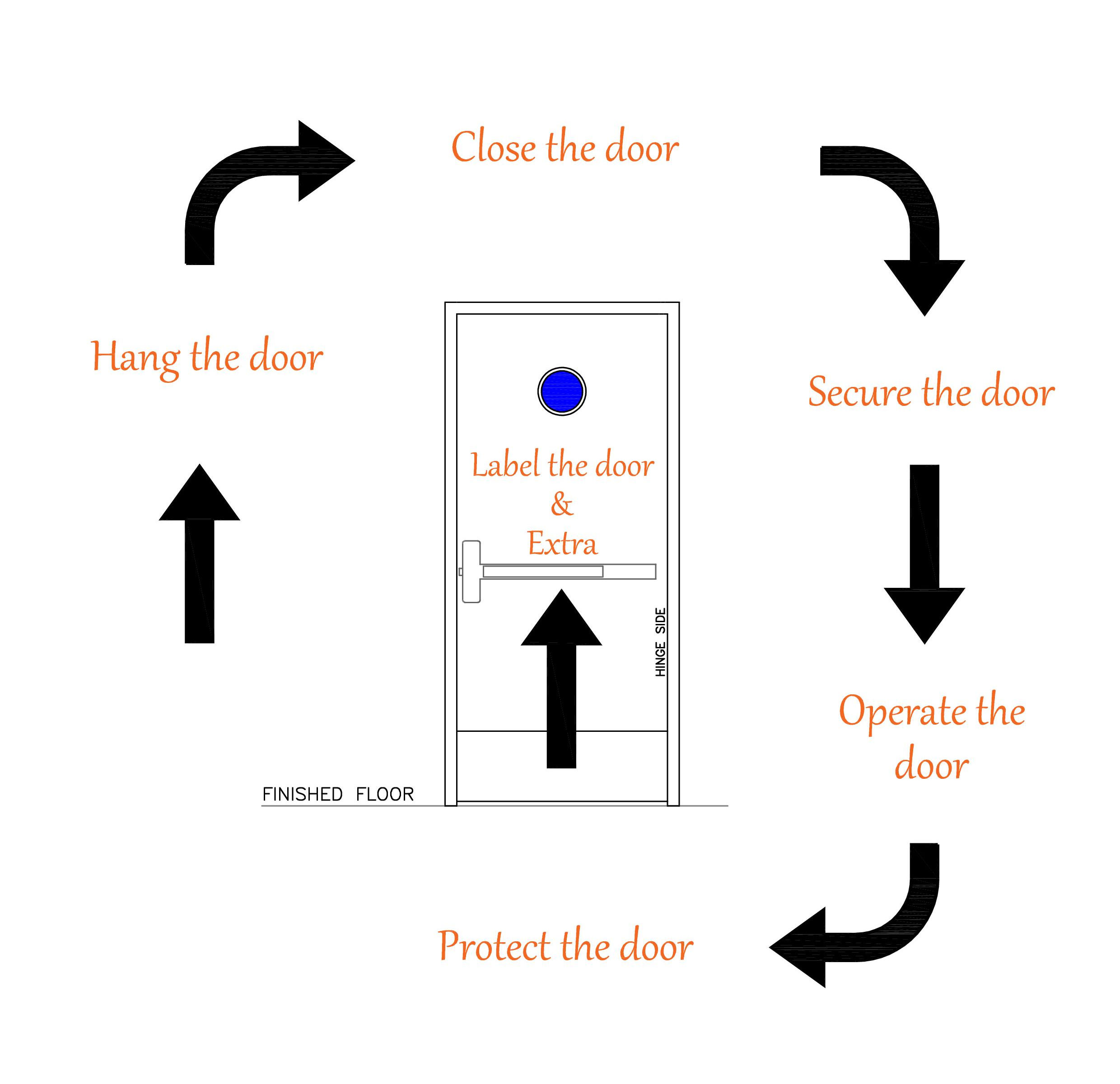 Sequencing refers to the listing of door hardware in a pre-determined order, doing so will ensure consistency in the specification written for every door. Sequencing the hardware will make the specwriter’s job more systematic by ensuring that all the items required are listed and not overlooked. This will also make it easier for the installer, customer, or end-user to read and understand the hardware and the specification.
Below we have the GAI (Guild of Architectural Ironmongers, UK) suggested listing or sequencing for European Hardware:
- Hinges: Hang the door.
- Closer: Close the Door.
- Lock: Secure the door.
- Furniture: Operate or open the door (lever handles, pull handles etc.).
- Protect the door.
- Miscellaneous items (floor stops and accessory).
- Label (Signage) the Door (Ex. “FIRE DOOR KEEP SHUT” or “FIRE DOOR KEEP LOCKED”).
Submitted by: Hamza Ali DHT and Sushil Kumar Dip GAI, both of Allegion
Have you had experience with hardware sequencing in other parts of the world?
You need to login or register to bookmark/favorite this content.



Ha! Thanks for this after all these years. I always followed an AHC’s order, and this is why. Go figure. Where does electrical hardware fit in? Seems it may go in two locations.
Hi Jim –
When I was writing specifications I put the electrified locks in the “secure the door” category, the electric hinges or power transfers in the “hang the door” category, the power supplies and readers at the end of the hardware set, and the operable description in the remarks for the set. Maybe someone else will weigh in with the current practices.
– Lori
As a hardware enthusiast, I find the differences in hardware sequencing practices between the US and Europe absolutely intriguing. It’s fascinating to learn how different regions approach the design and installation of hardware for doors and windows. Each approach seems to have its merits, and understanding these variations can help us make informed choices for our own projects. Whether it’s European elegance or American practicality, the importance of selecting the right hardware for doors cannot be emphasized enough. It’s amazing how something seemingly minor, like hardware sequencing, can significantly impact the functionality and aesthetics of our living and working spaces. Great post shedding light on an essential aspect of door hardware!
When submitting door hardware schedules, does DHI recommend that the quantities shown reflect a per door quantity or should the quantities reflect the totals of each door opening combined? For example if a set has two door openings that each get 3 ea. butt hinges, should the hardware submittal show 6 hinges or 3 ea.? Reason I ask, is that Comsense refuses to change their submittal format (they believe it should be the total quantity of each hardware items for all openings in the hardware set) and they keep referencing that their format matches what DHI recommends, but I find that hard to believe since every other program I’ve ever used shows the quantities per door. It’s very difficult for our customers and architects to review, when they have to do some math to determine if we have the correct quantity of per door. Comsense is so frustrating (venting here!).
Hi Emilio –
Unless something has changed, the hardware set should show the quantity per opening. For example, 3 hinges for a single door or 6 for a pair of doors, not 30 for 10 single doors using that hardware set.
– Lori
Lori,
DHI states the following:
“The quantities of each hardware item are multiplied by the number of openings in the hardware sets. For example, if each opening is to have 3 hinges and there are 10 openings in the hardware sets. The quantity for the hinges would be listed as 30. The same would hold true for each item of hardware in the sets”
Most of my projects are well over $1 million in doors and hardware and you have to have a calculator in order to determine if the correct quantities of hardware are provided for each item. It makes it a nightmare to review, but Comsense refuses to change it since it “follows DHI formatting’. I even sent an email to DHI about it but they never responded. Super frustrating.
Interesting…I don’t remember ever doing it that way but maybe I did that for my AHC exam in 1994. 🙂 As a specwriter I listed in the hardware set the quantity for one opening and did the calculations later.
– Lori