
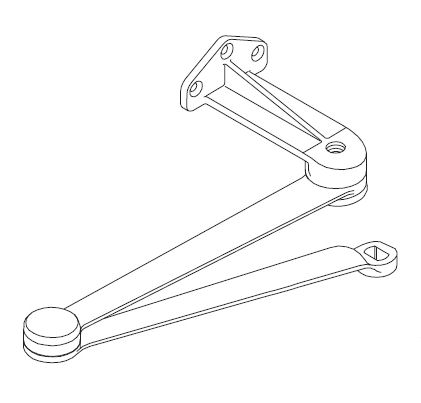
Check out these regular arm closers mounted on the push side of a pair with a transom panel. I would have used a parallel arm closer with a flush transom shoe, but I can appreciate the creativity.
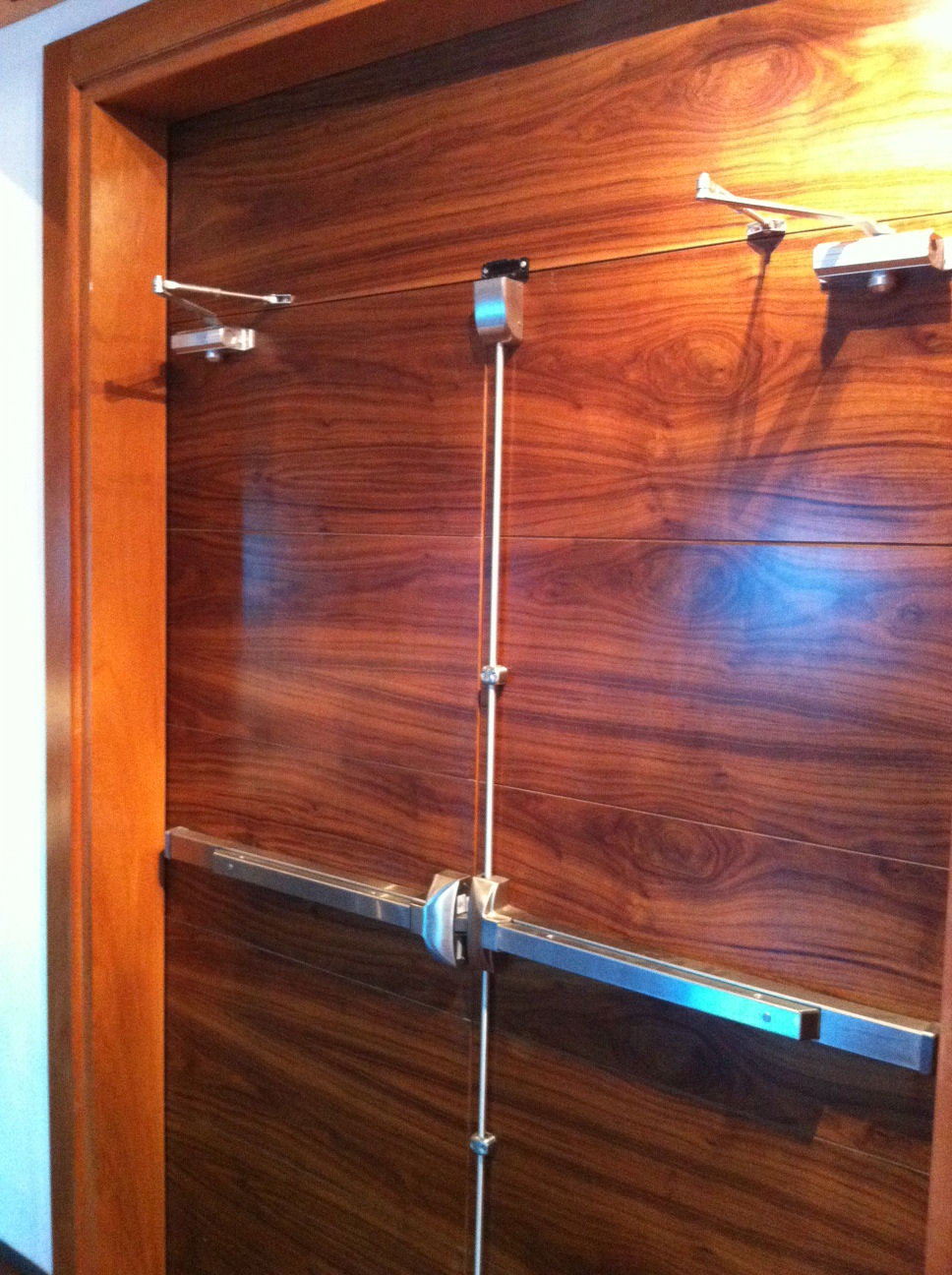
Thank you to James Stokes for sending me this photo!
You need to login or register to bookmark/favorite this content.




I bet the door manufacture is cursing the hardware guy on this job.
Really nice doors destroyed by ugly hardware. Put the closers on the pull side. Get the exit devices in US10 or DUR.
Wait, how does this work – the Reg. Arm is mounted on the push side… Does that work the same as using a PA arm or do you have to do something differently (like opposite hand) than if you supplied a PA arm for the application?
michael rebbec:
i have seen this in action (closers using regular arm on push side of the door, when in action, the arm does not swing out away from the hinge, but instead, it swings TO the hinge and loses spring power (leverage and angle) the closer has no advantage of leverage to close it the way its designed to.
even with a closer on a parelell arm install, they lose 20% of the total closing power that the closer can provide, hence why also with many installations (storefronts) they will install it as a top jamb install (body on frame, arm on door) its all havin got do with geometry and arm angle to determine if its going to be a hard to open door or one that is weak after a certain degree of opening.
for those abou to ask, no, those closers are NOT made by IR!
-Jess the door doctor
but yes, the hand of the closer is not porperly set to the hand of the door,