
This is Part 2 of an updated Decoded article covering door swing and encroachment, along with some new photos illustrating how a door might encroach into an egress path. (Part 1 is here.)
This Decoded article was published in Door Security + Safety
.

When a door swings in the direction of egress travel it may swing into a corridor that is part of an egress path, where a certain egress width must be maintained. The term “encroachment” refers to how far a door projects into the required egress width, and it is measured with the door in two different positions – with the door in its fully-open position, and with the door in the position where it encroaches upon the egress width to the greatest extent (often 90 degrees).
These photos illustrate doors swinging into the egress corridor, with the fully-open position being 90 degrees:
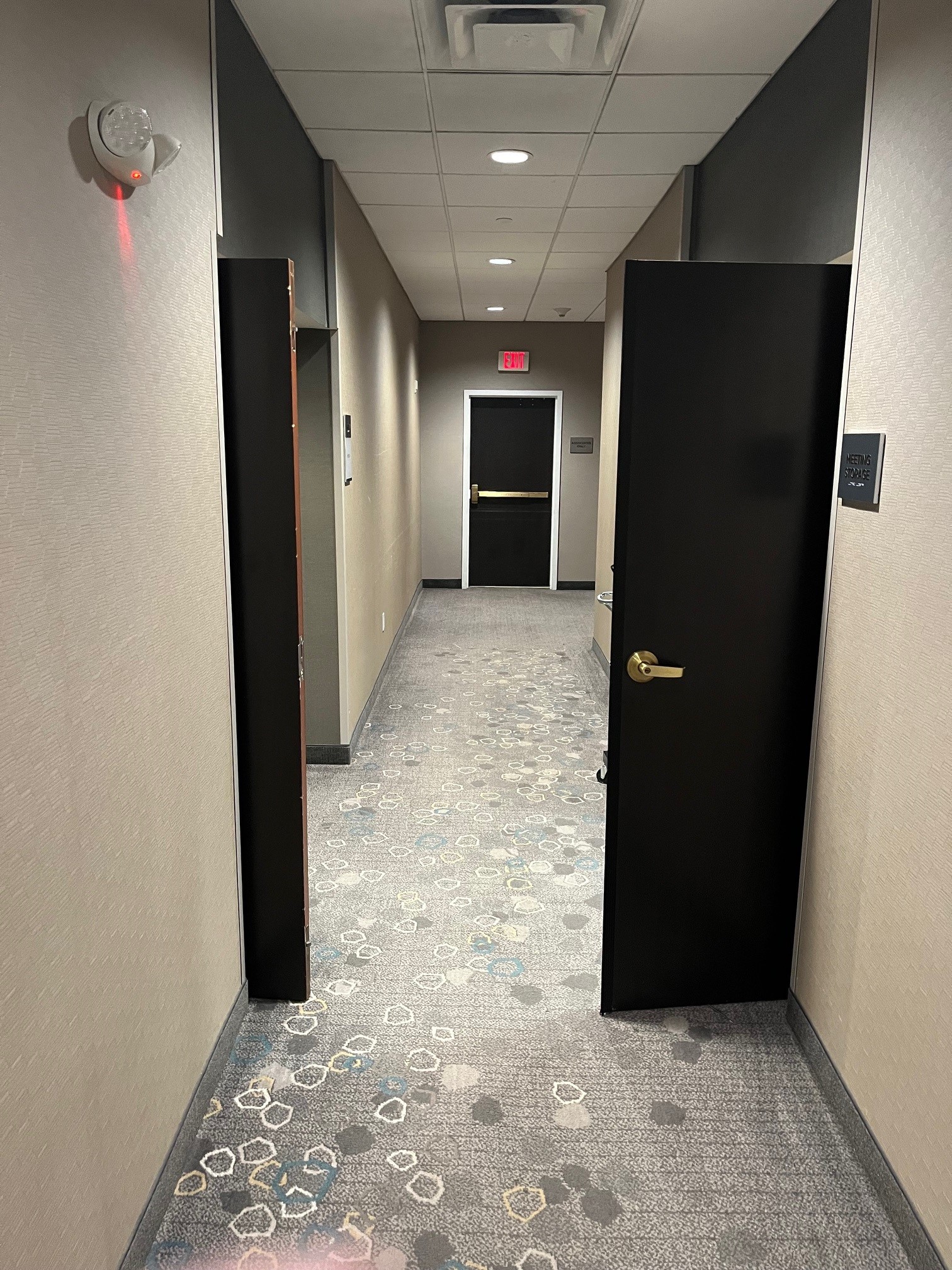
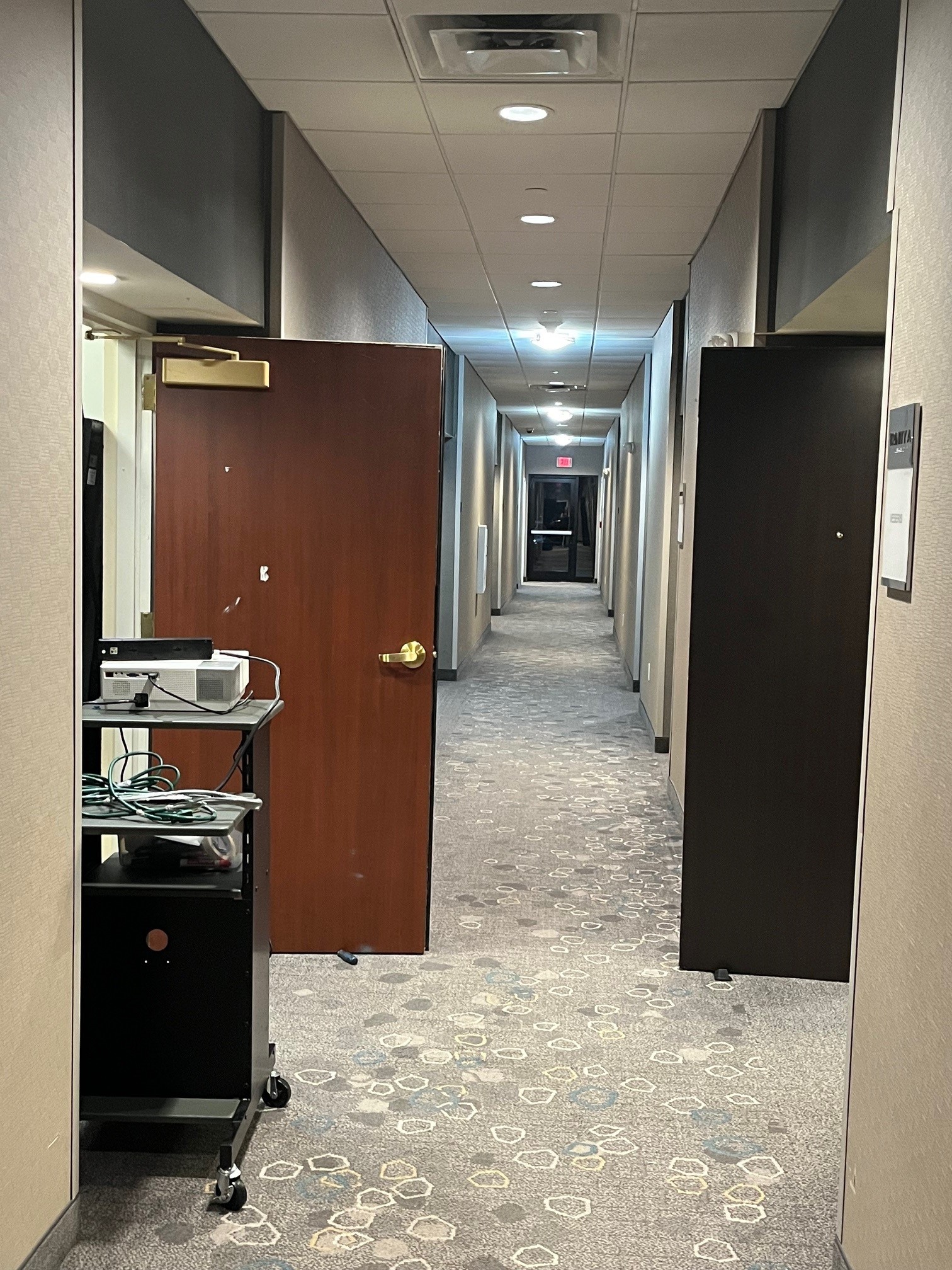
Egress width is determined by one of two methods – either the width prescribed by a model code such as the International Building Code (IBC), or a calculation based on the number of occupants and a width factor (the greater of the two prevails). The minimum egress width allowed by the IBC is 44 inches, unless one of the following exceptions applies:
- For access to and utilization of electrical, mechanical, or plumbing systems or equipment – 24 inches
- When the required occupant capacity of less than 50 people – 36 inches
- Within a dwelling unit – 36 inches
- In Group E with a corridor having a required capacity of 100 or more – 72 inches
- In corridors and areas serving stretcher traffic in ambulatory care facilities – 72 inches
- In Group I-2 in areas used for the movement of beds – 96 inches
To serve the occupant load of an area, a wider egress corridor may be required – based on the calculation. The IBC uses a factor of 0.2 inches per occupant for egress components other than stairways (0.3 inches per occupant for stairways). If a corridor is serving as a required means of egress for 300 occupants, the required egress width is 5 feet (300 occupants x 0.2 inches per occupant = 60 inches). This required egress width is greater than the minimum corridor width of 44 inches prescribed by the IBC.
When a door swings into the required egress width, the encroachment of the door into the required width must be considered. According to the IBC, a door may not reduce the required egress width by more than one-half at any point during the door’s swing. For example, if a corridor is 5 feet wide and the required egress width is 5 feet, a 3-foot door swinging into that corridor would encroach too far into the required egress width, because at 90 degrees the door will obstruct more than half of the required egress width. These restrictions do not apply to doors within individual dwelling units or sleeping units of R-2 and R-3 occupancies, which would include apartments, hotels, dormitories, and child/adult care facilities.
The IBC also states that when doors are fully open they may not reduce the required means of egress width by more than 7 inches. According to the IBC, the “surface-mounted latch release hardware” mounted on the corridor side of the open door is exempt from inclusion in the 7-inch projection when it is mounted between 34 inches and 48 inches above the finished floor. NFPA 101 contains very similar requirements.
One piece of hardware to consider with regard to encroachment is the door closer, because it may limit the fully-open position of the door. For example, a closer with a built-in stop (or a separate overhead stop) may have a maximum degree of opening of 110 degrees. The corridor must be wide enough to provide the required egress width with the door in this position – the door is only allowed to project 7 inches into the required width when it is fully open, 110 degrees in this case.
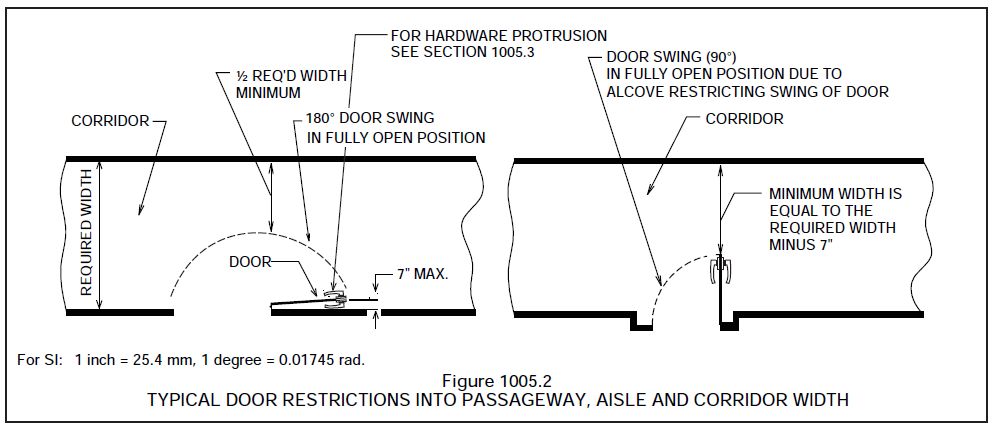
Graphic: International Building Code Commentary
In Summary
Two measurements must be taken into account with regard to encroachment:
- The door may not extend more than halfway into the required egress width at any point in the door’s swing.
- The door may not extend more than 7 inches into the required egress width when in the fully-open position. According to the model codes, latching hardware on the corridor side of the open door is not taken into account if it is mounted between 34 inches and 48 inches above the finished floor.
Codes may vary depending on the edition adopted as well as local requirements. Consult the applicable codes for more information. The Authority Having Jurisdiction makes the final determination on matters related to code compliance.
You need to login or register to bookmark/favorite this content.






Leave A Comment