
For several decades, the trend was to have storefront doors with the narrowest stiles and rails possible. I was never a fan, due to the durability issues sometimes seen in these doors along with the complicated hardware applications. Fortunately, the accessibility standards requiring a flush, smooth surface measured 10 inches up on the push side of the bottom of the door led to wider stiles and rails as a standard.
I remember learning about drop plates for door closers because of my failure to detail them on a project back in the late 80’s. I loved being a detailer, but WOW – there are a lot of details to keep track of! In today’s “What’s that?” post I want to take a quick look at drop plates.
The tricky thing about drop plates is that they are specific to the closer model and also the mounting type. For example, the LCN 4040XP closer mounted regular arm requires a minimum top rail on the door of 3 3/4 inches. For a narrow top rail, the 4040XP-18 drop plate is required, and the minimum top rail is 2 inches.

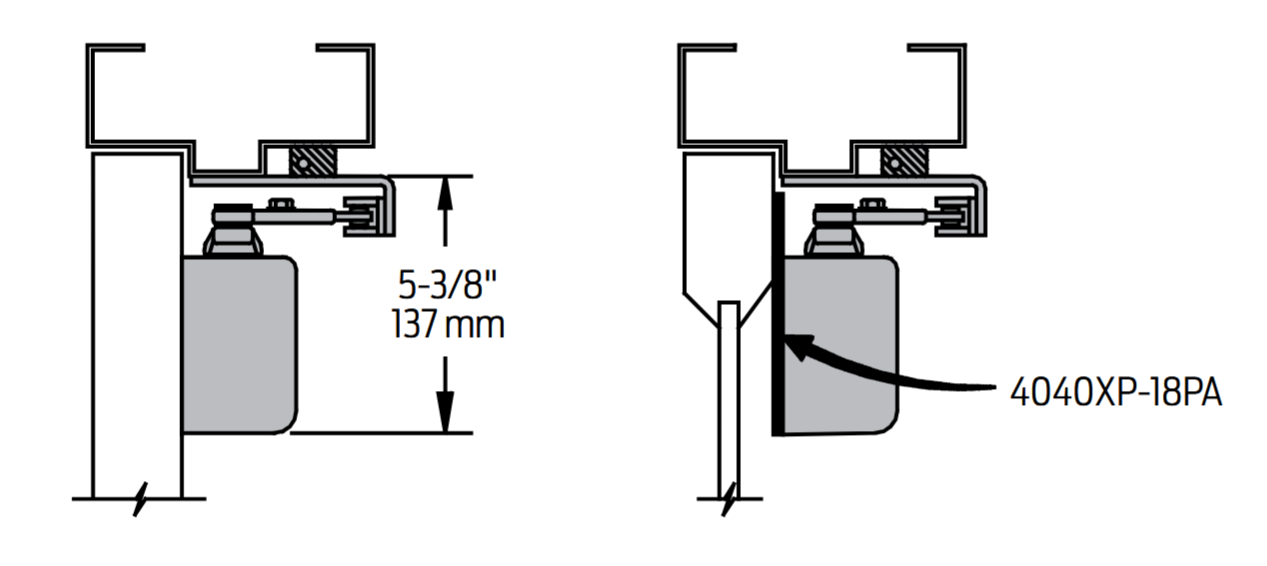
The 4040XP mounted parallel arm requires a minimum of 5 3/8 inches + the stop height to be mounted without a plate. If a top rail of that size is not provided, the 4040XP-18PA plate is required, which needs a minimum of 2 inches + the stop height.
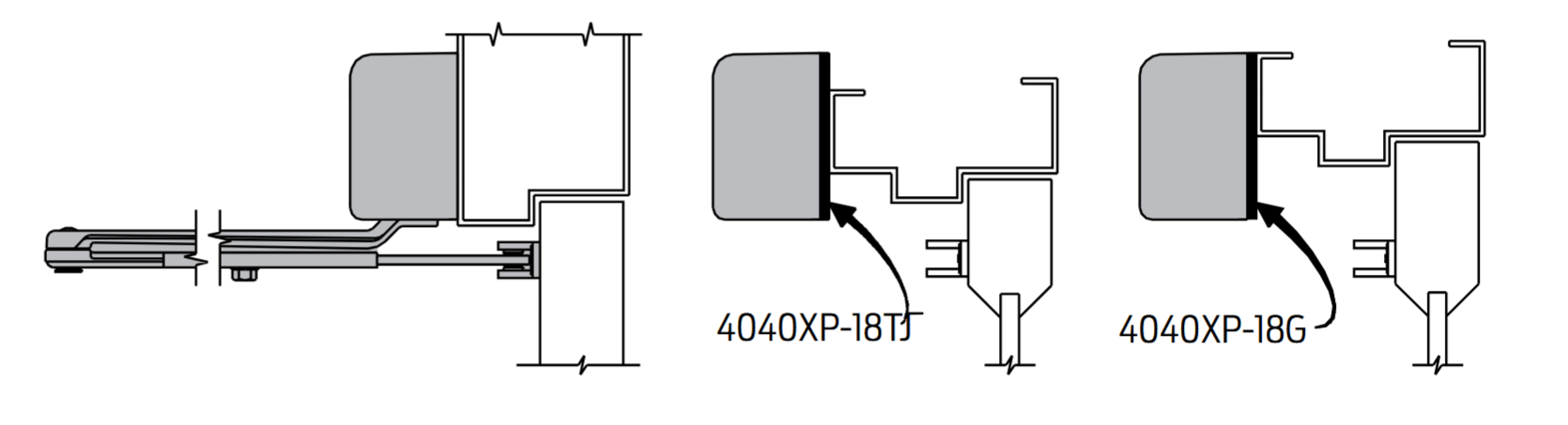
There are drop plates for frames too…when the 4040XP is mounted top jamb, a frame head of less than 3 1/2 inches in height will require a plate. The 4040XP-18TJ plate requires a minimum frame head of 1 3/4 inches. To move the closer down further on the head (for example, to install an overhead stop or to accommodate a flush ceiling condition), the 4040XP-18G plate is used and also requires a minimum of 1 3/4 inches of frame face. Using these plates will also affect the minimum top rail of the door.
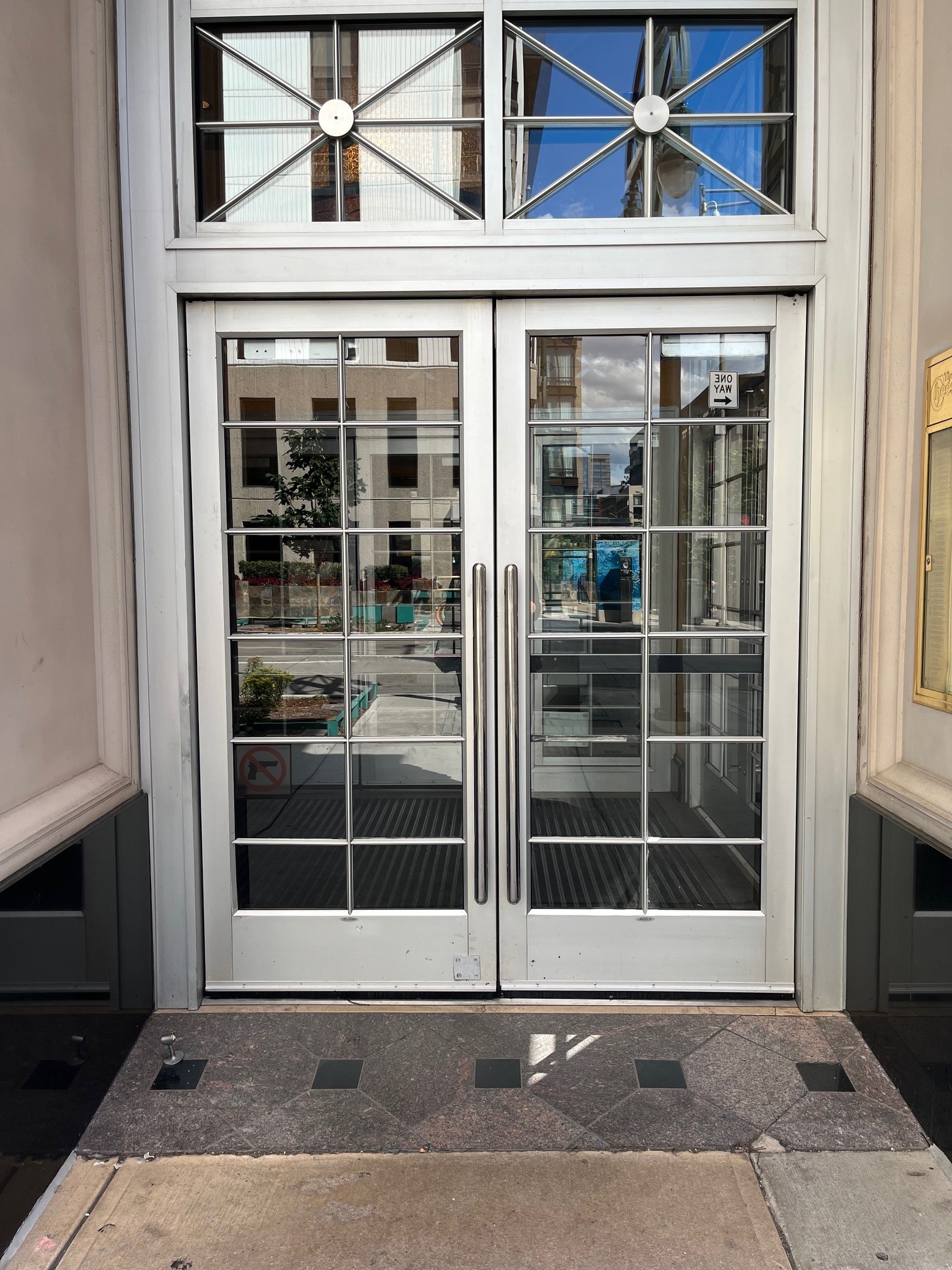
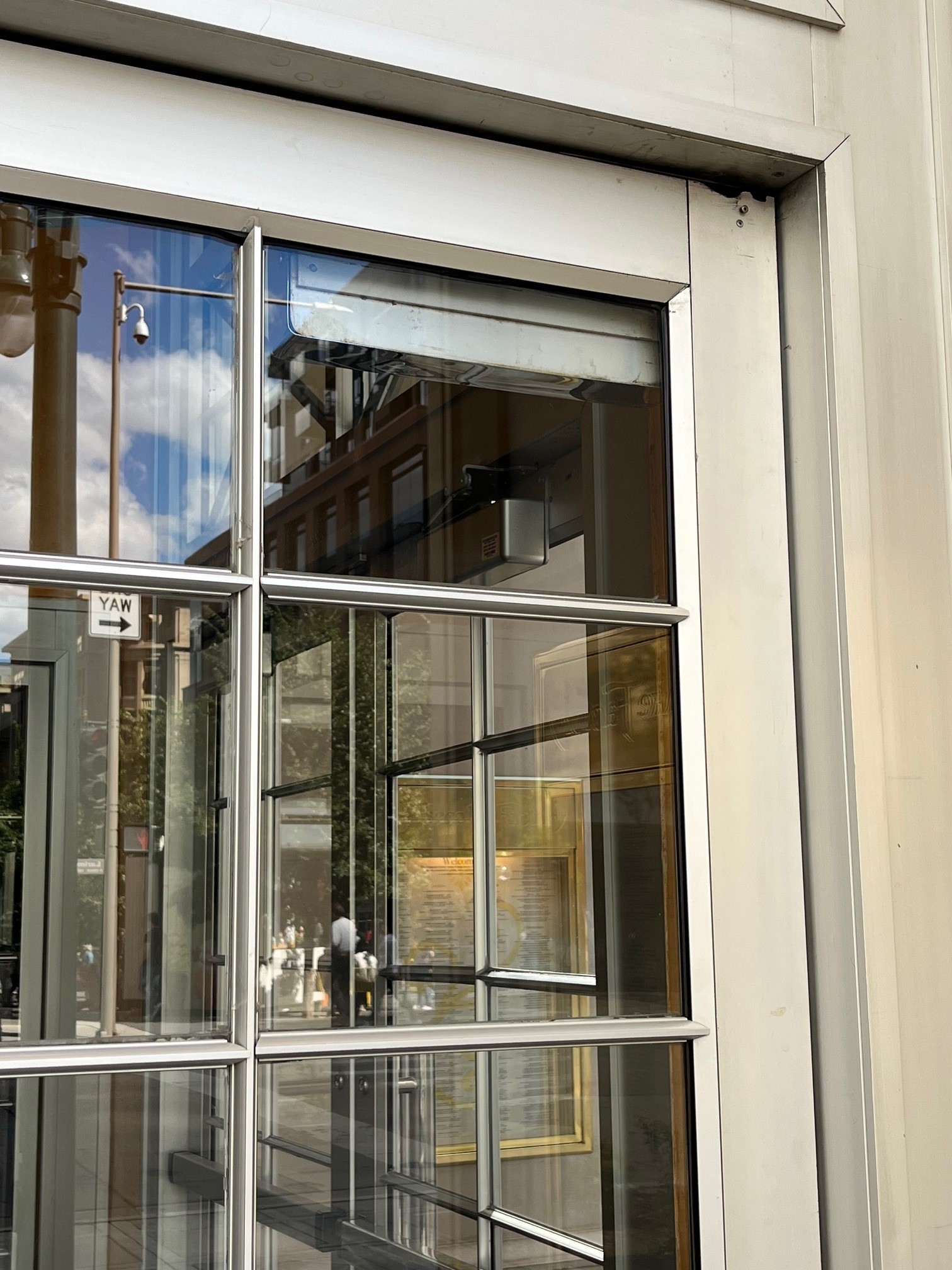
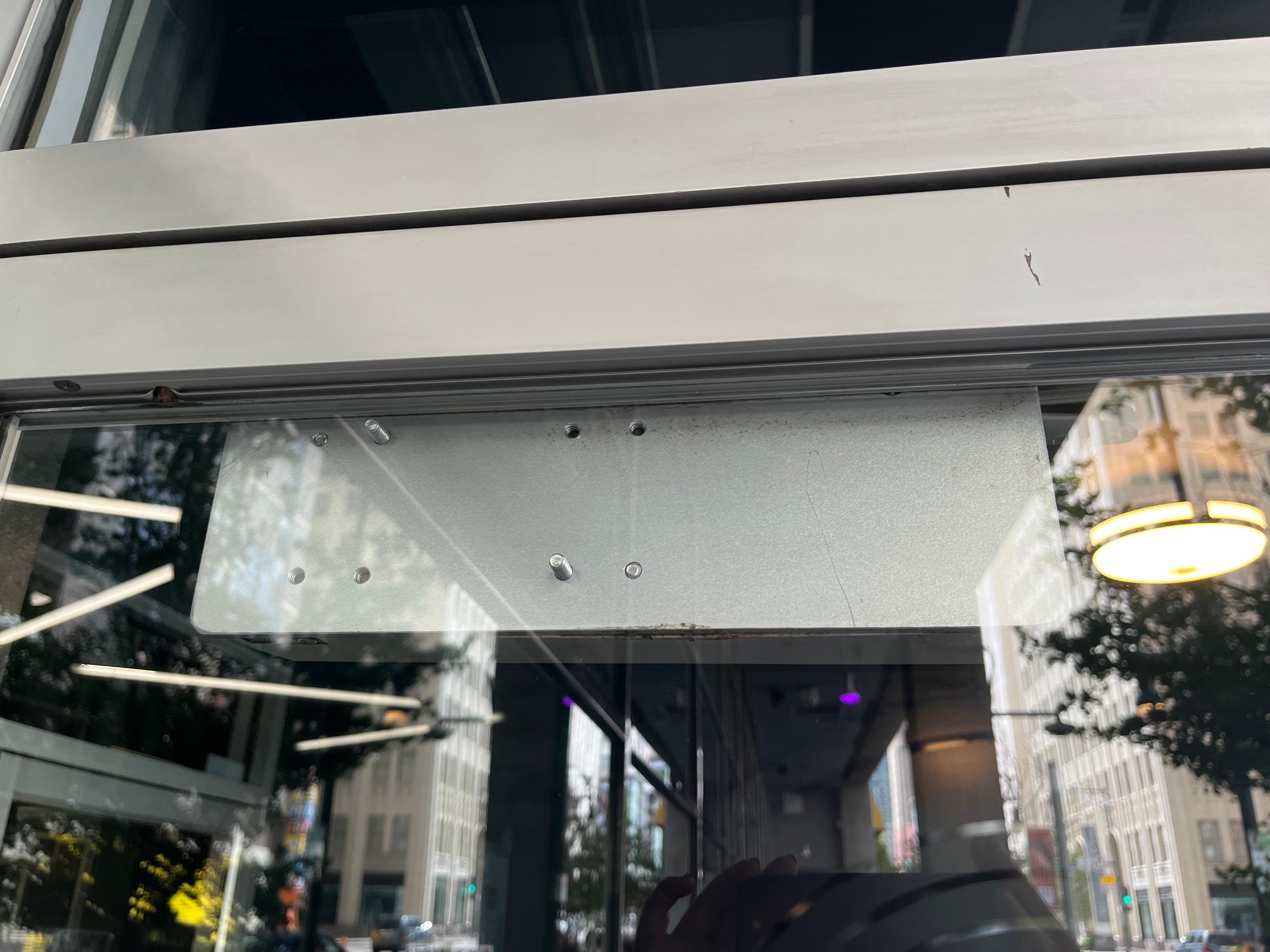
The other thing about drop plates is that they are almost always visible from the opposite side of the door. Without the plate you’d be looking at the backside of the closer, so I guess the plate is an improvement; it also provides something to mount the closer to. But I do remember architects being surprised to see the plate, so it’s worth mentioning. Here are a couple of examples that I saw recently:
Have you seen any parts and pieces lately that would make a good “What’s that?” post? I’m looking for suggestions!
You need to login or register to bookmark/favorite this content.
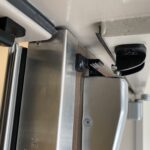


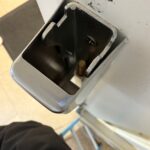
I have a picture of a door closer, mounted parallel arm with a drop plate on an exterior full glass aluminum door, taken from the exterior. There is a slight gap between the drop plate and the closer cover. I saw an allen wrench sitting in that gap, which is why I took the picture. It was a “convenient” place to store the closer adjustment tool so it doesn’t get lost.
Good thing it’s single glazed…
Must no have a cutting wheel
Or selected the wrong fasteners.
Would like to know more about top vertical rods on paired doors that latch into electric strikes. I guess there is no electric floor strike for the bottom rod, so bottom rods are left out in this type of installation.
Anyone else notice the overlength screws in the last picture of the PA drop plate?