Accessibility

Max Headroom

Remember him?  I guess I'm dating myself if I admit that I do since he made his debut in the mid- to late-80's, right around the time that Bill Lawliss, John Gant, and I all graduated with degrees in Architecture from Vermont Technical College.  Just think where we could be now if we took those drafting jobs we were offered instead of choosing the glamorous field of door hardware.

Solution for Unequal Pairs

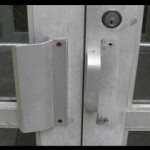
One of the top 5 questions which I receive almost weekly is regarding the replacement of a 5'-wide equal pair with a 3'+2' unequal pair.  Because automatic flush bolts and a coordinator can be problematic, and most panic hardware will not fit on a 2' wide door, I'm constantly being asked if it's ok to use manual flush bolts on the 2' leaf.  That's a tough question to answer because the code-compliant solution isn't the best application as far as function and durability.  The IBC (2003) says this:

By |2012-07-26T17:56:08-04:00March 4th, 2009|Accessibility, Locks & Keys|2 Comments

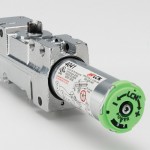
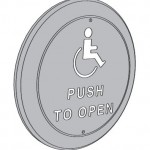
Automatic Operator Actuators

The 2007 edition of ANSI/BHMA A156.19 - American National Standard for Power Assist and Low Energy Power Operated Doors requires low energy operators to be initiated by a "knowing act", which is described as "consciously initiating the powered opening of a low-energy door using acceptable methods, including: wall- or jamb-mounted contact switches such as push plates; fixed non-contact switches; the action of manual opening (pushing or pulling) a door; and controlled access devices such as keypads, card readers, and key switches."

By |2013-04-23T12:05:04-04:00February 24th, 2009|Accessibility, Automatic Operators|1 Comment

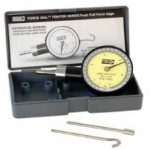
Door Opening Force

Door opening force is the measurement of how many pounds of force are required to open a door.  The requirements for door opening force are found in the Americans with Disabilities Act Accessibility Guidelines (ADAAG), ICC/ANSI A117.1 Standard on Accessible and Usable Buildings and Facilities, and the Massachusetts Architectural Access Board requirements (521 CMR).

By |2012-04-09T16:25:37-04:00February 23rd, 2009|Accessibility, Automatic Operators, Door Closers|19 Comments

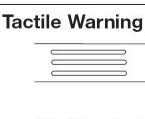
Tactile Warning

Tactile warning is an abrasive or knurled strip on a lever handle to indicate that the door leads to a hazardous area such as a boiler room, mechanical room, or loading dock.  This requirement is no longer included in the Americans with Disabilities Act Accessibility Guidelines (ADAAG) or in ICC/ANSI A117.1, but it is a requirement of the Massachusetts Architectural Access Board (521 CMR):

By |2017-05-25T15:37:23-04:00February 23rd, 2009|Accessibility, Locks & Keys|2 Comments
Go to Top