
 This month’s Decoded question is related to a new section of the I-Codes that has been approved for the 2027 editions:
In which use groups is an interlock permitted by the International Building Code (IBC) and the International Fire Code (IFC)?
An interlock is a set of two or more doors in series, where only door can be opened at a time. Opening one door effectively locks the other door(s) until the open door comes to a close. Interlocks are often used in clean rooms or other laboratory environments to limit air transfer, infection control areas in health care facilities, and high security areas such as data centers.
In the 2024 editions and prior editions of the IBC and IFC, interlock applications were not addressed by the model codes, except as related to sallyports in detention and correctional occupancies. This meant that each interlock application had to be approved by the Authority Having Jurisdiction (AHJ), often resulting in inconsistent applications from one project to the next. Safety features designed to balance life safety and security are crucial for interlock applications; without them egress could be compromised, risking the safety of building occupants during an emergency.
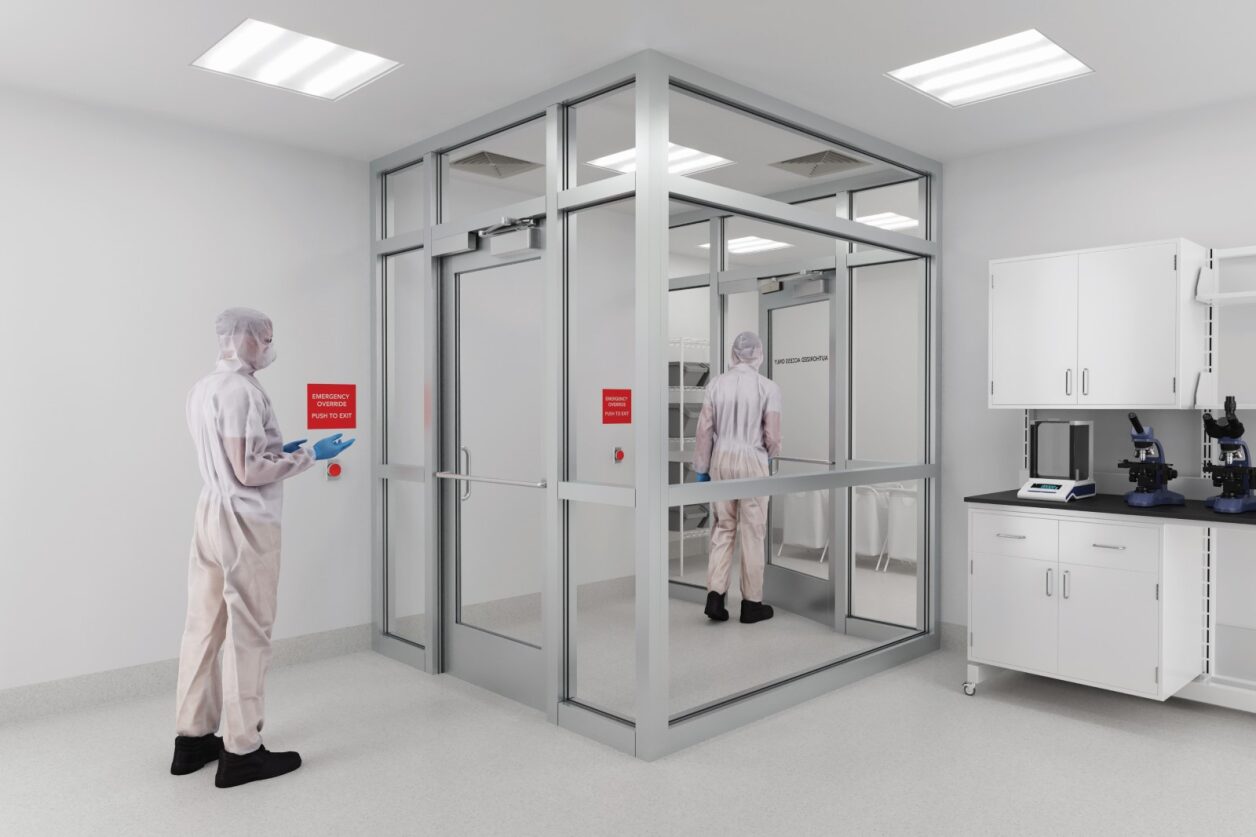
A new section has been approved for the 2027 edition of the I-Codes, addressing interlocks, or as defined in the codes, Control Vestibules: A space with doors in series that are interlocked such that when one door is open other doors are restricted from opening. These applications may also be called airlocks or mantraps. A similar set of code changes was proposed for the 2027 edition of NFPA 101, Life Safety Code, but the proposal was not incorporated. The changes approved for the 2027 I-Codes do not apply until that edition of the code is adopted in a project’s jurisdiction, but until then, the new code section could be used as the basis for a request for a code change modification to be granted by the AHJ.
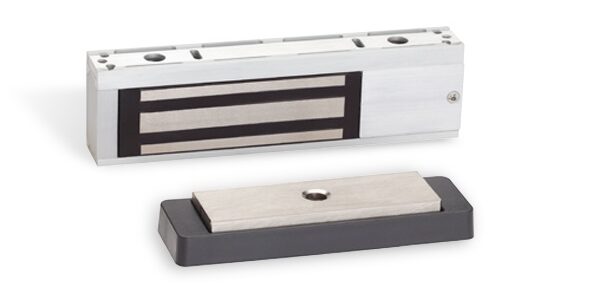 In order to prevent more than one door in a control vestibule from being opened, each door is typically equipped with an electromagnetic lock and a door position switch. In conjunction with a controller in the power supply, 0pening one door will automatically activate the switch and energize the mag-locks on the other doors, locking them. When the first door closes, the switch signals the other doors to unlock and they can then be used to continue the access or egress path. These systems could also incorporate other types of fail safe locks, but mag-locks are the most common type for an interlock system.
To answer this month’s Decoded question, once adopted, the 2027 I-Codes will permit control vestibules in the means of egress for purposes of security, environmental control, or clinical needs in the following use groups:
- Group F (factory industrial), H-3, H-4, H-5 (high hazard), I-1, I-2 (institutional) and S (storage) where the occupant load of the room or space served by the control vestibule is less than 50 people.
- Group B (business) and M (mercantile) where the occupant load of the room or space served by the control vestibule is 10 people or less.
There are other considerations when specifying, supplying, or installing an interlock that is part of the means of egress. If one door in the control vestibule fails to close, the other doors could restrict egress unless the newly-added safety requirements of the I-Codes are strictly followed.
A key safety component is the override switch that is required on the egress side of each door, and the accompanying instructional signage explaining to building occupants how the control vestibule will operate during an emergency. When the override switches are operated, power to the electrified locks must be directly interrupted – independent of the other electronics – and the locks must remain unlocked for at least 30 seconds. The switches must be located within 48 inches of the door and between 40 inches and 48 inches above the floor. The code includes an exception that permits the switches to be moved to alternate locations approved by the AHJ when the control vestibule is designed to impede occupant egress for security reasons.
The new section of the I-Codes will either require the room or space served by the control vestibule to have an approved automatic smoke detection system, or the building must be equipped throughout with an automatic sprinkler system. These areas could also have an emergency alarm system for hazardous materials. When these systems are activated, the interlock function of the doors serving the control vestibule must be deactivated automatically, allowing free egress through the vestibule. Power failure must also deactivate the interlock function of the doors, meaning that the electrified locks used in these systems must be fail safe.
The 2027 I-Code requirements mandate that building occupants must not pass through more than one control vestibule during the egress path from any point in the building. The IBC and IFC also state that the doors in a control vestibule must swing in the direction of egress (with an exception for power-operated doors in accordance with Section 1010.3.2), and doors must be equipped with self-closing devices. Self-closing is defined in the I-Codes as a door that is equipped with a device that will ensure closing after having been opened.
As with most other special locking arrangements, the new section requires the electrified hardware used in a control vestibule application to be listed to UL 294 – Standard for Access Control System Units or to UL 1034 – Standard for Safety for Burglary-Resistant Electric Locking Mechanisms.
Including the new requirements in the 2027 I-Codes will help to ensure a more consistent approach to these special locking arrangements. It’s important to keep in mind that these requirements for interlocks do not apply until the 2027 edition of the IBC and/or IFC is adopted in a project’s jurisdiction, or until the AHJ approves a code change modification based on the new section. The adopted codes should always be consulted, as they may have modifications that affect these applications.
You need to login or register to bookmark/favorite this content.
Leave A Comment