

As I mentioned last week,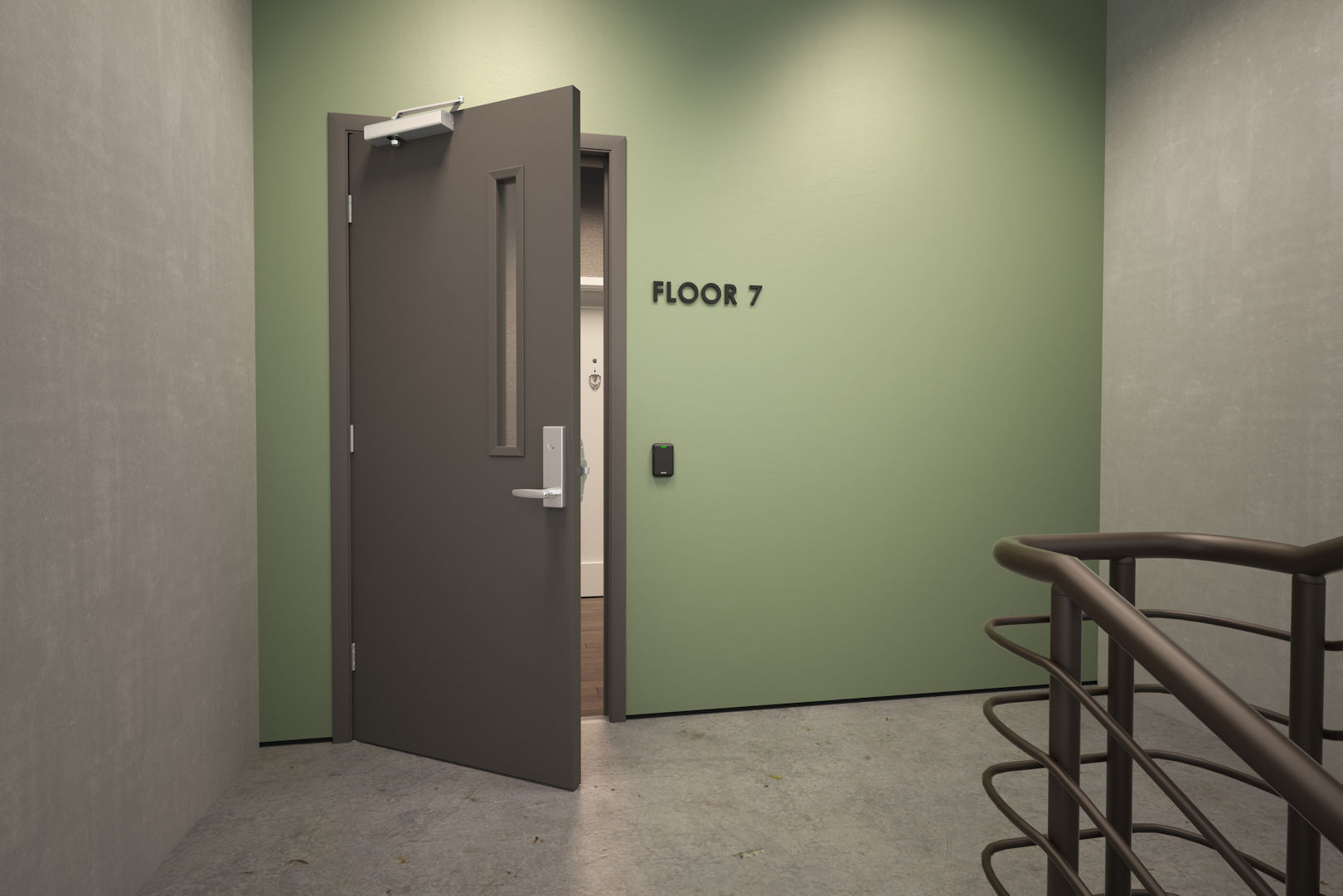 the 2027 editions of the International Building Code (IBC) and the International Fire Code (IFC) are now available, along with the 2026 edition of ICC A117.1 – Accessible and Usable Buildings and Facilities.
There is a change to the IFC that is worth mentioning, as it affects the operation of fire doors as well as fire door inspection. It occurs in Section 705: Door and Window Openings.
705.2.4: Door Operation
Automatic-closing swinging fire doors shall close and latch from the full-open position and from any position of 30 degrees (0.52 rad) open to full open. Self-closing swinging fire doors shall close and latch from any position of 30 degrees (0.52 rad) open to full open.
Exception: Self-closing and automatic-closing swinging fire doors with closers using cables, chains, or ropes, and pulleys and counterweights shall close and latch from any open position.
Prior editions of the IFC required swinging fire doors to close and latch from the full-open position, which is typically easier to achieve because of momentum. The new language requiring fire doors to close and latch from an open position of 30 degrees and any open position greater than 30 degrees helps to ensure the reliability of the operation of the fire door – even when someone passes through without opening the door fully.
If you conduct fire door inspections, what degree of opening do you use to test the closing and latching of fire door assemblies? Do you anticipate problems when testing fire doors per the new requirements?
You need to login or register to bookmark/favorite this content.





NFPA 80 more vaguely requires positive latching to be achieved on “each door operation,” which could be interpreted as applying to any opening angle. There is also a section of NFPA 80 (which used to just be annex material but became part of the main text in 2019) that requires spring hinges to achieve positive latching when closed from 30 degrees.
If my scribbling math is right, 30° of opening is about 18″ gap from door to frame on a “Normal” 36-inch slab…
I think I’m usually testing from 8-12″ open at a minimum when I’m troubleshooting closing & latching issues.
I see this as a potential problem for spring hinges. They already depend on momentum, and their testing was probably done from the 90° position. I don’t know if they would have to retest, but if they have to close from the 30° position, they may have to crank the power up so much as to rattle teeth when they close from 90°. It’ll be interesting to see what comes of this. The manufacturers will have some homework to do.