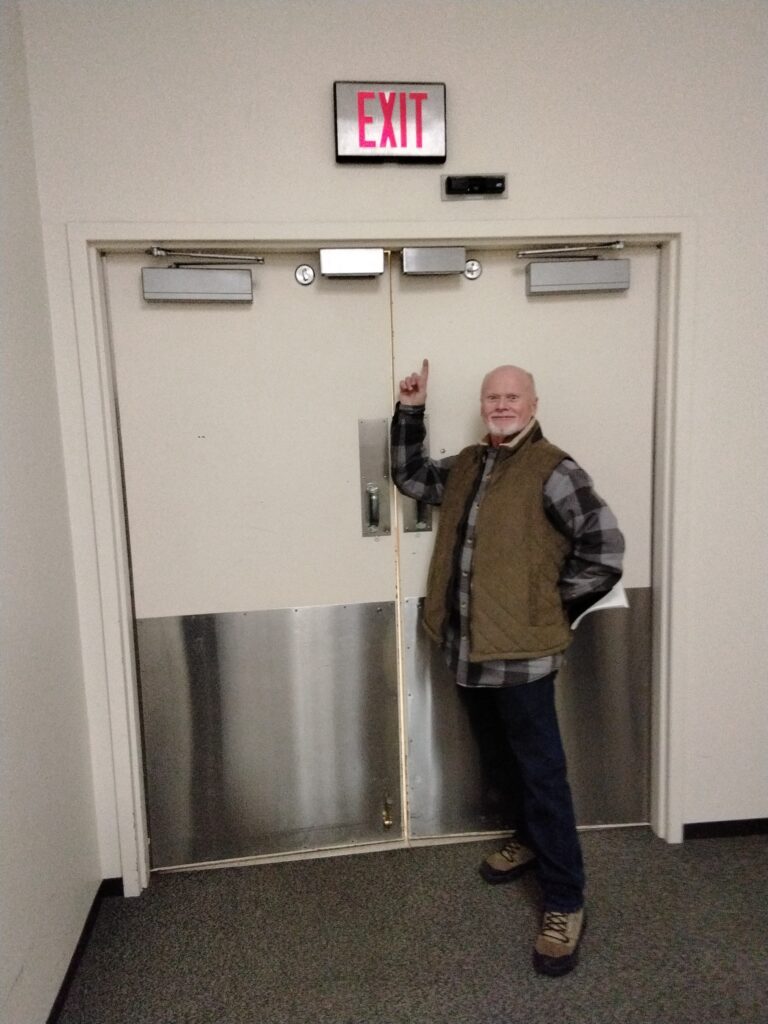
This is a great Fixed-it Friday video about the LCN Senior Swing being used to address HVAC stack pressure on a problematic door, along with a bonus code application! Can you spot it?
Comments: 0
Thank you to Larry Gallagher for sharing this “Lesson Learned”…for any of you who have learned tough lessons at the School of Hard Knocks (haven’t we all?), send them along!
Colin Watson of Allegion sent me today’s Wordless Wednesday photo of an application that he and Eddie Dobbins ran across in a public library…mag-locks with deadbolts as the mechanical back-up. YIKES!
Comments: 2
I’ve received some questions lately regarding accessibility requirements for multifamily buildings, so here’s an updated Decoded article on the topic.
Every year when this date – February 23rd – rolls around, I think about the time that has passed since February 23rd, 2009. I have a few questions I hope you’ll weigh in on!
Comments: 5
It’s not very often that I see terminated stops (AKA hospital stops), so I’m sharing these Fixed-it Friday photos from one of the many airports that I’ve passed through recently.
Comments: 3
In this episode of Paul Timm’s podcast – The Changing Face of School Security, he talks with Lori Alhadeff of Make Our Schools Safe about Alyssa’s Law.
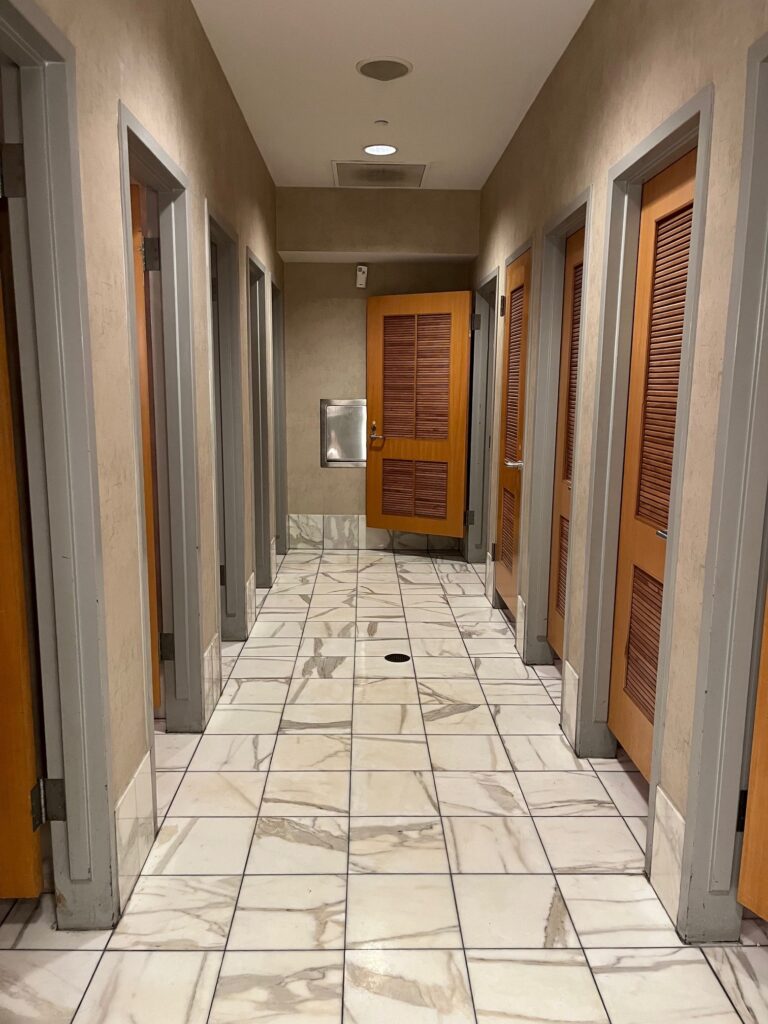
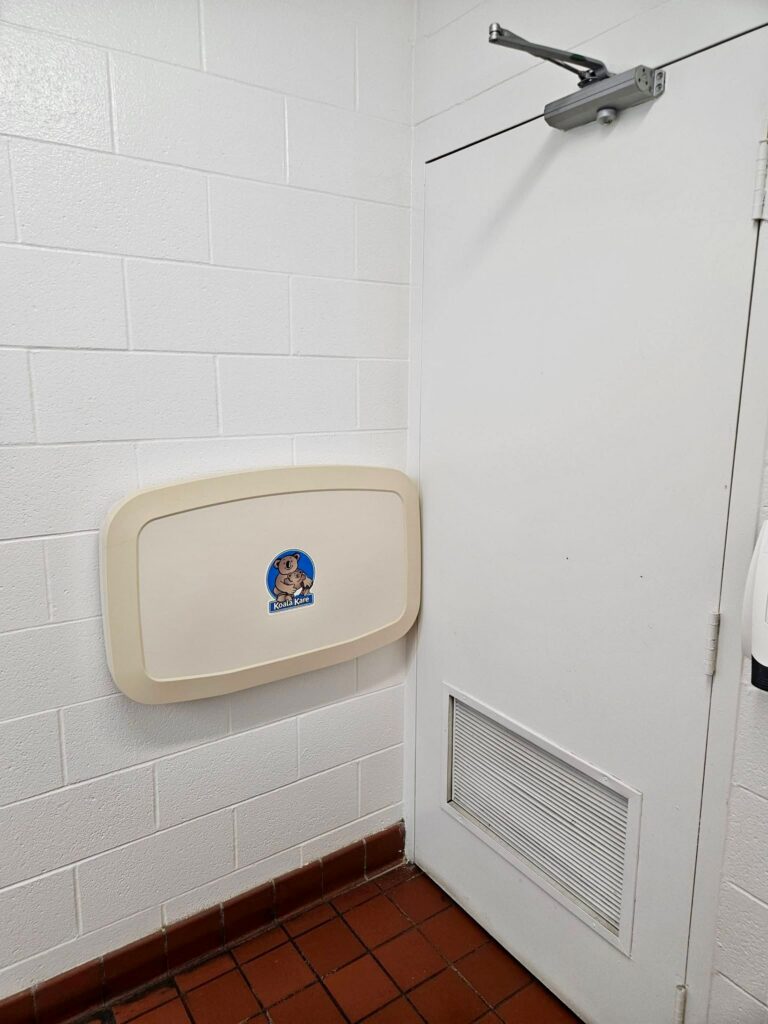
Scott Taylor posted today’s Wordless Wednesday photos and tagged me (love that!) on the Big Door Facebook page. They were taken in the men’s room of an all-boys high school gym…
Oh well, nobody’s perfect! I made a typo in my current article for Door Security + Safety Magazine, and Dave Jenosky of Jenosky Associates noticed…at least I know someone is paying attention!