
How I Discovered Door Checks (Part 2), by L.C. Norton
I posted Part 1 of this article a while back, and apparently there have been people waiting patiently for the second installment. As requested, here is Part 2. Part 3 to follow.
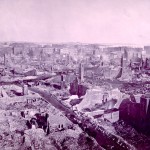
The Great Boston Fire of 1872
It's almost impossible to imagine a fire of this magnitude, which began on November 9th, 1872. More than 770 buildings burned in less than 20 hours, most of them commercial buildings that were previously thought to be fire-proof. Several problems contributed to fighting the fire - the flu that had stricken most of the horses used to pull the fire engines, the attempts to reduce the fire load by exploding kegs of gunpowder inside of buildings, an inadequate water supply, and the crowds of spectators and looters filling the streets.
How I Discovered Door Checks (Part 1), by L.C. Norton
I was recently cleaning out a drawer and found copies of a 3-part article printed in Doors & Hardware in 1986. The articles were written in 1937. I thought I should preserve this piece of our history, so here is the first installment (others to follow).
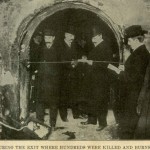
Iroquois Theater Fire
Today is the 107th anniversary of a tragedy at the Iroquois Theater in Chicago, which shaped the early codes and led to the invention of the panic device. More than 600 people lost their lives in this fire, making it the deadliest theater fire and the deadliest single-building fire in United States history.

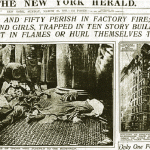
Triangle Factory Fire – 99 Years Ago Today
The fire at the Triangle Shirtwaist Factory in New York City on March 25th, 1911, claimed 146 lives - mostly young immigrant women. Building owners locked the exit doors to keep the workers in and the union organizers out, so when a fire broke out on the 8th floor it was impossible for some of the 600+ workers on the 8th, 9th, and 10th floors to escape. The fire escape was not sufficient to hold the number of fleeing occupants, and collapsed. Firefighters' ladders were several stories too short, and water from the fire hoses could not reach the upper floors of the building. Sixty workers jumped to their deaths.
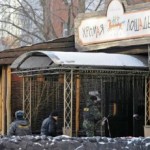
History Repeats Itself, Again
Once again, failure to follow fire safety and egress code requirements in a nightclub has resulted in a fire with multiple fatalities. The death toll from the December 4th fire at the Lame Horse in Perm, Russia currently stands at 112 with more than 100 people severely injured.
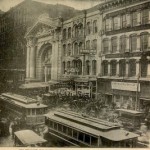
How It All Began
This article was written by Carl Prinzler, one of the creators of the original exit device, at the end of the 1930's. I think it's an interesting insight into the development of the first exit device and the code requirements at that time.